
AI Within Artistic Design: How Artists Are Responding To Artificial Intelligence
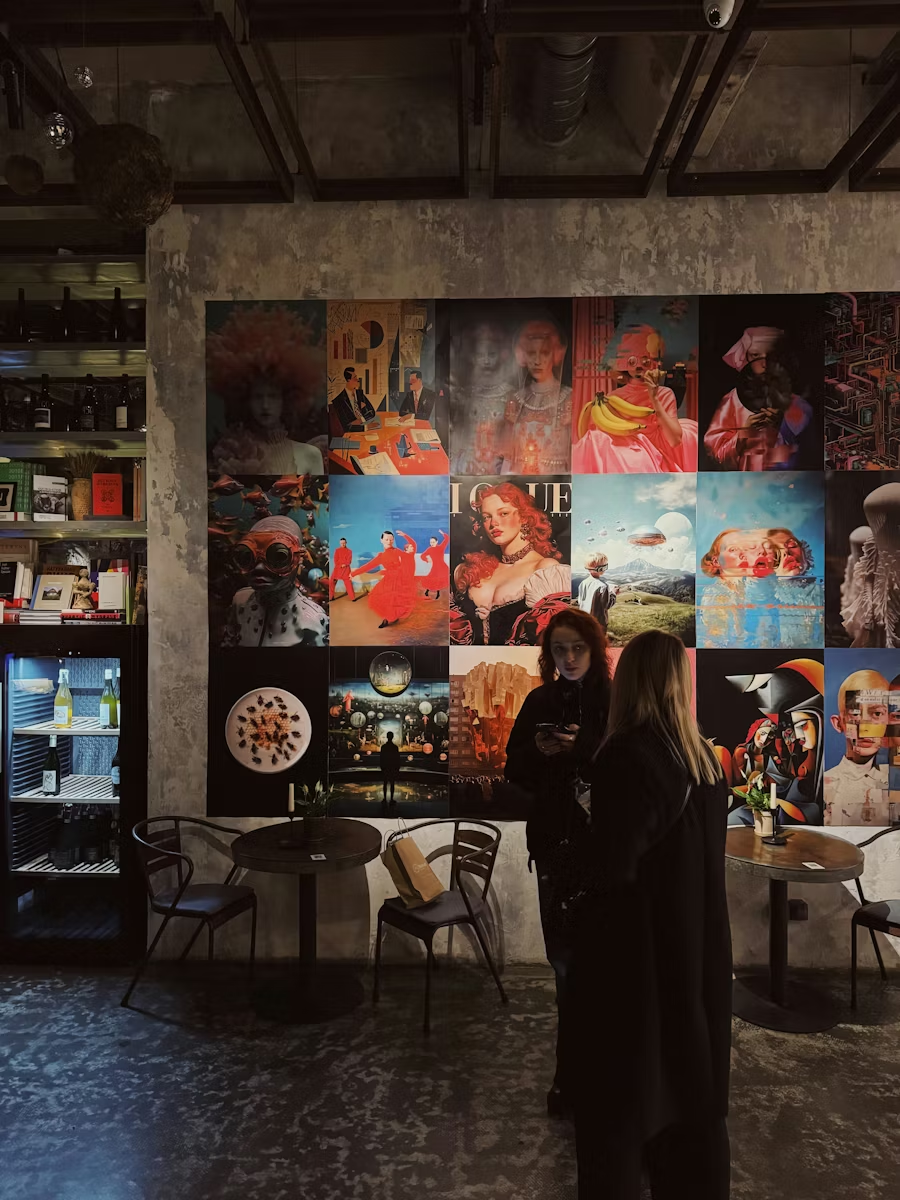
Art has always been a way to reveal something deeper about the human experience; a process through which beauty, meaning, and emotion enter the world around us. Yet, in today’s rapidly digitalised landscape, AI has begun to seep into design, often activated by just a few typed words, and creates a discussion in the design world on where this leaves artists.
Art has never been about efficiency alone. Its value lies in intention, reflection, and the consciousness behind its creation. When AI generates aesthetics, the viewer is often left without space for interpretation; there is no lived experience to analyze, no inner process to engage with, and no meaning to unfold. In response, many artists are resisting these developments, not only from an ethical standpoint, but also from a climate perspective, as they question the environmental cost of automated creativity.
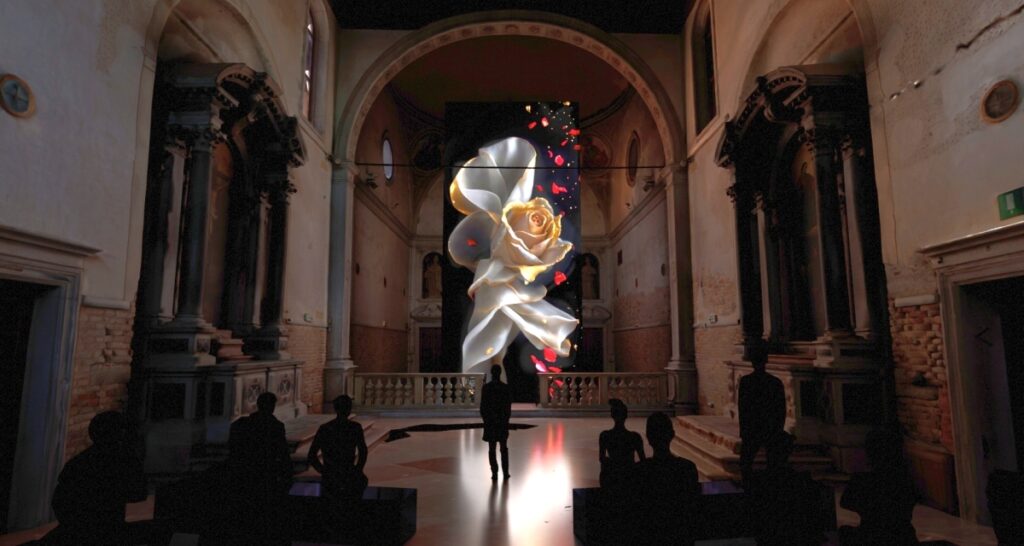
One artist who has embraced AI as its own medium is Memo Akten. They have created a series of AI installations are highlight AI as a conduit to art rather than the artist itself. Highlighting themes of environmental processes and the natural world, the immersive installations allow the audience to consider their perception of a non-natural world.
This is in direct opposition to many artists who have taken a strong stance against AI altogether. Problems such as reproductions of artworks and copyright issues are just a few obstacles artists now face. Artists who have been fighting back against their art being used without their consent are currently faced with no legal grounds to claim AI replicas of their work as their own.
In addition, the environmental concerns surrounding AI are a divisive topic and have left many with AI platforms, but where is the real environmental cost? The answer is not simple, with water consumption, carbon footprints, and exploitative data centers continuing to make global headlines. Despite the negatives being known, the demand for AI is expected to exponentially increase, and with limited regulation, the future of AI especially for artists is left with many unknowns.
While these downsides are significant and should be considered in the design world, it is not to say artists like Memo Akten should stop altogether because art is always in inherently resistant, and maybe these messages need to be seen to be understood.
“Because we too, see things not as they are, but as we are.”
Resisting the pull of the digitised world, The Garden of Earthly Worries stood for two years in Apeldoorn, the Netherlands, as a deliberate counterpoint to data-driven creativity. Inspired by Hieronymus Bosch’s The Garden of Earthly Delights, the installation translated symbolic imagery into physical confrontation, presenting four monumental sculptures that represent chemical compounds responsible for climate change. Positioned at the opposite end of the spectrum from AI as an artistic aid, the work insists on material presence over computational abstraction.
Installed within a 17th-century palace garden, the sculptures disrupt their surroundings through scale and colour. Rising three metres high and rendered in abrasive, unnatural hues, they dominate the landscape, shifting attention away from the garden itself. In doing so, the installation foregrounds the importance of sensory engagement, reminding us that the medium and site of an artwork are inseparable from its message, particularly in an era increasingly shaped by invisible systems and digital infrastructures.

As artificial intelligence becomes increasingly embedded in creative industries, the question is no longer whether artists should engage with it, but how. Rather than offering definitive answers, these practices create moments of pause—spaces where audiences are invited to confront their relationship with technology, nature, and authorship. In this sense, art remains a site of resistance and inquiry, capable of translating complex global issues into experiences that are felt, questioned, and remembered.
+All Images:
© Upsplash


