


New Sustainability Laws and Regulations for 2026
The EU and global regulatory bodies have made significant strides in sustainability and environmental regulation, introducing ambitious measures designed to empower consumers and hold industries accountable. As we approach 2026, society is reaching critical environmental thresholds, making this a decisive moment for change.
Through stronger regulatory frameworks and more informed consumer choices, the beauty, fashion, and design industries are being pushed to evolve toward systems that prioritise transparency, responsibility, and long-term impact. Luxiders has previously highlighted changes to new laws in fashion, and this article expands upon that topic to the beauty and design sphere as well.

New Sustainability Laws and Regulations in Beauty
Within the beauty sector, stricter regulations targeting harmful substances are set to come into force. France will ban cosmetic products containing PFAS, often referred to as “forever chemicals,” due to their persistence in the environment and links to serious health risks, including cancer and endocrine disruption. Once released, PFAS accumulate in waterways and soil, creating long-lasting environmental damage. This move reflects a growing international consensus, with other countries following suit, signalling a global shift in how beauty brands formulate products and assess ingredient safety.
In the United Kingdom, cosmetic regulations will also tighten from mid-2026. Products containing substances such as Enzacamene and certain carcinogenic, mutagenic, and reprotoxic (CMR) chemicals will be phased out, with a transition period extending to February 2027. Labelling requirements will become more stringent, particularly for products that release formaldehyde, ensuring clearer on-pack warnings for consumers. Together, these measures aim to create a safer beauty landscape while holding brands accountable for ingredient transparency and consumer protection.
New EU Sustainable Product Regulation
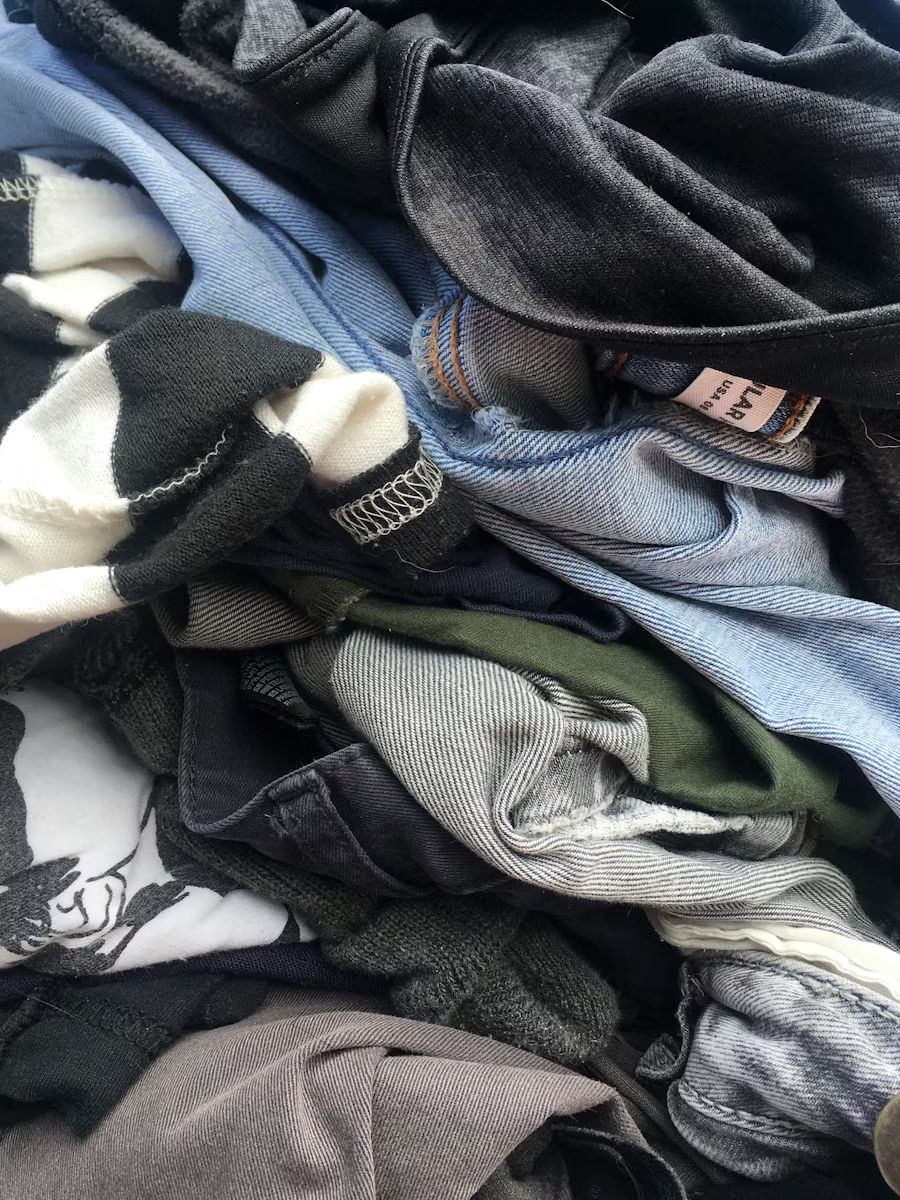
From 2026, the EU will prohibit brands from destroying unsold clothing and footwear, marking a decisive break from one of fashion’s most wasteful practices. Under the new rules, large companies must rethink overproduction and adopt circular solutions such as reuse, repair, resale, or donation. For an industry long built on excess, this regulation signals a deeper cultural shift: value must be embedded at the design stage, and waste can no longer be treated as an acceptable by-product of business.
For consumers, this may also bring practical changes. As brands adapt to tighter inventory controls, practices such as charging for online returns may become more common—highlighting the growing importance of mindful purchasing decisions in a more regulated fashion economy.
Regulations on Transparency and Greenwashing
By September 2026, EU consumers can expect far clearer sustainability communication, as new anti-greenwashing rules come fully into force. Vague or unsubstantiated environmental claims will be banned, and terms such as “green” or “net-zero” will only be permitted if supported by verifiable evidence. This legislation returns power to the consumer, enabling informed decisions based on facts rather than marketing language obscured by misdirection.
New Sustainability Laws and Regulations in Fashion
For the fashion and luxury sectors, 2026 marks a shift from voluntary sustainability commitments to enforceable standards. Regulations such as the Ecodesign for Sustainable Products Regulation will require garments and textiles to meet criteria around durability, repairability, and recyclability, while Digital Product Passports will introduce new levels of traceability across supply chains. Extended Producer Responsibility schemes will further hold brands accountable for the end-of-life impact of the products they place on the market. Together, these measures challenge fashion to slow down, design with intention, and align creativity with responsibility.
For emerging beauty, design, and fashion brands, understanding how these regulations touch every layer of the business is no longer optional. Integrating sustainability into supply chains and product development from the outset not only supports long-term compliance but also saves valuable time, resources, and investment as regulations tighten. The future is not waiting for companies unwilling to change, making it essential to keep consumers informed about how their choices and habits will be affected.
+All Images:
© Upsplash


