

Texworld 2026: Sustainability, Traceability And AI To Move Forward in Fashion Sourcing
From 2 to 4 February 2026, Texworld Apparel Sourcing Paris once again confirmed its role as one of the most influential global platforms for textile and apparel sourcing. With more than 1,100 exhibitors from 33 countries gathering at the Paris–Le Bourget Exhibition Centre, this 58th edition did more than showcase materials and manufacturing capabilities. It articulated a clear message: the future of fashion sourcing depends on traceability, circularity, and intelligent innovation. At the heart of this transformation stood the Econogy Tour and the Econogy Hub, two initiatives that translated sustainability from abstract commitment into concrete, operational reality.
Econogy Tour: Sustainability You Can Navigate, Not Just Declare
In an industry often overwhelmed by sustainability claims, the Econogy Tour offered something rare: clarity. Designed as a curated sourcing route, it guided press, experts and visitors through exhibitors and projects aligned with environmental and social criteria, based on the Econogy framework developed by Messe Frankfurt.
Rather than isolating sustainability in a niche corner, the Econogy Tour integrated responsible innovation directly into the sourcing logic of the fair. Buyers could move seamlessly from certified materials to circular components, from low-impact processes to scalable industrial solutions. Sustainability was not framed as an add-on but as a competitive advantage.
This approach reflects a broader shift in the market. Brands are no longer asking whether sustainability is desirable. They are asking whether it is reliable, traceable, and compatible with real-world production timelines. The Econogy Tour tryed to answer to this need.
Brands are no longer asking whether sustainability is desirable. They are asking whether it is reliable, traceable, and compatible with real-world production timelines. The Econogy Tour tryed to answer to this need.
Econogy Hub: Where Circularity Becomes Experiential
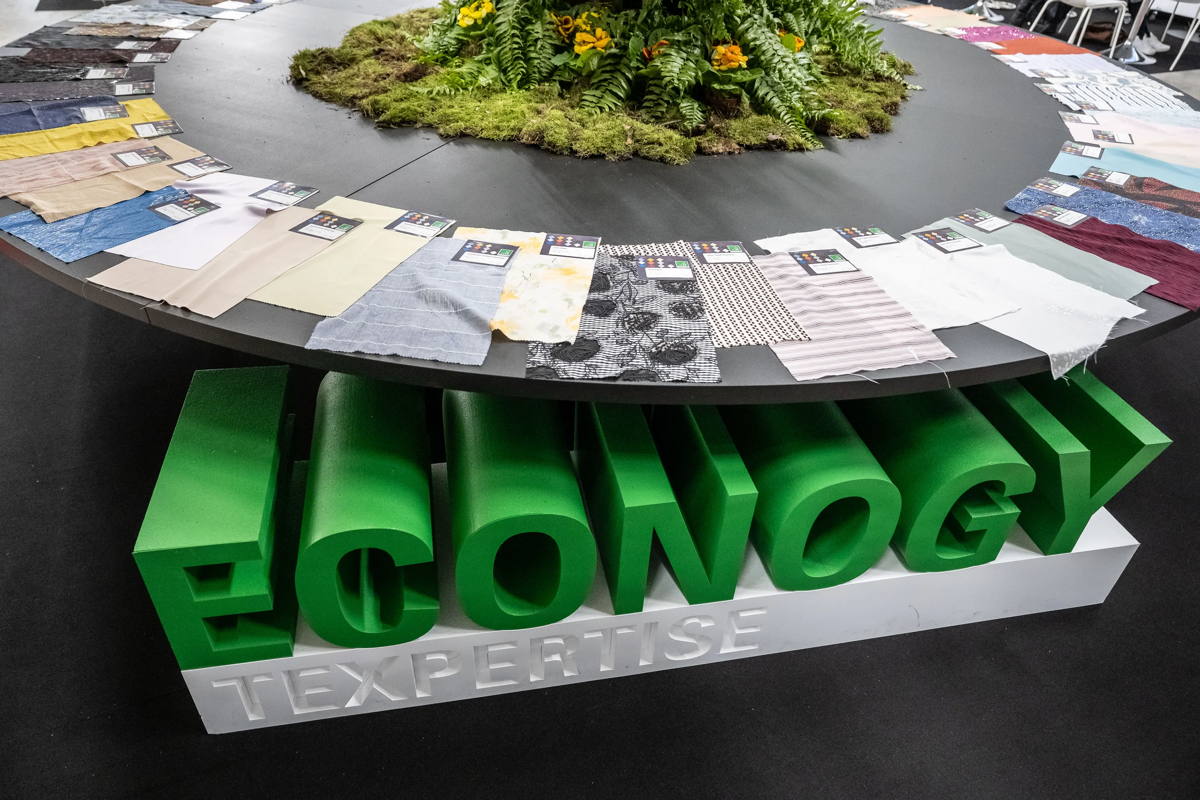
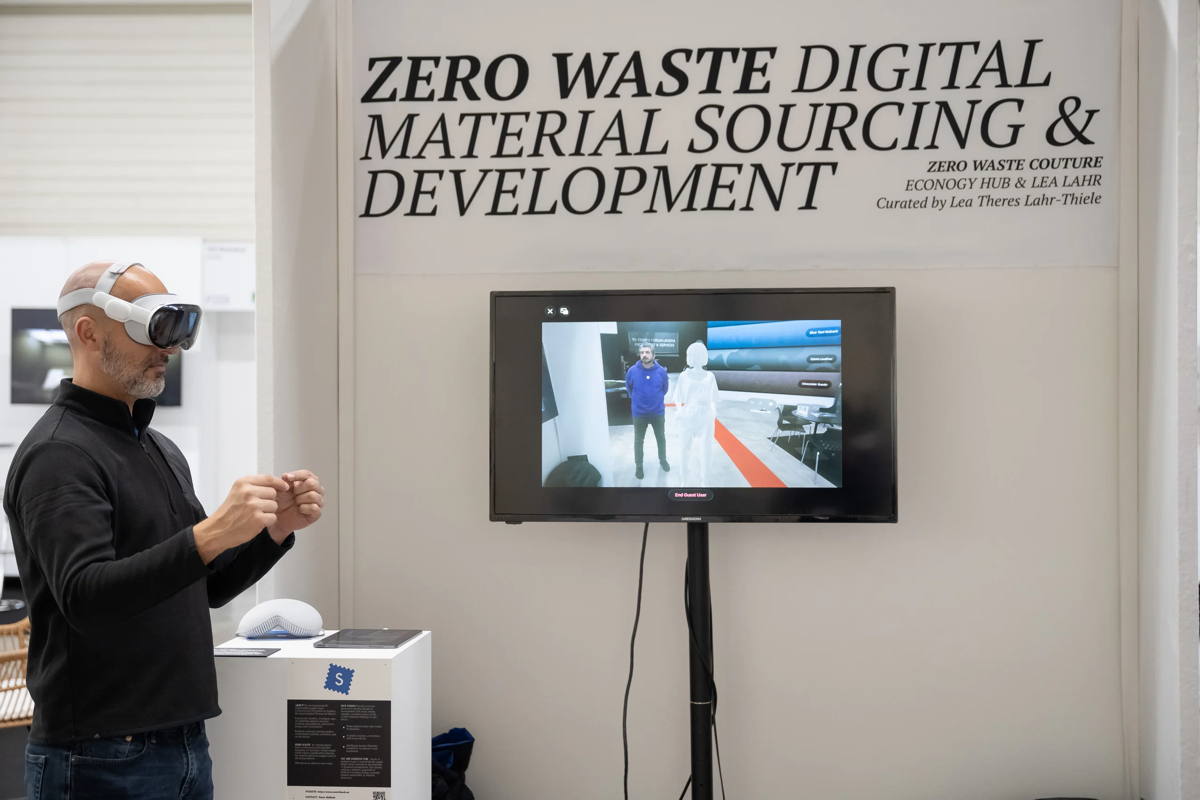
At the centre of the fair, the Econogy Hub functioned as both a knowledge space and a sensory experience. It brought together innovative companies, institutions, and creative projects addressing the full textile value chain, from fibre development to end-of-life strategies.
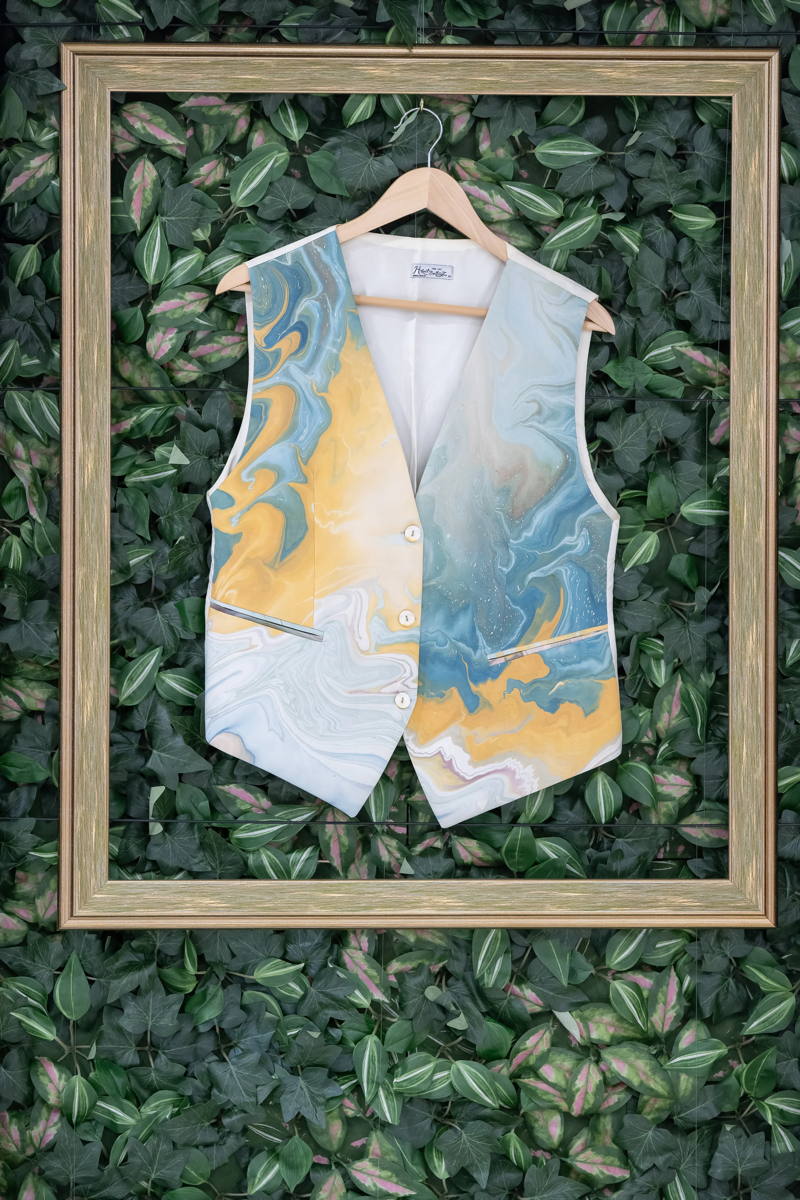
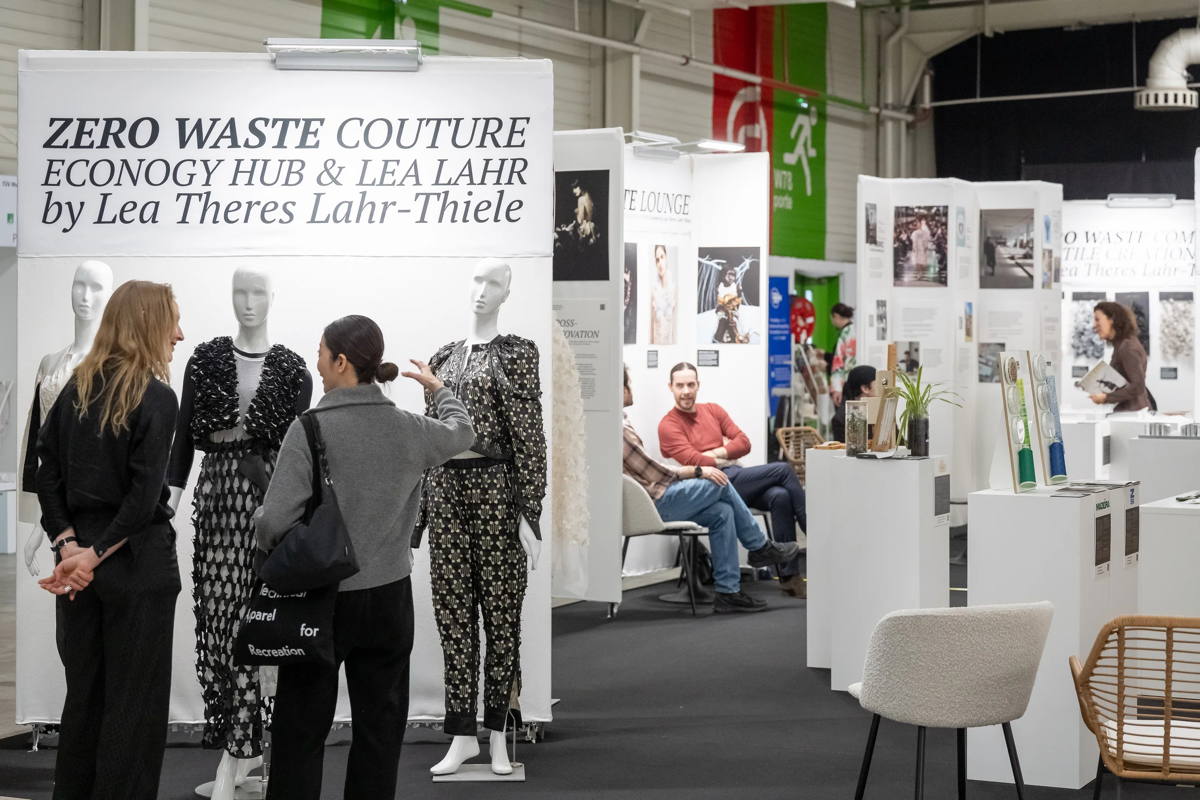
The highlight was Zero Waste Couture, an exhibition curated by designer Lea Theres Lahr-Thiele. Rather than focusing on finished garments, the exhibition explored what comes before the product: material research, design systems, components, and open processes. Zero waste here was presented as a development strategy. The exhibition was structured around three key zones: material transformation, circular components, and knowledge for systemic change. Bio-based innovations, recycled and circular fibres, redesigned fasteners, and open-source platforms coexisted in a narrative that deliberately avoided greenwashing.
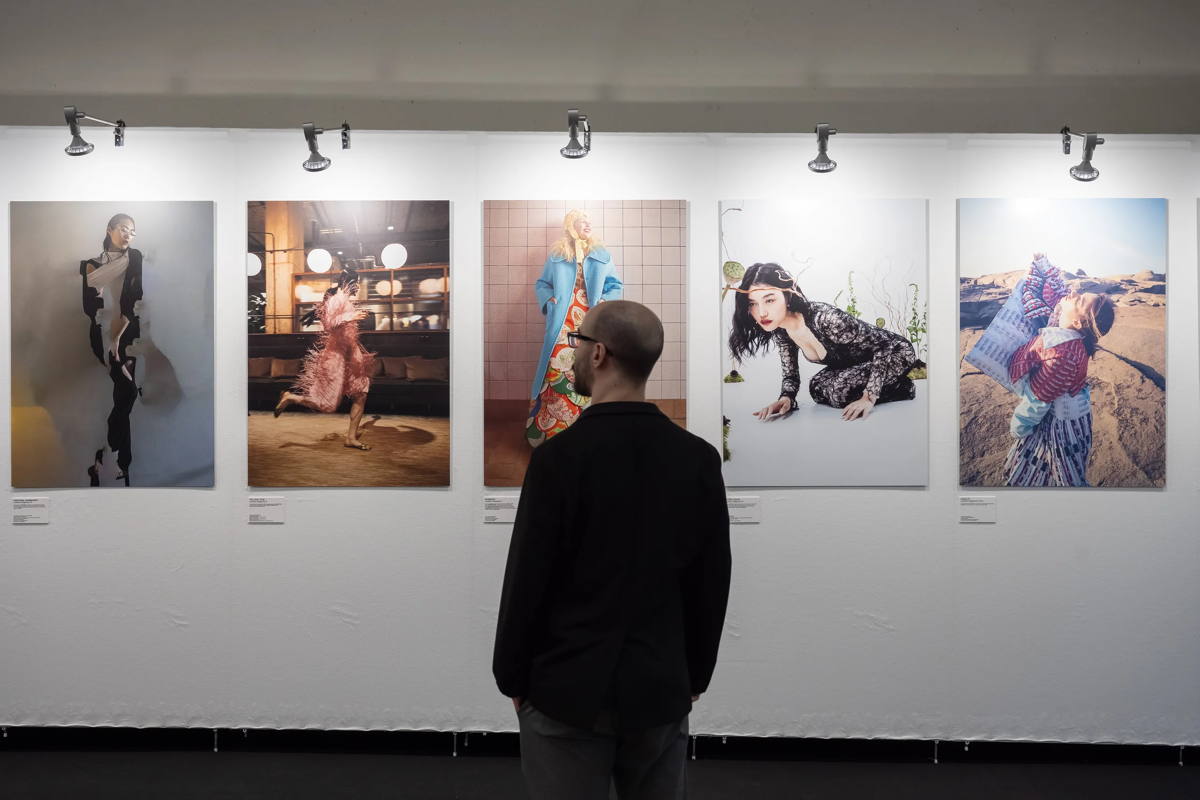
Transparency was central. Adding to the experience, live embroidery laboratories merged craftsmanship and technology, allowing visitors to witness sustainable threads being transformed in real time. The presence of Luxiders Magazine within the Econogy Hub, with its Visions of Transformation photo exhibition, further reinforced the cultural dimension of circular fashion, linking innovation to storytelling and visual impact.
Rather than focusing on finished garments, the exhibition Zero Waste Couture, curated by designer Lea Theres Lahr-Thiele, explored what comes before the product: material research, design systems, components, and open processes.
Traceability and Circularity Move to the Centre
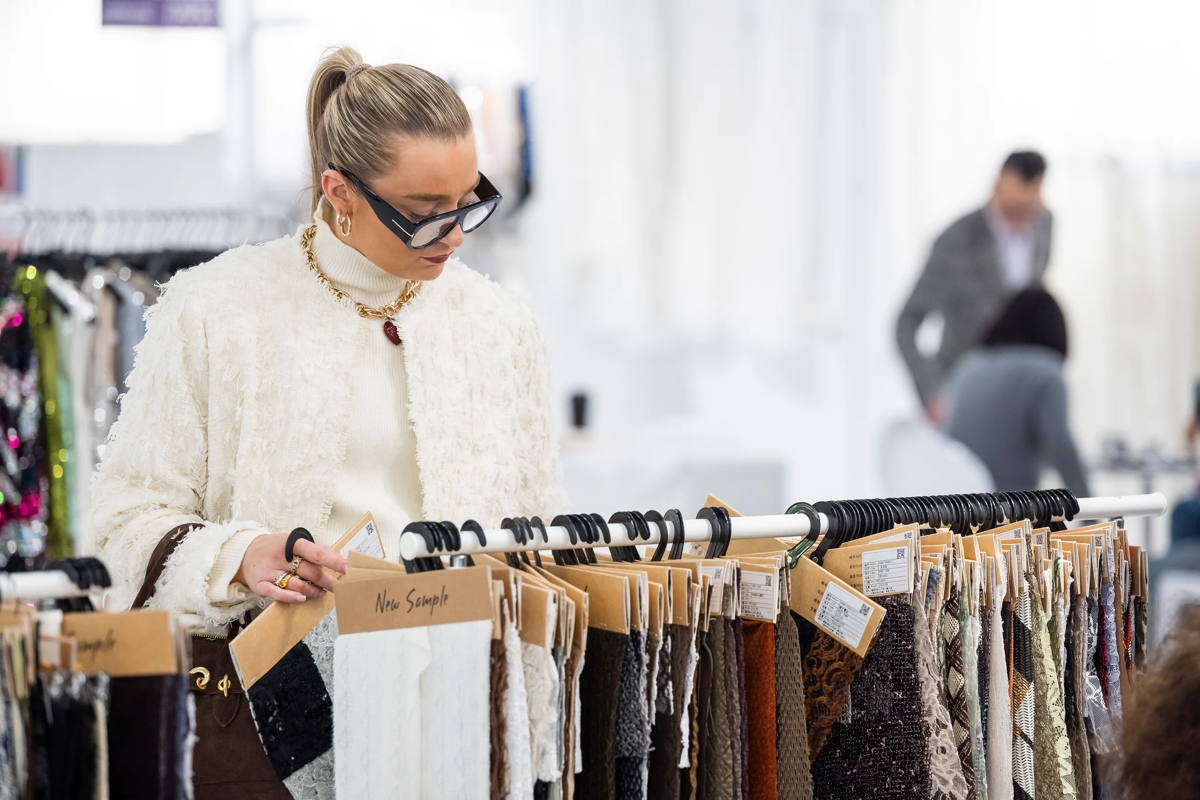
Across the halls, traceability and circularity were no longer treated as emerging concepts. They were structural pillars. Exhibitors increasingly are presenting transparent supply chains, digital tracking solutions, and material passports designed to meet both regulatory pressure and consumer expectations.
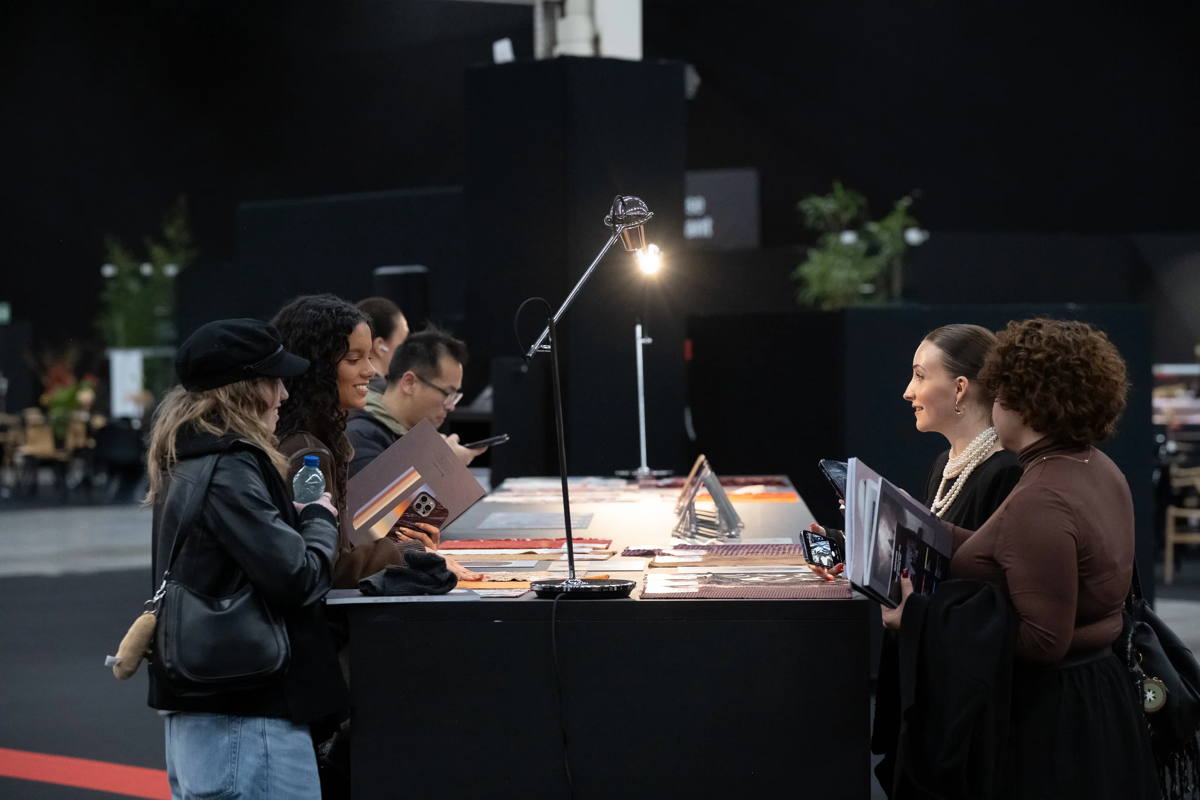
Near sourcing gained further momentum, with an expanded Near Sourcing Hub bringing together manufacturers from Portugal, Türkiye, Bulgaria, Greece, Morocco, and beyond. Combined with hybrid physical-digital sourcing via platforms such as Foursource, buyers could scan QR codes, access digital collections, and initiate quotations efficiently.
Circularity also extended into components and accessories. Small elements, often overlooked, were highlighted for their disproportionate impact on recyclability and durability. Buttons, linings, embroidery threads, and finishing processes became part of the sustainability conversation, signalling a more mature and detailed understanding of circular design.
Artificial Intelligence: Tool, Catalyst, and Ethical Question
One of the most debated themes of Texworld Paris 2026 was artificial intelligence. Under the broad umbrella of digitalisation, AI was explored not as a futuristic promise but as a present reality reshaping creative and industrial workflows.
Conferences on assisted and augmented creation examined how AI tools are already supporting pattern development, trend analysis, prototyping, and material optimisation. For designers and sourcing teams, AI offers speed, precision, and new forms of experimentation. For brands, it promises better demand forecasting and reduced waste. Yet Texworld did not shy away from the complexities. Several round tables addressed the ethical and environmental implications of AI, including energy consumption, data transparency, and the risk of homogenised creativity. The underlying question was not whether AI should be used, but how it can be integrated responsibly into a sector already under ecological pressure.
In this context, AI was framed as a lever. Powerful, but only effective when guided by human intention, cultural awareness, and clear sustainability goals. Belvis Soler, Art Director at Luxiders Magazine, participated in the talk “Assisted creation, augmented creation? How AI and digitalisation are reshaping creative practices, workflows, and professions, raising both opportunities and ethical questions”, with other experts such as Maria Vinagre, Creative Director, Fashion Stylist & AI Creative; Maggie Mattioni, Senior Designer; Elisabetta Alicino, Creative Director, Brand Designer, Gen-ai expert; Diane Wallinger, Fashion designer and the Head of Customer Success at Fermat; and Eva Ohayon, Co-founder at Rosa Futures and Lecturer at IFM.
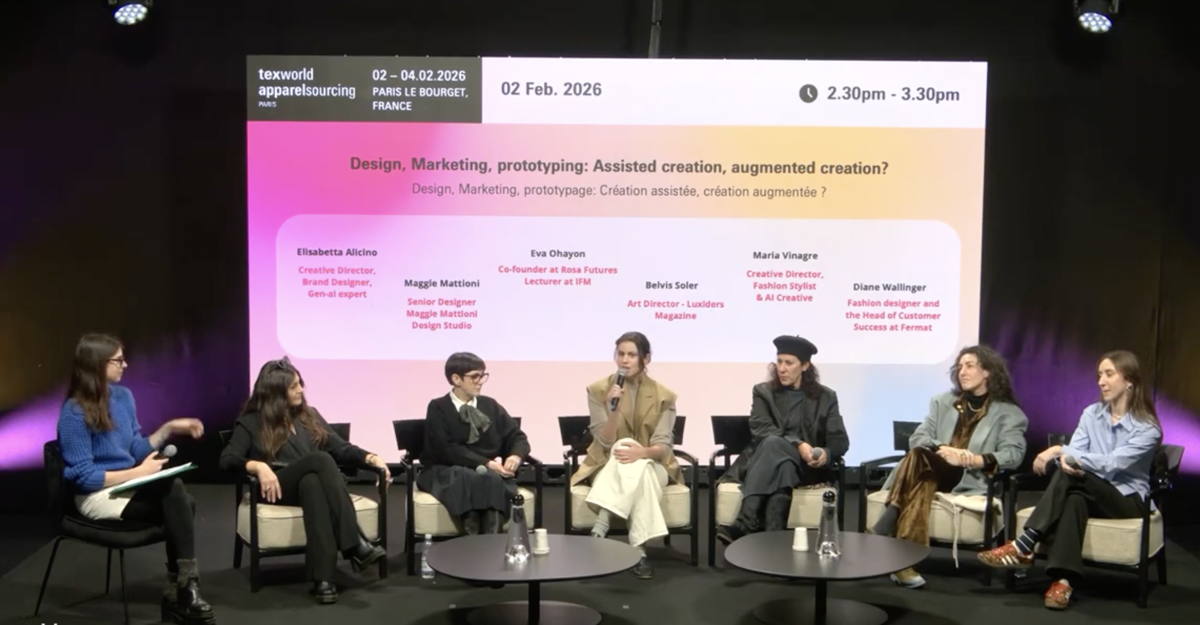
The conclusions of the round table opened a deeper and more nuanced debate around artificial intelligence and its real role within the fashion and creative industries. Is AI truly mature enough to deliver projects of high quality in communication and marketing, where narrative sensitivity, cultural context, and emotional intelligence remain essential? What gaps does artificial intelligence still create, even as it promises efficiency and optimisation?
The discussion also questioned the ethical narrative surrounding AI. How ethical is artificial intelligence in practice, and why is it so often described as ethical when its environmental, social, and cultural impacts are still largely unmeasured and insufficiently regulated? Rather than accepting AI as inherently responsible, the conversation called for a more critical and transparent evaluation of its consequences.
At the same time, the round table highlighted areas where artificial intelligence can genuinely operate in a more ethical and sustainable way. Applications such as early-stage design exploration, and prototyping were identified as spaces where AI can reduce waste, accelerate experimentation, and support decision-making without replacing human creativity. In these contexts, AI becomes not a substitute for creative vision, but a tool that, when used consciously, can contribute to more efficient and responsible processes.
All Images:
@ Courtesy by Texworld Apparel Sourcing Paris


