
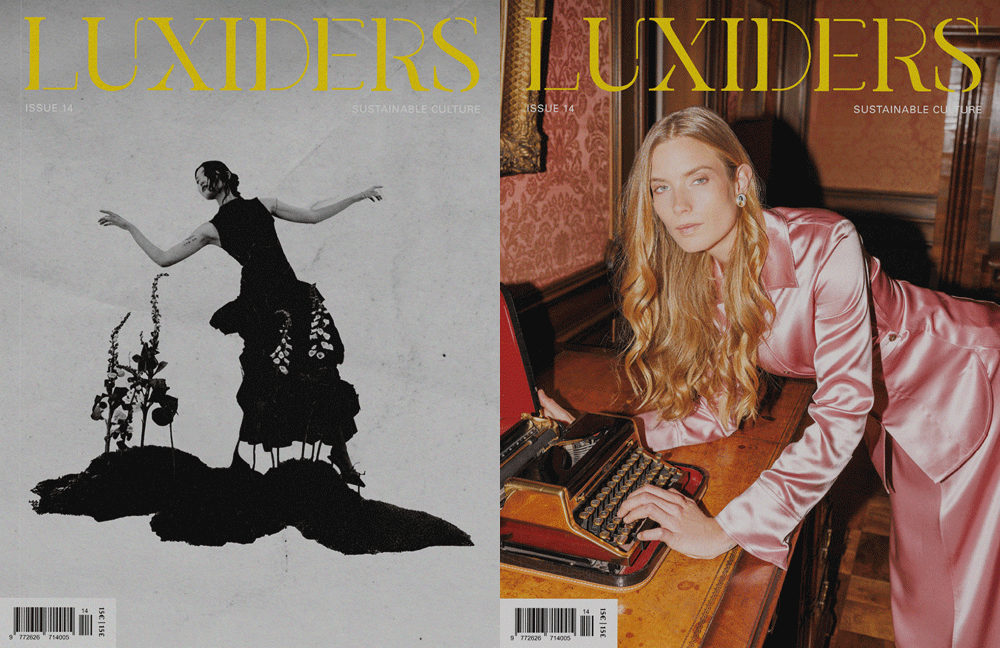

Human Touch: The Berlin-Based Brand That Humanizes Fashion
Human Touch is a relatively young brand to break out in the Berlin fashion scene. Though this brand’s aspirations go beyond only fashion. In this interview, founders –Juliet Seger and Christina Albrecht – spoke to us about the origins of their brand, current projects and their mission: To highlight the human touch essential in garment-making.
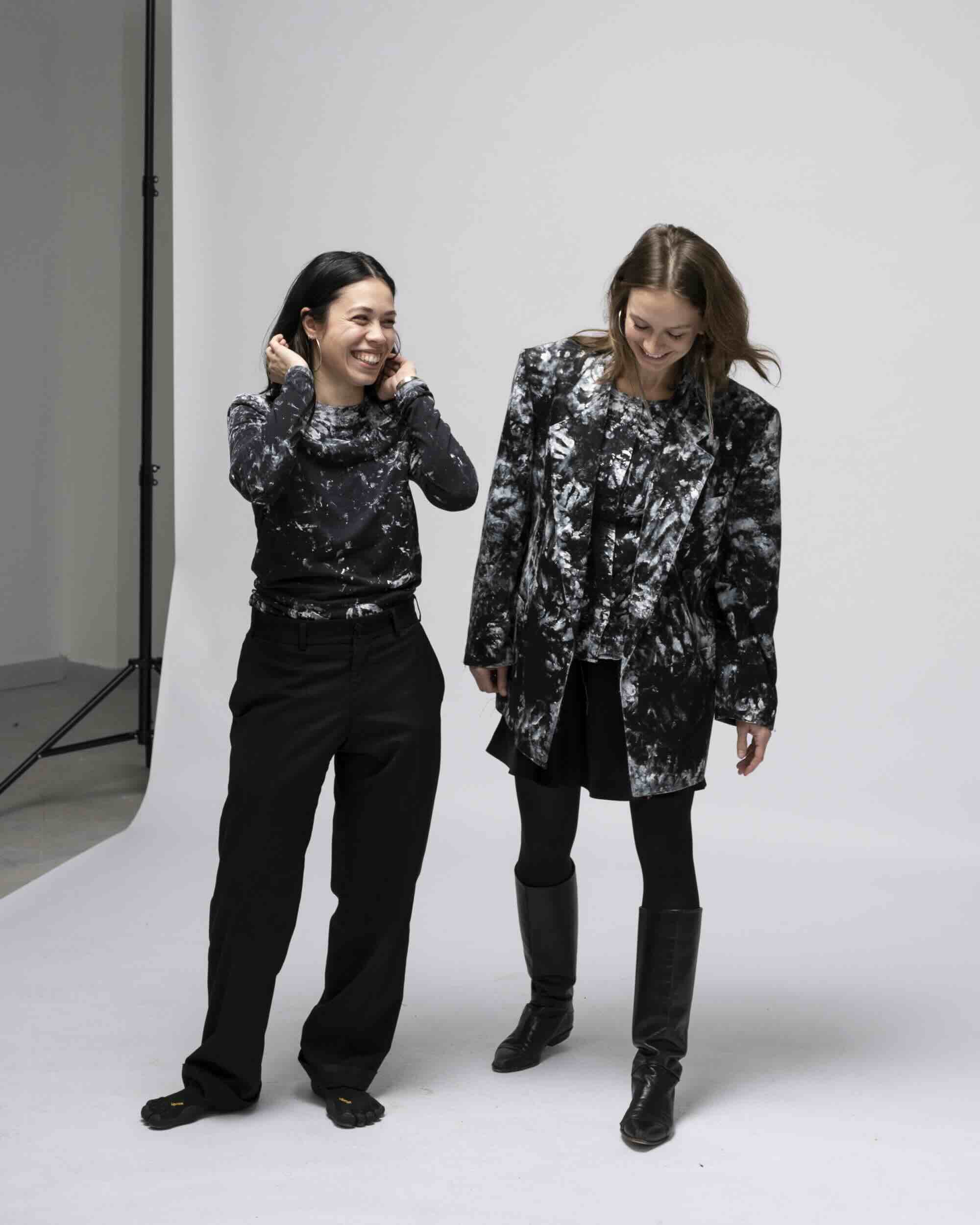
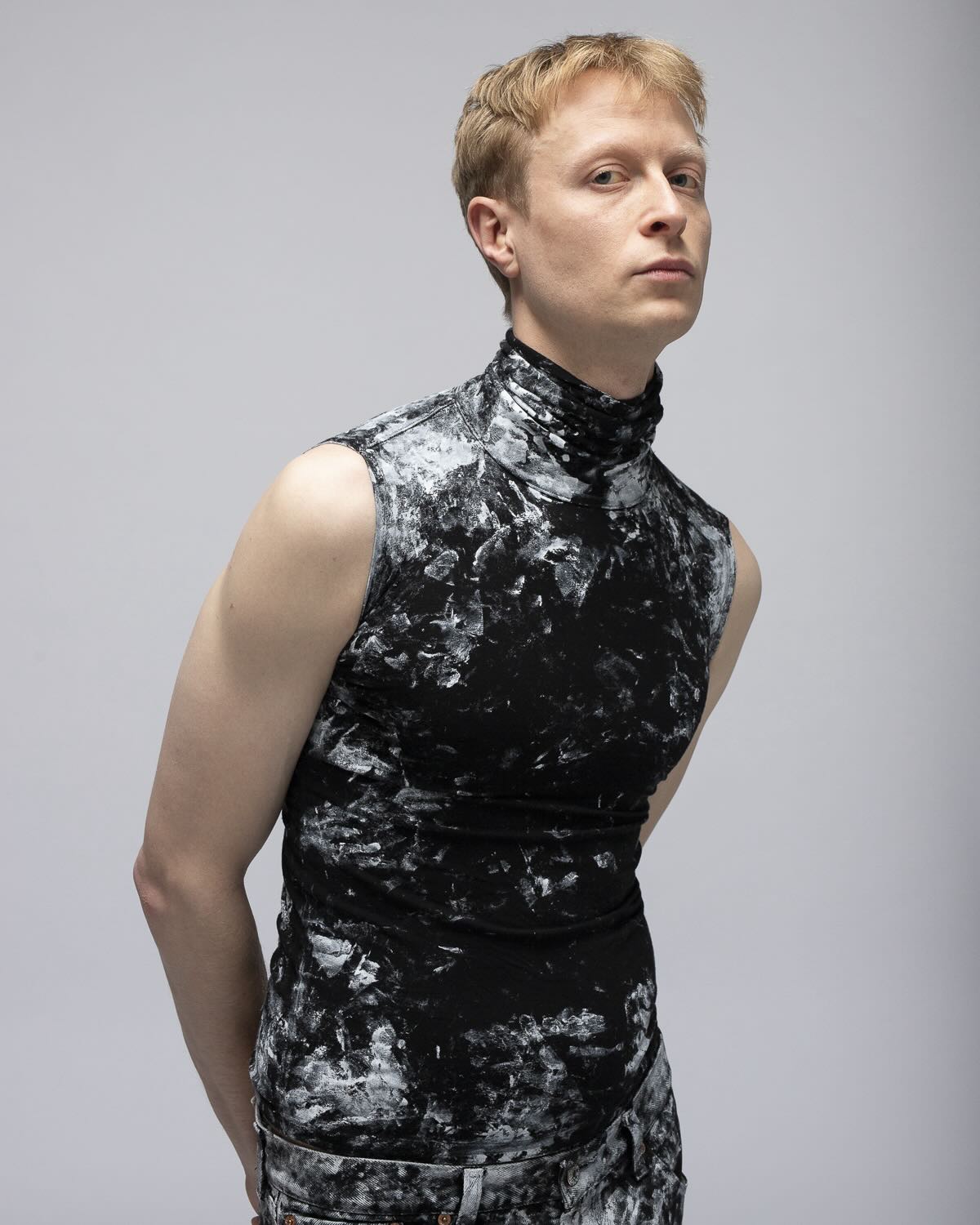
“To envision the invisible” reads the website of Human Touch, a new Berlin-based brand founded by designers Juliet Seger and Christina Albrecht. The brand showcases clothing collections adorned with distinctive and unique patterns. At first glance, these markings may appear to be purely aesthetic design choices. However, upon closer inspection, one discovers that they are actually fingerprints.
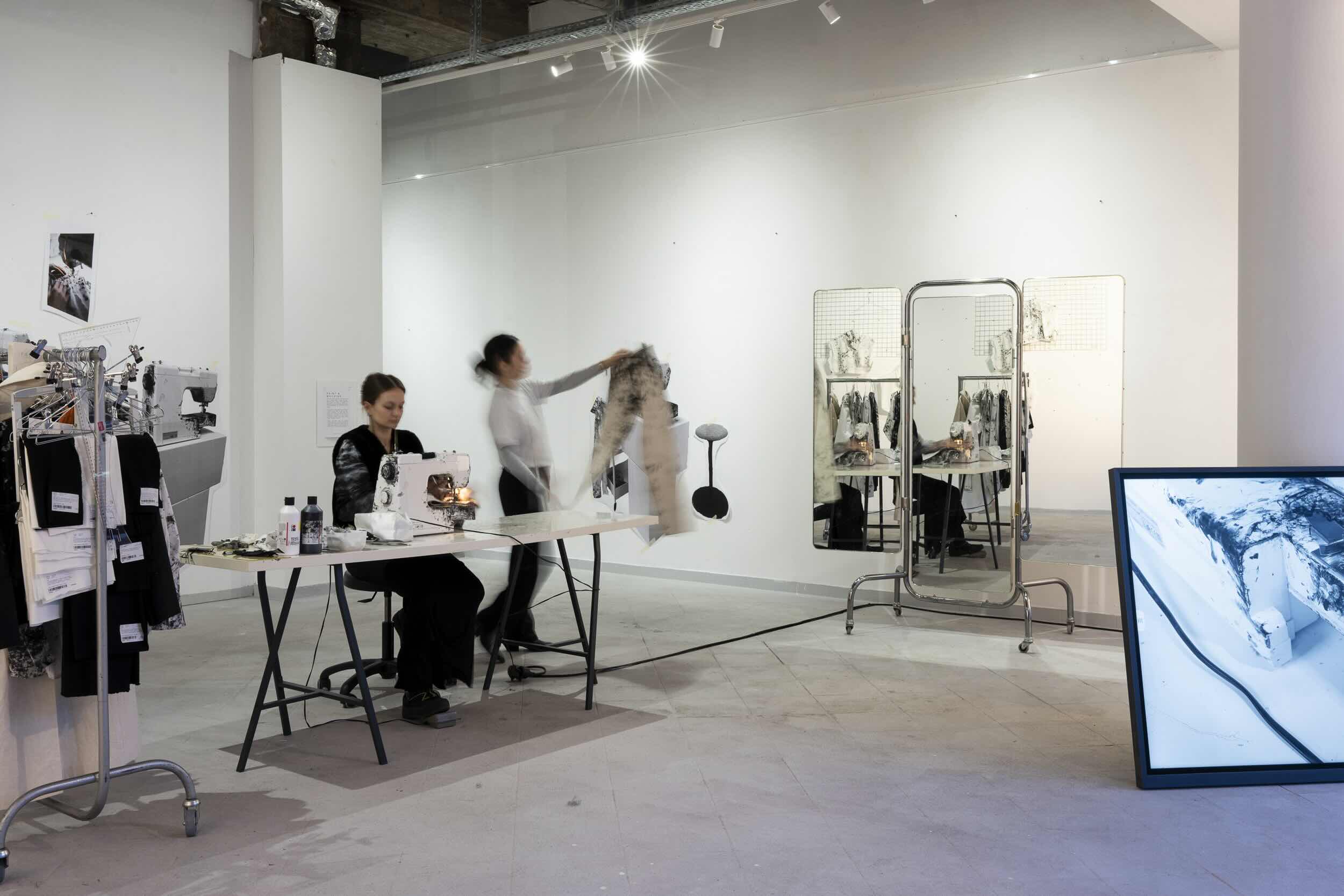
Seger uses a creative technique called “paint-sewing” in which she dips her fingers into paint before and during the process of sewing the articles of clothing. Each item hence showcases a unique pattern, created by the handling process. The markings are dense along the sections of the clothing that are complex to stitch and less marked where it is otherwise. Becoming an effective map of the labor and energy that goes into making the clothes we wear and cherish. The textile paint is fixed to the fiber allowing for regular wear.
In the age of late capitalism, the gulf between producer and consumer grows ever-larger. It is particularly pronounced in the fashion industry, where time and time we hear of sweatshops in third world countries or the use of labor. The fashion industry has been transformed to an unrelenting machine that spews out more and more goods, while reducing its human labor to mere cogs. Despite advancements in technology, the fashion industry still relies heavily on human labor and yet, most of the time we do not realize that our clothes are made by people. Human Touch seeks to address this rift between the essential garment workers and the every-day wearer of clothing.
The brand initially launched during Berlin Fashion Week 2023, where they showcased their collection as well as live performances demonstrating the paint-sewing technique. All of Human Touch’s clothing are made-to-order. In addition, they have an upcycled collection available known as Human Touch Remedy, which comprises second-hand clothing that have been adjusted and repaired.
Human Touch also recently participated in the SS2024 Berlin Fashion Week and we had the pleasure of interviewing them afterwards.
Can you tell us about the origin of your brand? How did the idea for Human touch first develop?
During her academic research, Juliet developed what became our signature paint-sewing technique as a way to visualize the handling by human hands of every piece of clothing worldwide.
For a couple of years, HUMAN TOUCH existed as a project. Last year, we joined forces to develop the concept further, to build it into a fashion brand but also to lay the foundation with which to harvest the activist potential that the HUMAN TOUCH idea incorporates. We want to build something with a net positive outcome while also celebrating fashion with all its fun, edgy and arty facets.
If you could describe the essence of Human Touch in three words, what would they be?
Poignant, wearable, optimistic.
Human Touch is not only known for its “human touch” but for its distinctive aesthetic. How would you describe the brand’s style, and what influences this aesthetic?
Form follows concept, you could say… To highlight our one-of-a-kind print technique we focus on clear silhouettes and neutral colours. All our pieces are made to be worn in daily life,everyday and by every body type. In our collection we’re striving to offer easy-to-wear, diverse silhouettes that can serve as a wearable canvas for our message.
And since Juliet and I enjoy experimenting with fashion since our teenage years, even before, our personal influences from pop- and subculture can be found in our designs.
What role does storytelling play in your brand, and how do you convey your narratives through your collections?
We continuously reference the story we remain most fascinated with: The value that each garment holds, inherited from the human hands who made it. This is the unshakeable core of all our collections.
Can you walk us through the design process?
For us, it all starts with the materials. Our fabrics come from wholesale suppliers and dead stock traders, some of which even sell entire rolls of high quality textiles that had trickled down from big production chains. We’re focused on natural fibers and regenerative cellulose and put an emphasis on traceability where possible. For this we’re asking: Does this wholesaler disclose their supply chain? If not fully, then to which level? Are they aiming for it? If they don’t disclose the information directly, can we request it anyway?
We aim to avoid fibre mixes and synthetics, especially elastane when it doesn’t serve functionality. It’s an ongoing quest to find textiles that suit our requirements, but what seems like a limitation makes it easier for us to navigate the masses of options.
Then, with a diverse audience in mind, we develop trans-seasonal designs by starting the in-house sampling process. As trained tailors and pattern makers, we test fabric behaviour, optimise fits and decide on finishing techniques ourselves.
As the placement of our distinct HUMAN TOUCH print is determined by the placement of seams, there is always this exciting moment when all our designs come to life. The look of each finished piece is unique and, despite our team’s experience, to some extent even a surprise. This is the beauty of our process.
You have priorly stated that Human Touch will always be a concept first and fashion brand second. What are some challenges you have faced in identifying as a concept/activist brand in the fashion industry?
There is an interesting dynamic in the fashion industry: Artisanal designs are elevated to pieces of art, but one is also – traditionally – expected to scale quantities. This is taken for granted and seen as a metric of success. However, it is usually made possible through outsourcing the manufacturing and taking a margin on this “cheap, low-skilled labour”. Within HUMAN TOUCH we want to investigate an alternative to this common business model. Manufacturing in-house and by our immediate team is therefore something we want to hold on to, not just because we enjoy it but also as a means of research-through-practice of how things can be done differently.
“The value that each garment holds, inherited from the human hands who made it. This is the unshakeable core of all our collections.”
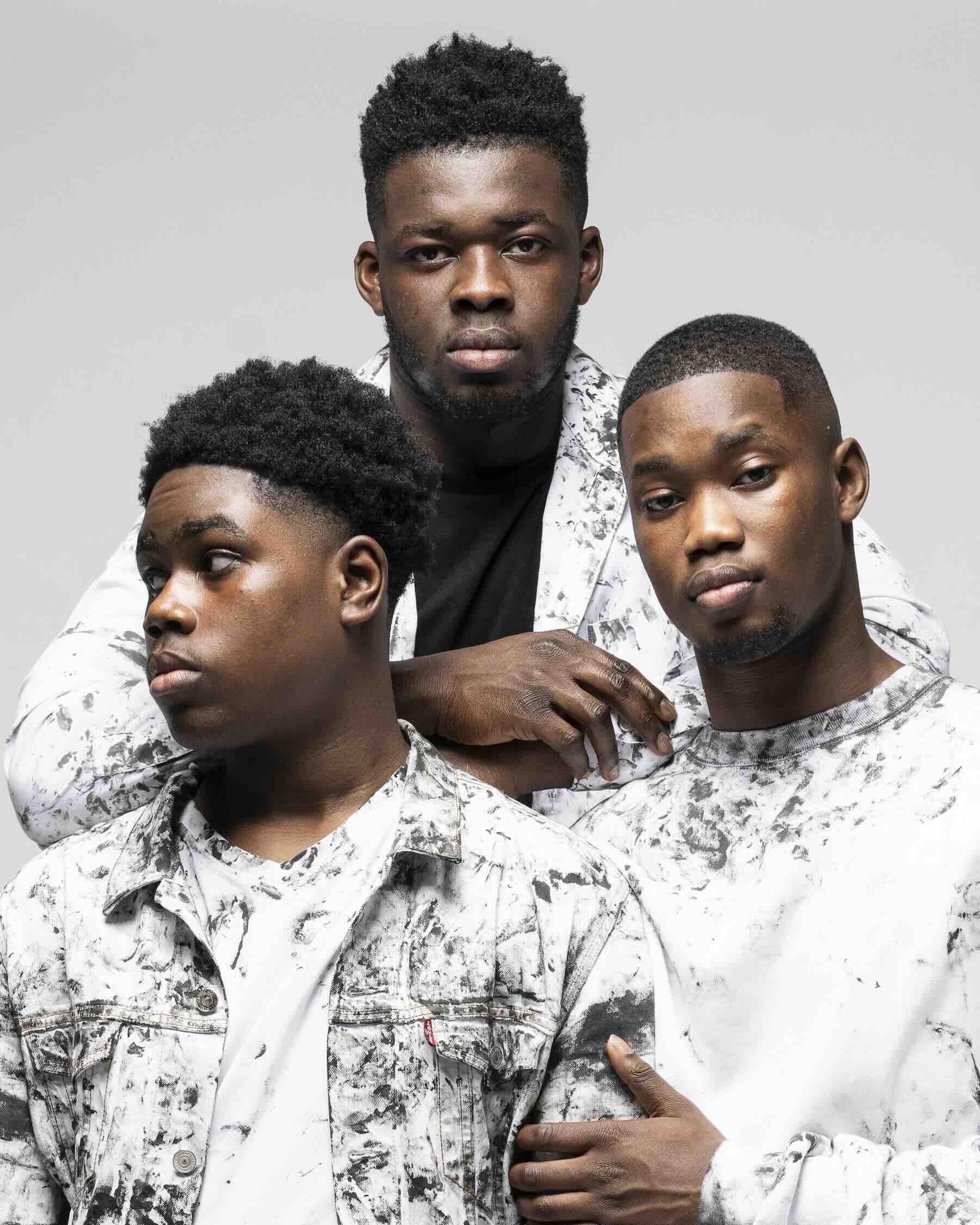
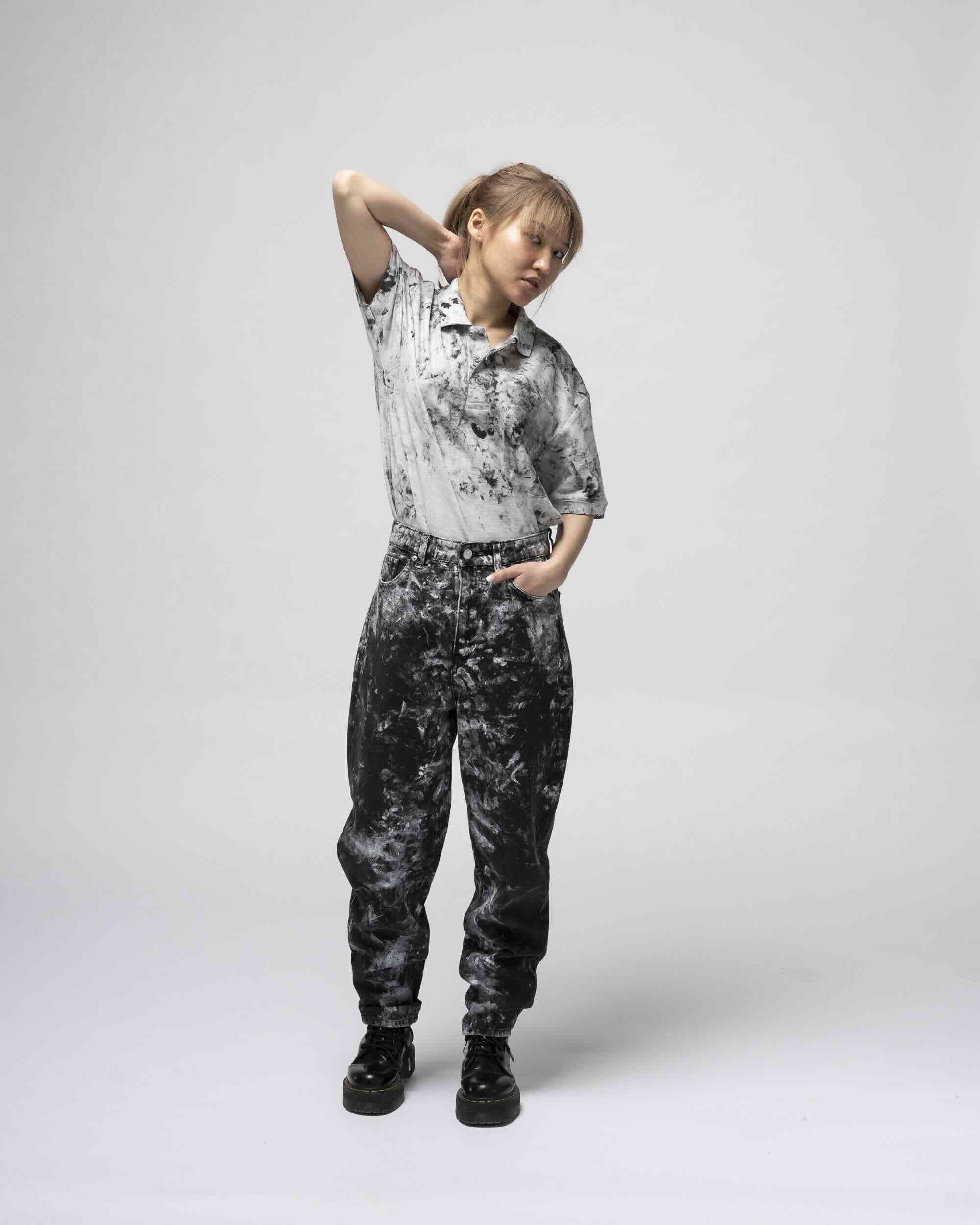

Your business model is very interesting. You have done workshops, performances and pop-ups. Why did you opt for such a structure? And wWhich of these projects do you find most impactful in delivering the core message of your brand?
Having worked in fashion for years, we are both motivated by a pursuit to not reproduce negative dynamics. Fashion is our aesthetic playground as well as our platform for empirical research on how to re-shape our beloved industry.
Educating our audience about garment workers’ perspective plays a big role in this. One goal is to equip our customers with knowledge and empathy, so they relate to clothing based on its value, i.e. material resources + intellectual and manual labour, instead of its usually misleading price or brand tag.
This fluid set-up enables us to try out different approaches in order to connect with our audience and also to deepen our own knowledge. What kind of entanglement between concept and product works best to get our point across? Which customer wants to wear the idea and which is the aesthetic? How can we continue with our concept without repeating ourselves? Etc.
Our brand operates out of an optimistic state of mind and we have many more ideas for how to express HUMAN TOUCH as a fashion brand while also expanding the activist potential.
Your line Human Touch Remedy is based on upcycling vintage or second-hand clothes. To what extent do you think upcycling in fashion design could contribute to creating a more sustainable industry?
Exactly, we source pieces that speak to our aesthetic and re-sew the seams to make the original human touch visible. These pieces can be produced more quickly, which is how we can offer them at a more accessible price point, thus making the concept more accessible as well. It also feels like paying homage to the skilled person that originally manufactured the item. There are several drops per year featuring one-of-a-kind pieces that we mainly sell via our webshop or pop-ups.
According to our taste we also update the fit or finish. It’s a fun, hands-on process and also a way to further educate ourselves on sewing techniques and finishing, and a reminder for us on how much human skill and labour goes into the making of each piece of clothing.
With this in mind, the ever growing amount of clothing waste on our planet is truly mind-boggling. The effects are long term environmental and economical damage for countries in the global south like Chile, Kenya, Ghana, Indonesia, and more.
Compared to this, upcycling fashion can sometimes feel like a drop in the ocean.
However, we remind ourselves that customer demands can successfully change supply, and we are still in the beginning stage of this change.
Upcycling fashion needs to become a mainstream product, so each brand and designer committed to this is vital in reaching this point.
We find the line from your website “To envision the invisible” particularly striking, because “invisible” is an apt word to describe the exploited, the under-appreciated and the underpaid communities in the global fashion industry. In your opinion, who are “the invisible” that you wish to represent through your work?
So happy that it resonates…Thank you! There is a very clear bias that cheap clothing means made badly. This causality is not true, as manufacturers as well as tailors worldwide are specialists in their field. These experts are usually the source of knowledge around clothing construction for even big commercial brands who place production orders at these factories.
Despite this, powerful fashion enterprises are able to push the prices, and ultimately skilled garment workers are the ones to carry the financial burden.
HUMAN TOUCH aims to visualise the often overlooked or “merely pitied” group of garment workers. We want to show that sewing is not a “low-skilled” task – it is so much more. With its dependency on human agency and the incredibly large amount of people sewing globally, sewing technology should be recognized as a social technology, one that is vital in examining and valuing as a lever in creating a better fashion system.
You participated in Berlin fashion week for the second time since launching. What did you have in store this time?
We showcased our newest work at our friends’s brand, which is called Souvenir and is another activist brand that’s very interesting to look into).
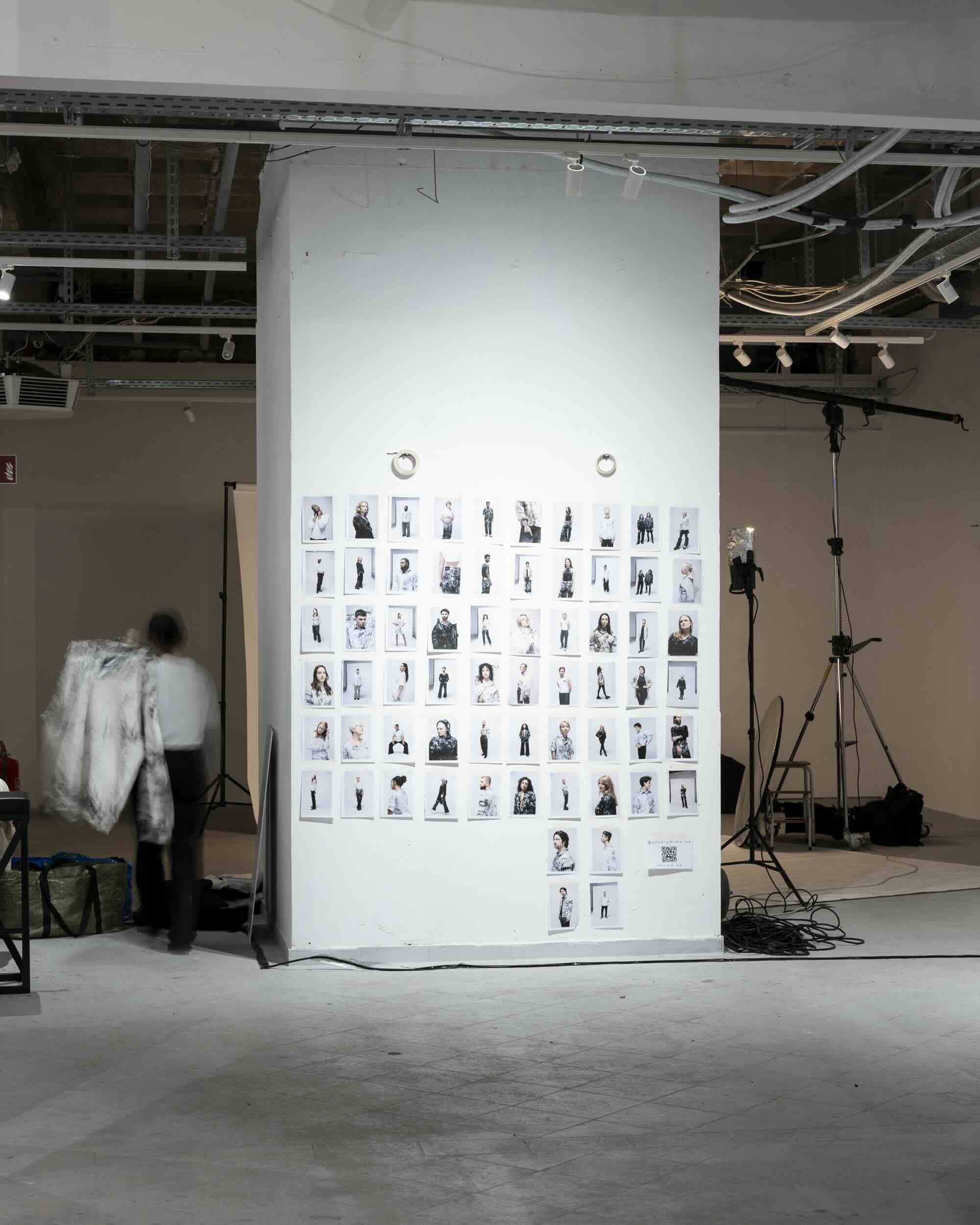
Focusing on our local community we hosted a more intimate event with live sewing and on-location model shoots to share what is usually taking place behind-the-scenes. We also presented our unreleased HUMAN TOUCH remedy pieces as an exclusive preview and worked on our upcoming collection, to share our work in progress with our community.
How do you see the future of fashion evolving, and what role do you envision Human Touch playing in that future?
That’s a big and fun question! There was a time where it felt like nothing could be done about the negative sides of fashion. In the last decade, fast fashion has still been on the rise, but also: more sustainable and innovative ideas have been given some space, credibility, and were approached with more seriousness.
We see some really great initiatives and brands on the rise, educating and making the industry better. In the search for alternatives, small-scale concepts are heard and not immediately dismissed as “they won’t work anyways”. Designers are allowed to try out new business practices and develop them further, even after having put them out. An increased sensibility for the ambivalences of sustainability in fashion allow us to say “I don’t have all the answers, but I believe in idea X because of Y and will give it a go.” Of course there is cancel-culture and green-hushing (brands hiding their sustainability initiatives to not be accused of green-washing). But our impression is: If you can claim authenticity of your motivation, there’s a refreshingly welcoming audience out there. (That being said, there may always be a bunch of people who vent their general emotions through non-constructive negative comments on social media.)
What advice would you give to aspiring fashion designers looking to make their mark in the industry?
Dream freely and then back that up with research.
Think collaboratively.
Find out how you stay motivated and find/ create a job that offers this.


