


Bangladesh Garment Workers’ Protests: Wages, Rights and Fashion Brands | Meaningful Change to the Fashion Industry?
What separates the recent garment workers’ protests in Bangladesh from previous protests? In interviews with Marjella Bronkhorst from the Clean Clothes Campaign and Pearl Pandya from Armed Conflict Location and Event Data, we discuss why garment workers are struggling to get a living wage, what happens to the protesters, the responsibility of international fashion brands and the impact or change these protests are having on the global fashion industry.
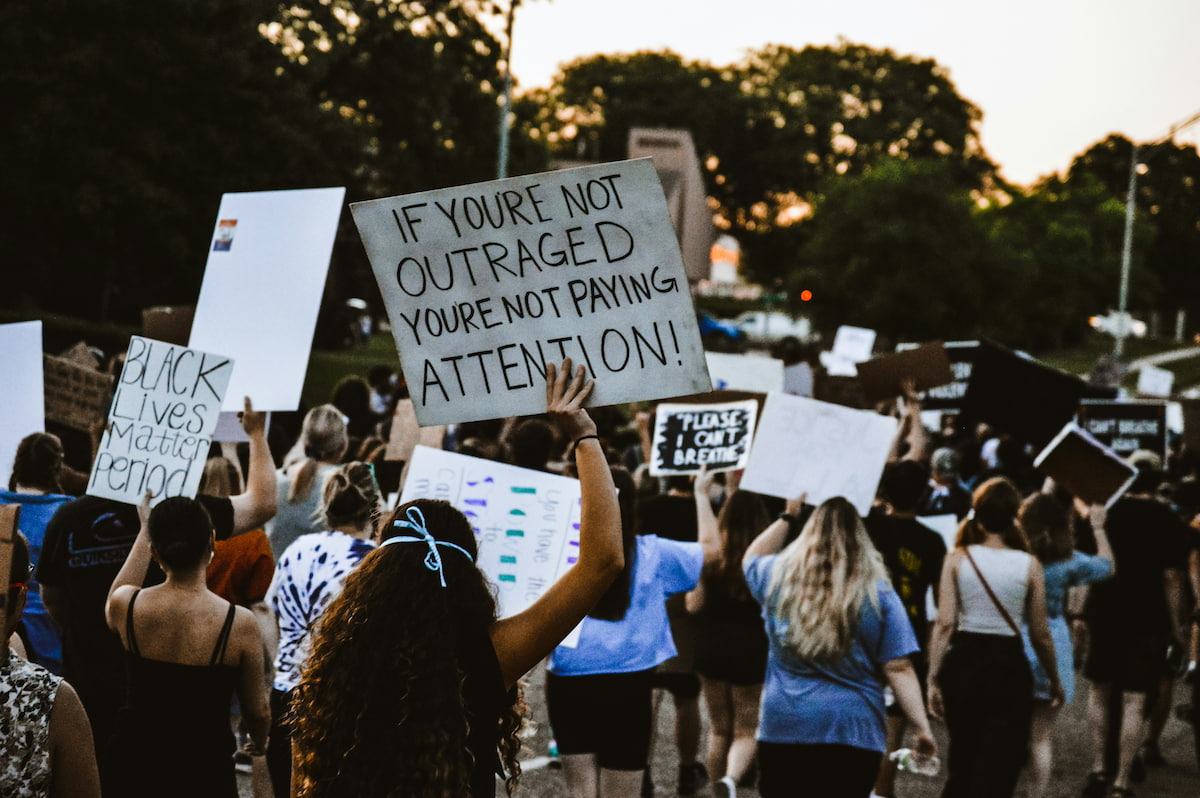
On 31 October, Bangladeshi garment workers began to protest for a higher wage to meet the rising cost of living. According to ACLED data, there have been over 200 demonstrations since the last wage increase took effect in December 2023. Workers have taken to the streets for a minimum wage of Tk 32,000.
The Clean Clothes Campaign (CCC) is a network dedicated to improving the working conditions of garment workers, operating in over 45 countries. Marjella Bronkhorst is the Lobby and Advocacy Co-ordinator at the CCC.
The Armed Conflict Location Event Data (ACLED) is an organisation that collects and maps data about conflict. Pearl Pandya is the senior analyst of South Asia.
Current Protests: Key Differences and Wages
When asked what sets these protests apart from previous demonstrations, both Bronkhorst and Pandya agree that workers are more demanding this time – even after the development of a Wage Board on 1 November, workers are in their third week of protesting. Bronkhorst discusses this as workers needing a “meaningful outcome that addresses the reality of their daily lives” and because of the “growing international solidarity. Trade unions and workers in Europe have started publicly supporting the demands of their colleagues in Bangladesh, including through protests outside stores of major international brands such as H&M and Zara.” The world is truly done with the fashion industry treating garment workers poorly. Similarly, Pandya argues that the protests continue “because the review process is more protracted this time, but it also reflects ongoing instability in Bangladesh since 2024’s political upheaval – ACLED data show that rioting in the country remains above average compared to before.”
According to Bronkhorst, a recent CCC report found that the majority of garment workers in Bangladesh were “unable to make ends meet and numerous wage and working time violations were reported.” 20% of workers report that they were being paid less than the minimum wage for their grade and 13% report experiencing illegal wage deductions. Bronkhorst adds “This is not simply a matter of individual factories failing to comply with the law. It is also a structural problem in the global fashion industry’s business model. International brands exert enormous pressure on suppliers through the prices they pay, short lead times and purchasing practices. Factory owners, in turn, use the pressure to argue that they cannot afford substantial wage increases without losing orders. Our research also exposes the limitations of social auditing: 76% of workers said they did not feel able to speak freely to factory inspectors or auditors about their wages and working conditions. As long as the prices paid by brands do not allow suppliers to pay decent wages, and workers cannot safely raise concerns or organise collectively, low wages will remain a structural feature of the industry rather than an isolated problem.” By contrast, Pandya argues that Bangladeshi workers struggle to get a liveable wage because Bangladesh’s garment industry’s “competitive edge comes from the relatively low cost of its workforce. In the more immediate term, economic headwinds over the last few years – including the Iran war and resultant increase in the cost of living, and the political unrest in Bangladesh in 2024, which forced the closure of hundreds of garment factories – have also destabilised the industry. Local manufacturers argue that they operate on slim margins, and cannot increase wages on their own without a corresponding increase in purchasing volumes or prices from international brands.” It seems that international fashion brands have a much larger role to play in helping Bangladeshi workers than they seem to.
Responsibility and Minimum Wage
When asked who is ultimately responsible for improving wages (factories, governments or international fashion brands), both Bronkhorst and Pandya agree that all three play a role, but international fashion brands play an important part in this issue. Bronkhorst explains that “Responsibility lies with all three, but international fashion brands have a much greater responsibility than they often acknowledge. The government is responsible for setting and enforcing an adequate minimum wage and protecting workers’ fundamental rights. Factory owners are responsible for paying workers correctly, respecting labour law and ensuring safe working conditions. But we cannot ignore the role of international fashion brands. What brands pay for their orders from garment factories is a crucial factor in determining what factory owners can afford to pay their workers. Every time Bangladesh negotiates a new minimum wage, we hear the same argument from employers and the industry: wages cannot increase too much because Bangladesh will lose its competitive advantage and international brands will move their orders elsewhere. This argument effectively turns workers’ poverty into a competitive advantage for the industry. That is why international brands must speak out now in support of the Tk32,000 demand and, crucially, commit to absorbing the increased labour costs through their purchasing practices. They must ensure that suppliers have the financial capacity to implement the new minimum wage without passing the costs on to workers or threatening to relocate production. If brands genuinely believe that workers deserve decent wages, they must demonstrate that commitment in the prices they pay and the way they do business.” Pandya highlights that “Garment worker pay in Bangladesh is among the lowest globally. The crux of their grievance is that their pay is not able to meet living costs. Here, the government’s role in providing broader cost of living support, as well as instituting mechanisms through which workers’ pay rises with inflation in between the wage review cycles – currently with a term of three years – becomes important.” Why are most international fashion brands not speaking up about the role they play?
Bronkhorst explains the consequences of Bangladeshi workers’ low wages and how workers are not being given the bare minimum in terms of pay: “Workers are demanding a minimum wage of Tk 32,000. According to Times of Bangladesh, industry sources say employers are considering an offer of only Tk 14,000–15,000. The inadequacy of such an offer becomes clear when looking at the realities workers face. Clean Clothes Campaign’s own research among 1,094 garment workers found that 89% cannot cover their families’ basic expenses with their current wages. Workers are already forced to borrow money, rely on family support or take on additional overtime just to make ends meet. The demand for Tk 32,000 is not an arbitrary figure. It is the proposal put forward by workers’ representatives on the Minimum Wage Board, who have already taken the industry’s financial circumstances into account. They have pointed out that a family of four needs Tk 45,000–60,000 a month to cover essential expenses such as housing, healthcare and education. Against this backdrop, an offer of just Tk 14,000–15,000 would fall far short of what workers need to secure a decent standard of living. Rather than addressing workers’ legitimate demands, it would only deepen the sense of injustice and add fuel to an already volatile situation.”
Brands Taking Action, Protesting Consequences and Structural Changes
What international brands have actually taken concrete action for Bangladeshi workers? According to Bronkhorst, “Italian outdoor company Oberalp publicly expressed support for the demand for a minimum wage of Tk 32,000 per month. The company also stated that it intends to continue sourcing from Bangladesh and has no plans to reduce its sourcing activities following a wage increase. They remain thus far the only brand. This is an important statement because one of the recurring arguments against substantial wage increases is that international buyers will simply move their orders to other countries. However, public support for the wage demand is only a first step. What we need now is a clear commitment from brands to absorb the increased labour costs through their purchasing prices and practices, rather than leaving suppliers and workers to bear the financial consequences. We are calling on the major international buyers sourcing from Bangladesh to publicly support the Tk 32,000 demand and demonstrate how they will ensure that the new wage levels can actually be implemented.” Why have very few brands spoken out? Are they afraid of losing money for themselves rather than giving garment workers minimum wages?
Workers who participate in protests “face serious risks of violence, arrest, intimidation and retaliation.” according to Bronkhorst. “These tactics have a chilling effect on workers’ fundamental right to freedom of association and collective bargaining. When workers risk losing their jobs, their income or even their lives simply for demanding a wage they can live on, it becomes extremely difficult to exercise those rights. This is precisely why international solidarity and pressure on brands are so important. Brands cannot claim to support decent wages while remaining silent when the workers demanding those wages face violence and repression.”
Pandya highlights that ACLED has records of “34 demonstrations in Bangladesh between 31 October, when the movement really escalated, to 13 November. Of these, police have forcibly intervened in 23 demonstrations. All but one also involved violence on the part of the workers as well. Along with that, several trade union leaders have been arrested. Beyond the protests themselves, workers’ participating in the protests have also reportedly been arbitrarily dismissed and blacklisted, which hinders their employment in other garment factories. Blacklisting has formally been banned, but workers allege that the practice continues. At the moment, some owners have also cited the unrest as a reason to close factories indefinitely under a labour law provision which allows them to withhold pay while the factories stay shut.” If workers are still protesting even with these severe consequences, it is clear how much workers need this pay increase.
Can these movements lead to structural changes in the fashion industry? “Yes,” says Bronkhorst, “but only if the demands of workers in Bangladesh are translated into changes that go beyond a one-off increase in the minimum wage. A higher minimum wage is an important first step, but it will not solve the underlying problem if international brands continue to use purchasing practices that put downward pressure on wages and production costs. Structural change requires brands to take responsibility for the economic conditions under which their clothes are produced. This means paying prices that allow suppliers to pay living wages, ensuring that wage increases are genuinely passed on to workers, committing to long-term sourcing relationships and ending purchasing practices that undermine labour rights. It also requires governments to enforce labour protections and guarantee workers’ freedom to organise, without fear of violence, dismissal or criminal prosecution. The current protests offer an important opportunity to challenge the assumption that Bangladesh must compete internationally through cheap labour. A competitive garment industry should not depend on workers being unable to afford food, housing, healthcare and education for their families.” Pandya highlights what is required after the wages are set to make meaningful change – “Even after the wages are updated, as they will be, due diligence needs to be undertaken to ensure that these are actually being paid to workers, as per their current classification, and labour activists are not being penalised. Having said that, in 2023, several big brands including H&M and Next adjusted their pricing in order to reflect the updated monthly minimum wages.”
If H&M and Next could update their prices in 2023, why can’t these brands update their prices now? Is profit really more important than thousands of people having a liveable minimum wage?
Highlight Image:
@ Niloy Biswas via Unsplash


