


ESPR: The Ban on the Destruction of Unsold Clothes and How Brands Can Get Around It
With the introduction of the ESPR, large brands in the EU are prohibited from destroying unsold clothes, accessories or footwear. This law is supposed to encourage reuse, repair and circularity. Before the introduction of the ESPR, there were companies’ that had recently been accused of destroying their unsold stock. Will these companies’ find loopholes in the ESPR to destroy their unsold clothing? What are the issues facing fabric recycling and waste management systems? Many environmental organisations have pointed out flaws in the new legislation, and that the law doesn’t address the underlying problem of clothing overproduction.
What is the ESPR?
The Ecodesign for Sustainable Products Regulation was brought into effect on 19 July 2026. Under this law, large businesses must keep clothes in use by selling them at discounted prices, donating them to charities or enterprises, or preparing them for reuse (repair, refurbishing or remanufacturing). These brands are only allowed to destroy unsold clothing under certain circumstances, including if the product is unsafe, damaged, or rejected by the charities. Currently, the law only applies to businesses classified as large (more than or 250 employees, with an annual turnover of more than €50 million). The ESPR is set to apply to medium-sized companies’ (fewer than 250 employees, with an annual turnover of or less than €50 million) in 2030. According to GreenStitch, micro and small enterprises (less than 50 employees and an annual turnover of €10 million or less) are indefinitely exempt from the ban.
Even if brands don’t destroy their unsold goods, they must prove it by disclosing the following on their website: the number and weight of unsold products discarded per year, the reasons for discarding them and the proportion sent for reuse, recycling or disposal. The Digital Product Passport is the tool being used to enforce these rules. According to the European Commission, the passport will store all the relevant information about the product’s sustainability, origin, materials and reparability. By 2027, almost every garment sold in the EU will likely require a digital product passport. The ESPR also enforces minimum requirements for fabric strength and requires products to be designed for ‘high-purity sorting’ in recycling.
Recent Investigations: Clothing Brands and Unsold Clothing
What recent investigations have revealed about brands destroying unsold clothing, accessories or footwear? In 2023, Swedish journalists from Aftonbladet attached 10 trackers to clothing in H&M’s Garment Collecting Program, which ended up in landfills in Benin and Northern India. Rather than being recycled into new garments, the clothes were sent to countries where “they risk being dumped or burned uncontrolled.” In response, H&M replied “The H&M Group is categorically against clothing becoming waste and it goes completely against our work to create a more circular fashion industry. We know that there are still challenges related to the collection and recycling of clothing and textiles, but we also see that more scalable solutions in textile recycling are being developed, which is very positive. The H&M Group is actively working on the issue and is also investing in such solutions.”
In a 2024 investigation, journalists from Aftonbladet returned five clothing products from Shein with AirTags inside the clothing. Of these, three were sent to Iquique, Chile – a city overflowing with second-hand garments. According to the report, importers burn up to 40,000 tonnes of clothing annually in the surrounding Atacama Desert. Prior to the publication, Aftonbladet asked Shein questions regarding the review. Shein responded that “Returned Shein-branded products undergo a series of strict quality checks, QC. Once they have passed the QC process, these products are put back in stock and sold again. In Europe, approximately 90 percent of our returns are repackaged and put back into our warehouse system for sale to customers. Shein also has initiatives to handle products that do not pass QC.” It is strange that they claimed that 90% of their products were put back into their warehouse when 60% of the investigated products ended up in landfills outside of Europe, with a high chance of being burnt.
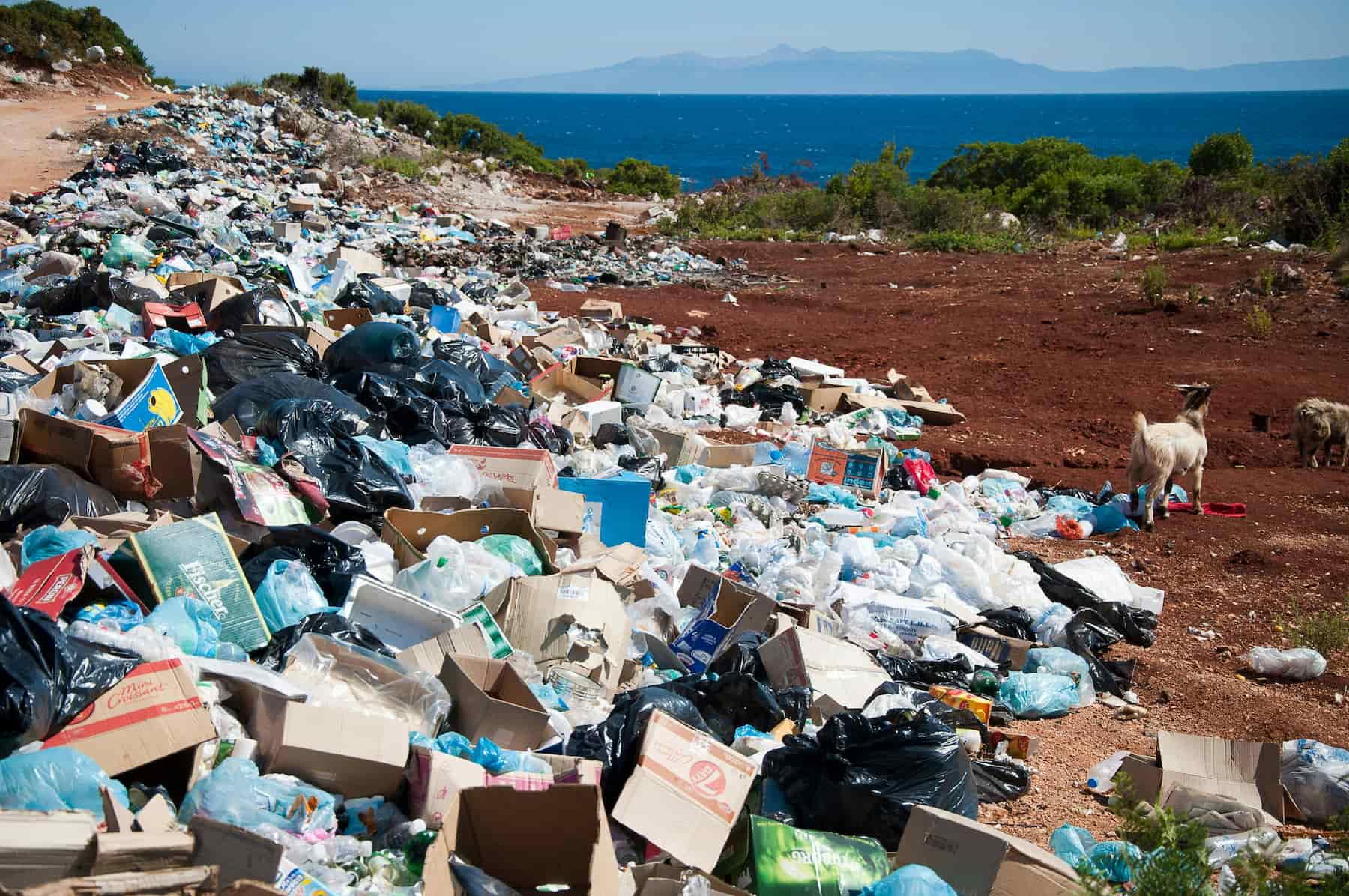
Can these brands continue to carry out these practices with the introduction of the ESPR? The answer is yes. Although companies’ can’t destroy their unsold inventory, they can still legally be sent to countries outside Europe – such as India or Chile, where clothes can end up in landfills or be destroyed. The ESPR may not necessarily help the issue of overproduction, but push the problem further outside of Europe. Similarly, charities or other entities can refuse donations. Since fast fashion brands are regularly mass-producing products, it is unlikely that charities will be able to accept all donations. Instead of producing fewer products, companies’ can document this as a reason to destroy their unsold inventory. Although the companies’ compliance is monitored through checks by various authorities, as well as through digital product passports, it is possible that many brands will not legally be required to reduce the amount of products they sell or consider circularity.
Issues with Recycling Facilities and Waste Management Operators
When brands recycle or use waste management operators for their unsold inventory, it sounds sustainable. However, there are many issues with recycling and waste management in the fashion industry. According to GreenAmerica, natural textiles like cotton are cleaned and re-spun into yards of thread that are ready to be used for weaving or knitting into new products. However, synthetic fibres like polyester are processed into polyester chips that become polyester again. The chips are melted and spun into new filament fibre for new polyester fabrics. According to Changing Markets Foundation, approximately 98% of recycled polyester comes from recycled plastic bottles rather than old clothes. This process sheds microplastics, which cannot easily be recycled and are harmful to humans and the environment. As a result, the products ultimately end up in landfills, as they can’t be recycled again. However, under the ESPR, brands must prove that they are incorporating textile-to-textile recycled fibres, not just from plastic bottles. Poly-cotton blends that can’t easily be separated in recycling can face penalties or fees.
Waste management operators are organisations that sort and process used clothing to try to recycle and reuse clothes to ensure they don’t end up in landfills. According to Textiles EPR, workers separate garments by their condition, type and composition. The products that are in good condition are prepared for reuse and returned to the market through second-hand shops. However, the majority of clothes are not reused or recycled. According to Uppsala University, less than 1 percent of all discarded textiles are recycled into new garments. Similarly, only about 20 percent of discarded textiles are collected for either reuse or recycling. The vast majority of collected items are reused or downcycled into products like industrial rags or insulation. Should the ESPR address this?

Voices From Environmental and Research Organisations
While Consumption Research Norway argued that the ESPR doesn’t address overproduction, Fair Trade Advocacy raised issues about recycling. Similarly, the Ellen MacArthur Foundation stressed that the ESPR puts too much emphasis on the digital product passport, rather than more legally enforceable performance thresholds. According to Consumption Research Norway, setting requirements for clothing durability isn’t as important because there are more issues with clothing overconsumption and constant changes in fashion. This needs to be considered when creating rules for companies’ sustainability, rather than focusing as heavily on clothing durability. Secondly, Fair Trade Advocacy highlighted that “recycled fibres should come from post-industrial, pre-consumer, and post-consumer textile waste” when setting rules about product recycling. Brands can meet recycling thresholds if non-textile feedstocks such as plastic bottles are allowed to count. In turn, brands could meet recycled content targets without helping solve the textile waste crisis. Lastly, Ellen MacArthur Foundation argued that the ESPR relies too heavily on the digital product passport and could benefit from more sustainability requirements – “By establishing mandatory performance criteria at an EU level, the ESPR can embed circular economy principles directly into product design and market access conditions, delivering a robust legislative framework for the EU’s environmental objectives and a more competitive, resilient economy.”
While there have been no statistics or data published on the impact of the ESPR so far, the law does not adequately address the underlying issue, which is overconsumption. While the law is a start, brands can merely push the problem to outside of Europe, and possibly produce more waste by creating durable clothing that will be consumed at the same rate. It is possible that brands can produce the same amount of waste and find ‘loopholes’ to destroy unsold clothing, raising questions about the actual purpose of this law.
Highlight Image:
@ Antoine GIRET via Unsplash


