
How is AI Changing Fashion Photography? Interviews with Fashion Photographers
AI is reshaping many work sectors, including fashion photography. Do photographers need to change the way they work to keep up with AI? In interviews with three fashion photographers, we discuss how photographers and their clients feel about AI-generated photos, job insecurity and the future of AI in fashion photography.
AI has the potential to change workflows in many sectors like education, healthcare and science. How can AI change the tasks and workflow for fashion photographers? Are there greater protections and employment risks associated with AI in photography?
Luisa Pra Levis is a fashion photographer based in Basel who specialises in fashion editorial and e-commerce. Scarlett Davis is a London/Leeds-based fashion photographer and Laura Knipsael is a fashion photographer and artistic director based in Roermond. All three photographers offer unique perspectives and experiences with AI and fashion photography.
How Has AI Changed Fashion Photographers Workflow?
AI is changing the way photographers work through scheduling and AI photoshop tools. While Scarlett doesn’t use AI in her work, she notices that AI has become “embedded in digital editing softwares, including generative tools and smart selection, which can be helpful for large editing workloads, and short-cuts.” However, she still doesn’t approach her work differently – “I still value a manual process because I prefer a human touch to my work.” Contrastingly, both Luisa and Laura find AI helpful in both pre and post production. Luisa uses AI to put together “schedules and arranging organisational tasks” and sees some benefits of AI in post production – “ I’m very grateful for AI in programs like Lightroom or Photoshop, where it, for example, takes over the otherwise tedious task of masking a subject or removing things from a picture. What I know everyone used to rave about, but what I kind of refuse to use, are the ‘Generative Fill’ options in Photoshop. That just doesn’t sit well with me, as I don’t think AI should be used in a generative way.” Similarly, Laura finds AI useful in pre-production as a “brainstorm partner.” “I use it to test ideas, sharpen a text, question whether a message is clear, or look at something from another perspective. I still make the creative decisions myself. For me, AI is useful when it supports my thinking, not when it replaces it.“ In post-production, Laura believes AI is useful – “Photoshop’s AI tools, for example, can take care of small technical tasks that used to require more time in post-production.” While Scarlett prefers a human touch, Luisa and Laura see some benefits of AI in photography.
Scarlett and Luisa haven’t noticed less work available for photographers since AI became popular. Luisa became a photographer when AI was well-established and feels she can’t compare the number of jobs fairly. However, both photographers see more AI use in big campaigns. For Scarlett, this is concerning – “ I definitely think it’s troubling when I see huge advertising campaigns out in public that are clearly AI generated (e.g. Skechers, H&M, Mango). There is so much value in human creativity, and it’s upsetting that cost & production time is being prioritised over the art and experience of practitioners.” By contrast, Laura is noticing less jobs available because of AI – “I’ve already experienced the impact directly. I lost a major client because they decided to generate their entire campaign imagery with AI instead of producing traditional shoots. So for me, this isn’t a theoretical discussion about what might happen in five years. It’s already affecting the photography industry, budgets and the kind of work that reaches photographers.” However, Laura also sees clients who “deliberately choose to work with a photographer because they value the process, the collaboration and the physical result of a shoot.” Is it possible that workload might not necessarily be less for photographers, but there will be changes in who values real photoshoots?
AI-Generated Photos
When photographers were asked about AI producing realistic photos and if we can still call this photography, none of them agreed. All three photographers believe that AI is not ‘real’ photography. For Scarlett, AI skips the entire photography process -“an image is created without real context. Regardless of technological advancement, without the direction, production and process of creating a photographic project, it cannot be considered as true photography.” She believes that AI fashion photos “always look the same, and it’s usually obvious that it’s not human-produced”. Similarly, Laura believes that AI will get good at “reproducing the visual language of photography.” However, the image “is only one part of photography. There is something very different about being on set with a team, building a world together, reacting to what happens in front of the camera and making creative decisions in real time.” For this reason, Laura would not call this photography – “It may look like a photograph, but the process is fundamentally different. You created a prompt; the machine created the image.” Luisa believes that for a photo to be photography, it needs “a certain creative mind and idea to generate a realistic-looking photo, and prior knowledge of photography definitely helps. But this is a machine doing the final work for you, and I don’t think you can claim to be a photographer in that case.” The future of photographs might be AI generated and look realistic, but for photographers, this is not ‘real’ photography.
On seeing AI-generated photos, photographers feel concern, resistance and curiosity. For Luisa, AI photos are concerning, but she loses respect for brands using AI – “whenever I see a brand launching an AI campaign, I do think less of them. And I think that’s also something that will gain importance in the future: real photography and real campaigns as a status symbol and a sign of quality and value.” Scarlett feels resistant to it, but since some communities refuse to use AI, this gives her hope about the future – “I definitely feel resistance towards it, because I know that it takes opportunities away from talented, worthy practitioners. It is difficult to work in a creative industry, because it can be hard to find enough paying work to make a living, pairing this with the loss of work due to AI content generation is disheartening. But, I’m hopeful that there will always be communities of people who value and support the training and experience of real photographers, and the human approach to creativity, that can never truly be replicated by AI.” Laura is both interested and worried – “I’m fascinated by what the technology can do and I think photographers should understand it rather than simply reject it. At the same time, I don’t want AI to become an excuse to remove the people and the creative process from image-making altogether. I hope it develops into another creative tool rather than a replacement for the photographer.” Could AI be used as just a tool? Will brands become less likely to use AI if their customers know that AI takes jobs away from artists?
AI and Clients
When asked about clients turning to AI to reduce photoshoots costs, all of the photographers understood the clients’ appeal. Scarlett has not experienced clients turning her away for this and believes “ the outcome of this [photoshoots] makes it all worthwhile; it’s a shame that any photographer might be losing opportunities because clients choose cost efficiency”. Laura believes that photographers are heading towards a ‘split’ in clients – “some clients will choose AI because they primarily need an image, while others will invest in photography because they want the creative process, the people behind it and the authenticity that comes with it.” Luisa notices that her clients “are becoming more and more price-sensitive. But this could also be because of overall increasing costs and economic instability.”
If brands use fewer staff on a photoshoot or don’t conduct photoshoots at all, what will happen to creatives like photographers, stylists or makeup artists? Luisa notices photographers upskilling with AI, but prefers to work with clients who are against AI altogether – “I’m definitely seeing peers starting to upskill in AI-based creation, and even whole production companies or agencies are now advertising themselves as “AI-forward”. I get it, it makes sense to get yourself ready, but I personally think there will always be clients who are willing to still invest in real productions. I personally would rather focus on finding these clients than upskilling myself in AI”. Similarly, Scarlett is hoping that many people will be against AI in the future and that fashion photographers will still be relevant – “I know that a lot of influential people in fashion choose to work against AI, and continue to fight for real human creation. This gives me hope for my own future in fashion, and for the futures of all my collaborators.” Contrastingly, Laura believes that professions will become more distinctive – “If part of your work can be replicated by AI, you need to be very clear about what cannot. That could be your creative vision, your ability to direct, your personal style, your relationships, your understanding of people or your ability to create something completely unexpected on set.” Is there hope for the future of fashion photographers? Will brands turn away from AI, or will photographers have to change their creative processes to stay relevant?
None of the photographers have been asked to use AI in jobs that would previously have involved a photoshoot. Scarlett spoke about the shame she feels about the idea of AI in photography – “Sometimes the idea of using AI feels shameful, so honestly I don’t think that kind of job would be right for me, I feel as though it goes against what I cherish in my own work.”
AI Laws and The Future of AI
Do current AI laws do enough to protect creatives from being exploited? Scarlett and Luisa felt they didn’t know enough about the current systems in place. However, Luisa feels that “it’s extremely important that the use of AI is clearly stated in campaigns of all sorts and in social media content as well.” Similarly, Scarlett thinks it would be “ reassuring to know that my work isn’t being used for creating generated work, but I know that the reality of working as a photographer means that this is currently unavoidable. To seek out opportunities and find new clients, you have to share your work on the internet, or through social media, it feels like there is nowhere to hide from AI” Opposingly, Laura feels that “ the boundaries need to be much clearer” in AI laws. “I’m already seeing situations where photographs from a shoot are taken afterwards and altered with AI, and then effectively presented as a new shoot without involving or compensating the original creative team. That raises much bigger questions around authorship, licensing and consent. If a client has paid for and licensed a photograph, that doesn’t automatically mean they should be able to use AI to transform that image into something completely different and treat it as a new piece of content without considering the photographer, model or other creatives involved. The technology is moving much faster than the rules around it, and I think the creative industries need stronger protection”
When asked what advice they would give to beginner photographers, all three photographers argue that beginners should master the skill of photography. Scarlett believes that beginner photographers also need to master lighting and composition because “you have to have the skill it takes to actually work in photography, mastering AI skills doesn’t make you a photographer.” Similarly, Luisa believes that “in order to create a realistic-looking image with AI, you will have to understand at least the basics of lighting, composition and directing” and to “master the traditional route of becoming a photographer.” Unlike Scarlett and Luisa, Laura would advise beginners to start with photography, and then “Learn your light. Find your style. Learn how to direct people. But I would also tell young photographers to learn the business side of the industry and build a strong personal brand. Being a great photographer is only one part of building a sustainable career.” While Scarlett and Luisa focus primarily on photography, Laura recommends looking at the business side and shows how beginner photographers need to focus on their business, not just photography.
What will fashion photography look like in ten years? All three photographers have different views. Scarlett is hopeful that AI doesn’t drastically change fashion photography, adding that “There will likely be more AI features offered in pre and post-production processes, but to me, human output will remain essential, AI cannot do what trained professionals can in creative contexts”. Luisa believes that some jobs that are costly will be taken over by AI. However, she feels that brands will come back to hiring creatives – “I do think that we will still be needed for jobs that require either more creativity or real-life documentation. And I am very sure that, after the first wave of “Oh, let’s try out this new AI thing”, many brands will go back to the traditional and “real” way of creating imagery.” While Laura believes that some areas of photography will be taken by AI, creative vision will become even more valuable – “conceptual fashion photography, strong art direction, collaboration and distinctive visual worlds will remain valuable. In fact, they may become even more valuable because when everyone can generate an image, having a genuinely recognisable vision becomes the thing that sets you apart.” Overall, each photographer has a more positive view of the future of fashion photography.
AI in the fashion photography industry has some benefits, but also major concerns. Will there be fewer jobs available for creatives and more issues with ownership? AI laws need to be examined, and photographers need greater protection. However, the photographers interviewed are hopeful about the future and believe there are many people who don’t want to use AI as an alternative to photoshoots.
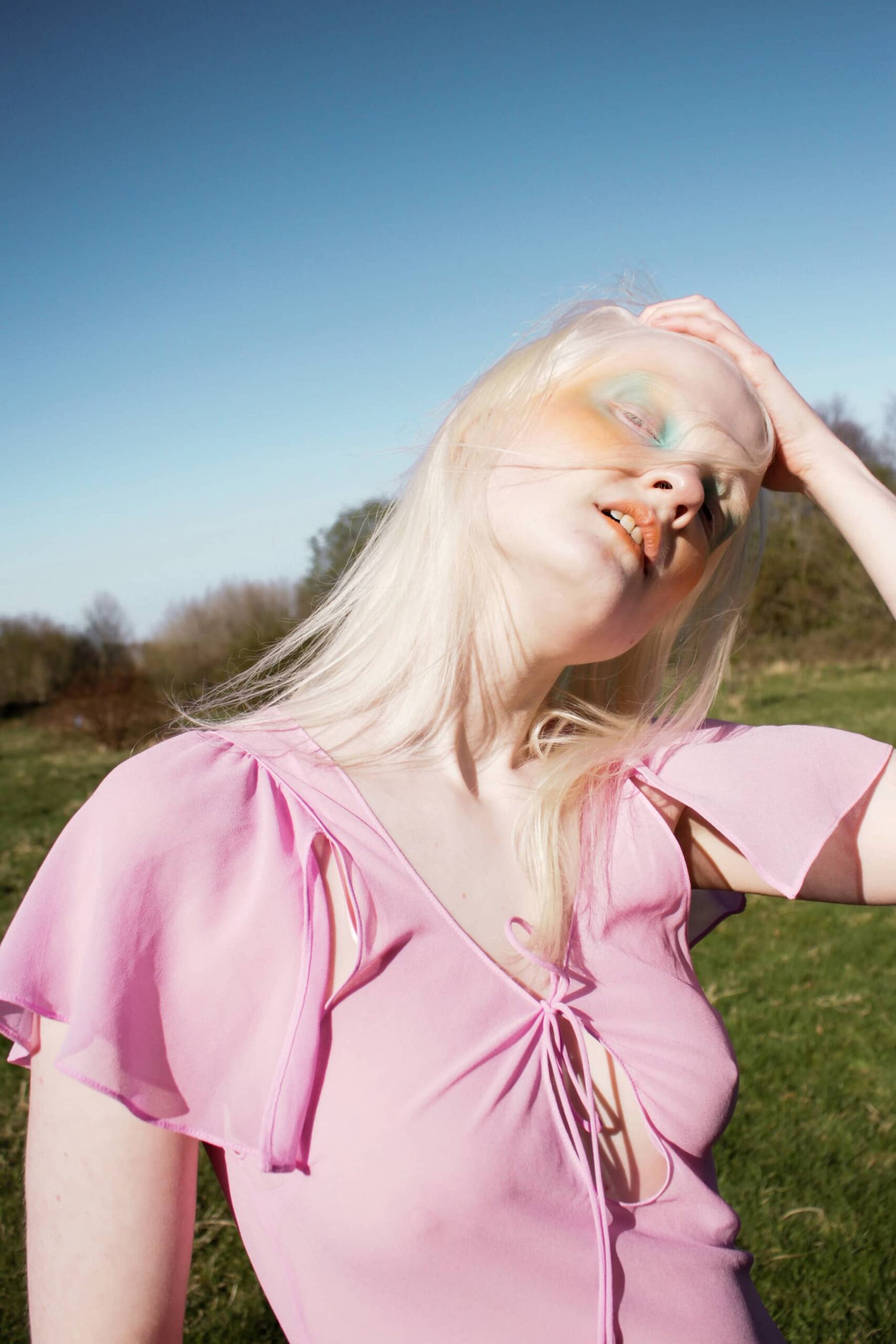
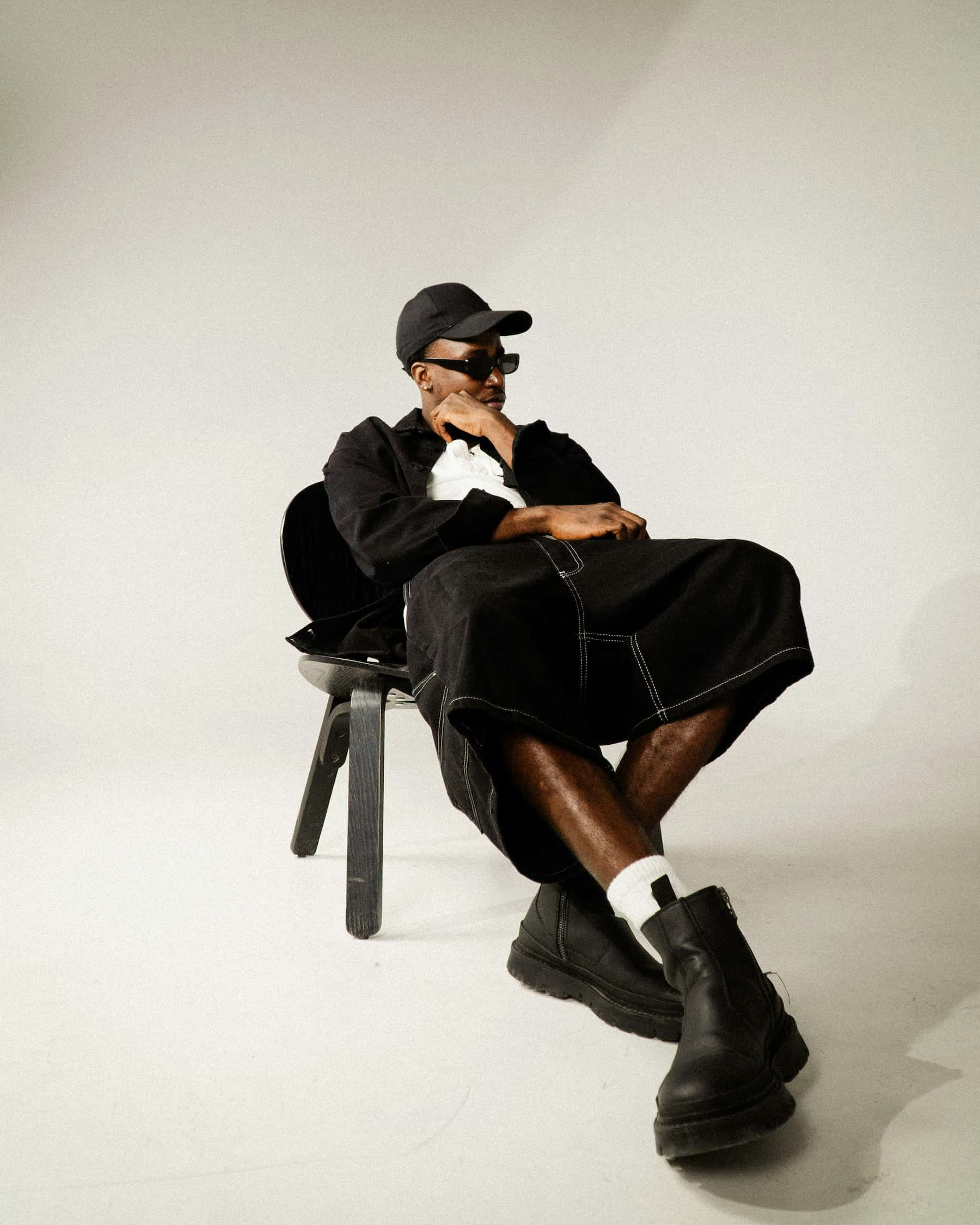
Highlight Image:
@ Christian Agbede via Unsplash


