
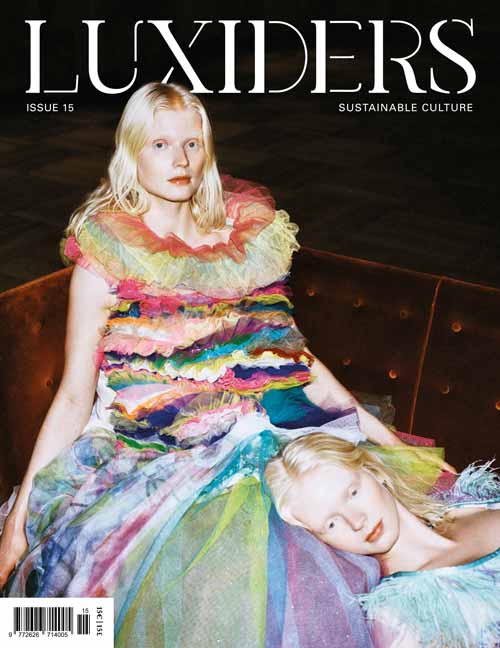

Structural Fashion: How Art, Architecture, and 3D Printing Are Reshaping Fashion
Structural fashion transforms garments into sculptural works of art through innovative construction, bold silhouettes, and cutting-edge technology. From the geometric elegance of Art Deco to Iris van Herpen’s pioneering 3D-printed creations, discover how architectural fashion continues to redefine creativity, sustainability, and the future of design.
When Structural Art and Fashion Merge
Fashion can be quiet or bold, minimalist or extravagant, understated or vibrant. Its energy comes not only from colours and prints, but also from the shapes it creates — its silhouettes. Silhouettes are sometimes seen as niche details, overlooked as unnecessary extras. However, if we pay closer attention, we realise that silhouettes, even those we barely notice, surround us and play a crucial role in our clothing. They may be classic, romantic, flowing, sharp-edged, geometric, or even animal-inspired. These forms can be borrowed from the natural world, or from the architecture that quietly shapes our bustling, modern lives. In this regard, Structural Art enters the scene.
Structural fashion uses innovative construction techniques to form silhouettes that would not occur naturally. These designs push the boundaries of what clothing can look like, turning garments into wearable works of art.
The Evolution of Structural Fashion
Throughout history, clothing has relied on hidden structures to shape the body, from Renaissance farthingales and eighteenth-century panniers to Victorian crinolines and bustles. These garments used hoops, whalebone, padding, and corsetry to create exaggerated silhouettes that reflected the beauty ideals of their time. However, these structures primarily served to mould the body into fashionable proportions rather than becoming artistic statements in themselves.
Then, the twentieth century marked a turning point for structural fashion with the establishment of Art Deco, a French art movement that flourished in the 1920s and 1930s. New York’s Metropolitan Museum of Art describes Art Deco as drawing inspiration from its predecessor, Art Nouveau, embracing geometric shapes in contrast to the soft pre-war silhouettes. It also reflected the creative spirit of its time by incorporating influences from other movements: Futurism’s enthusiasm for technology, Cubism’s love of repetition and geometry, German Expressionism’s bold distortions, and the theatrical flair of the Ballets Russes. Together, these influences made Art Deco a rich and multidimensional style.
Later, in the 1960s, the avant-garde pop art movement took over the fashion industry with radical geometric forms, incorporating industrial materials such as metal, wire, and plastic to create futuristic silhouettes. Most importantly, space-age fashion was incredibly vivid in that age. Shimmering lamè fabrics, spherical hats resembling astronauts’ pressure helmets, boxy jackets, go-go boots, oversized googles, and tubular dresses dominated the runways.
During the 1990s, Japanese designers led a wave of avant-garde and deconstructed fashion that opened a new chapter in the industry. Instead of following the rules of traditional Western tailoring, they experimented with sculptural shapes and loose forms. Clothing no longer emphasised the body’s contours but instead concealed them beneath bold, abstract silhouettes.
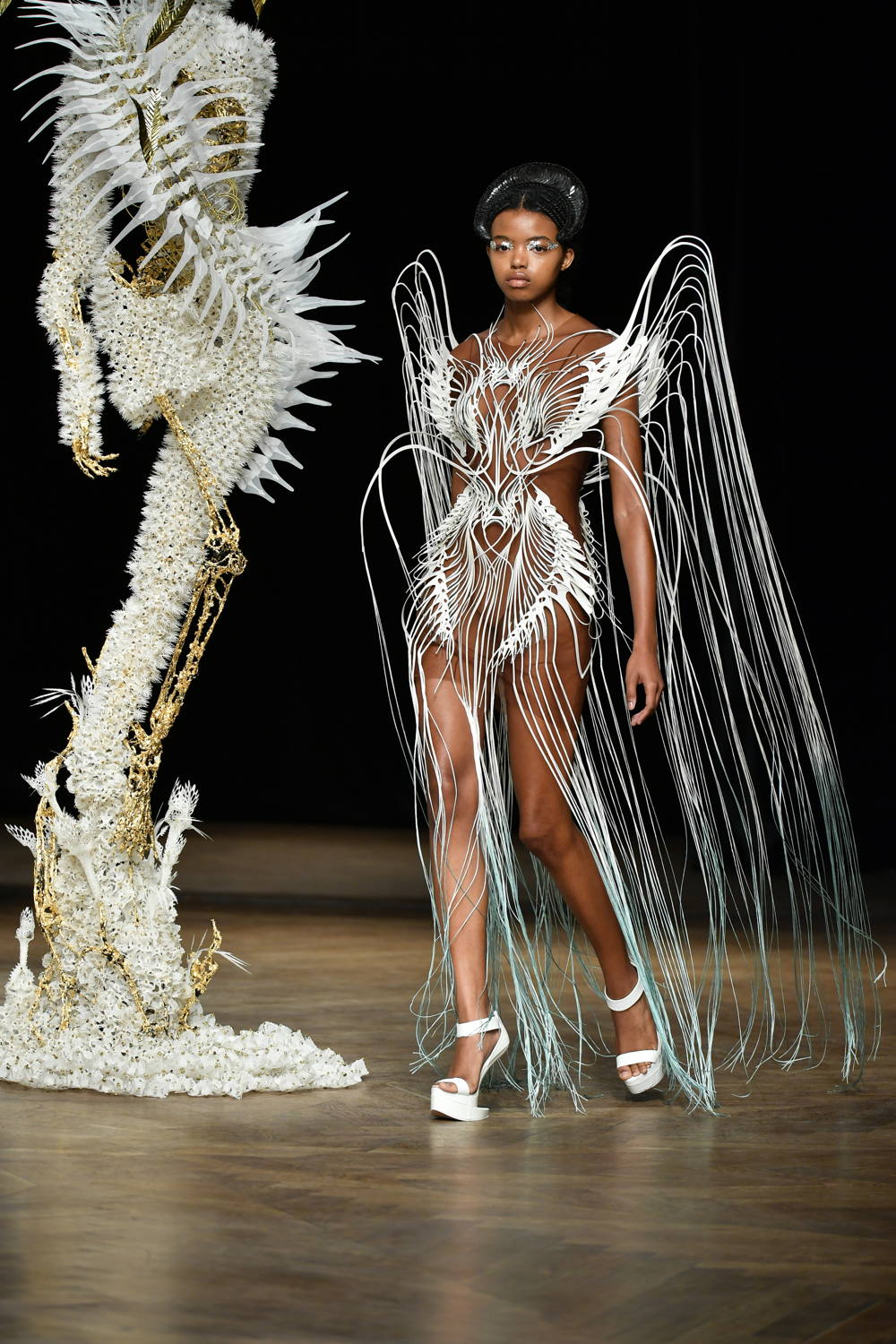
Iris van Herpen’s Posthuman Legacy
In fashion, the idea of the posthuman represents a sense of deep connection and overlap between people and the non-human world. Iris van Herpen embodies this concept by blending art, fashion, and technology, creating designs that exist in the space between traditional categories.
Her work often uses the latest technologies to capture what is usually invisible or intangible, such as dreams, sound waves, drifting smoke, or magnetic fields. She is especially drawn to intricate, organic shapes — such as spider webs, butterfly wings, shells, or skeletons — because, as she told curator Andrew Bolton, these natural structures are almost impossible to recreate in 2D: : “With 3D printing, I am very much drawn to the organic … because in organic structures such as fossils, for instance, you have structures that you can’t easily replicate by hand”.
For van Herpen, hybridity is essential; her designs unite the digital and the physical, presenting women as posthuman figures shaped by their relationships with technology and the world around them. By forging bonds with non-human elements, van Herpen challenges the idea of what it means to be human and shows that our bodies are always linked to the broader material world, both through nature and technology.
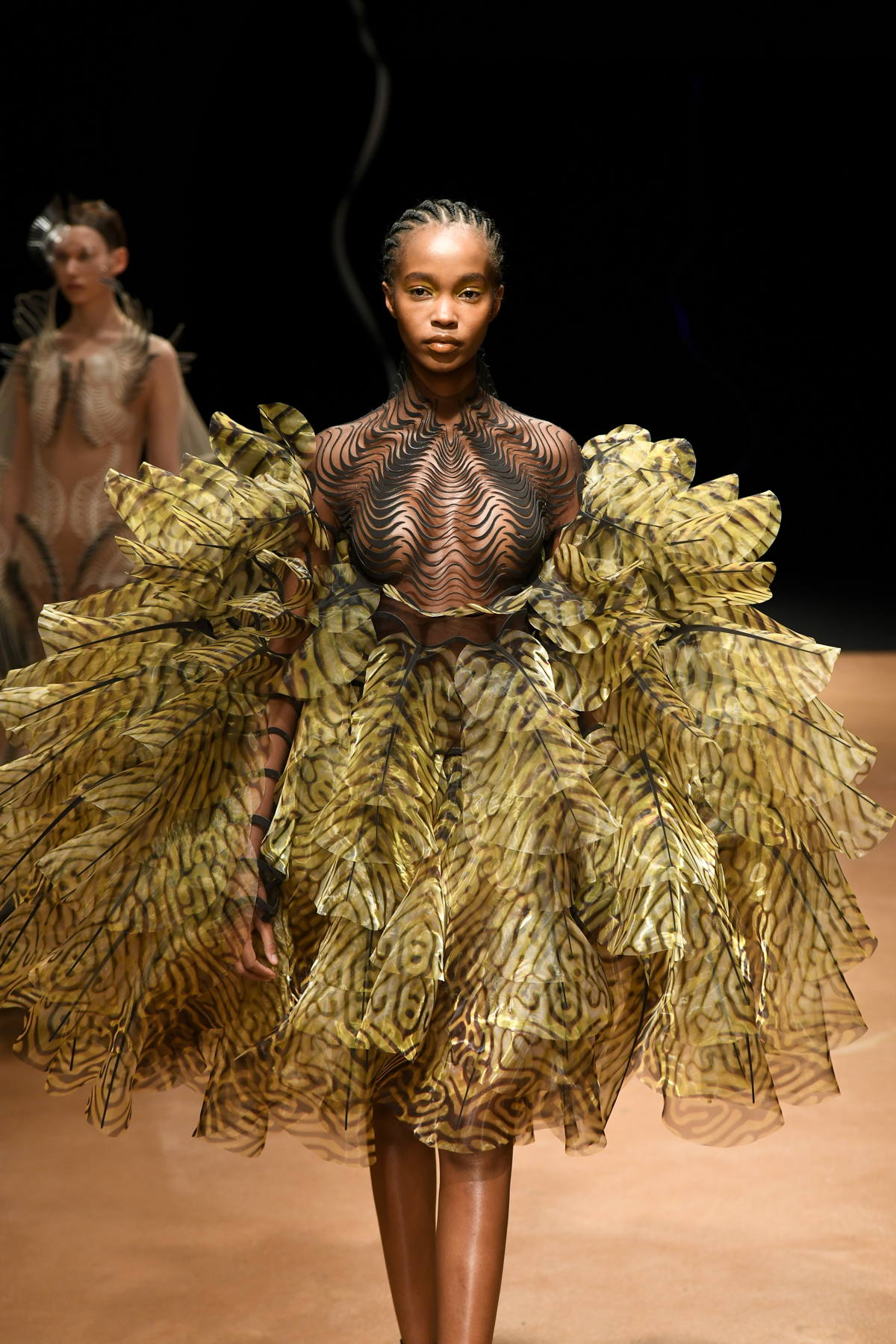
3D Printing Today: Innovation and Sustainability
Iris van Herpen is considered the forerunner of 3D printing, but her legacy — which began with the launch of her haute couture brand almost twenty years ago — is very contemporary. The Journal of Fashion Technology & Textile Engineering reports that clothing made with 3D printing offers a new level of customisation, as garments can be designed digitally and printed with precision to fit each person. By starting with a digital design and printing only what is needed, this approach helps eliminate waste from excess fabric and leftover materials.
Furthermore, unlike traditional textiles that often depend on non-renewable resources and energy-intensive manufacturing, three-dimensional printing allows designers to choose from more sustainable materials, including biodegradable polymers, recycled plastics, and innovative bio-based options. Many of these new materials can even be recycled, further reducing their environmental impact and creating a more circular production process. In addition, by turning waste into new designs, the need for fresh resources is minimised.
Another advantage is that traditional fabric production uses significant amounts of water and chemicals, especially for dyeing and finishing, whereas three-dimensional printing often uses materials that already contain colour. As a result, the process greatly reduces water use and textile dye pollution, which is especially important in regions facing water scarcity. And finally, garments created through three-dimensional printing are often more durable, as each piece is digitally crafted and optimised for strength, meaning they last longer and do not need to be replaced as frequently. This combination of customisation, sustainability, and durability demonstrates how 3D printing is shaping a more responsible future for fashion.
Structural fashion has evolved from historical garment construction into a bold form of artistic and technological expression. As designers continue to experiment with sculptural silhouettes, innovative materials, and 3D printing, the boundaries between fashion, architecture, and art blur. Visionaries like Iris van Herpen demonstrate that structural fashion is not only redefining aesthetics but also shaping a more sustainable and imaginative future for the industry.
Hightlight Image:
©Karina Karina via Unsplash


