

MOMAD Madrid 2026 Reinforces Sustainable Fashion as a Business Strategy
The success of a fashion trade fair is no longer measured only by the number of exhibitors. It is measured by the quality of conversations it creates, the buyers it attracts and the business opportunities it generates. The July 2026 edition of MOMAD Madrid demonstrated precisely this shift.
With more than 200 brands, including 50 newcomers, and buyers arriving from Europe, North America, Latin America, the Middle East and Asia, MOMAD’s new July edition confirmed that the Spanish fashion trade show is evolving into a more focused sourcing event, designed around commercial efficiency rather than exhibition volume. The clearer segmentation of the fair, new thematic areas and an increasingly international audience all contributed to an environment where product discovery and business conversations took centre stage.
With 60% of exhibitors coming from Spain and an increasingly international profile, MOMAD confirmed its ambition to strengthen Madrid’s position as one of Southern Europe’s key fashion business hubs.

Why The Conscious Boutique Matters
One of the strongest improvements introduced this year was a clearer segmentation of the exhibition, making it easier for professional buyers to navigate the fair according to their interests. New initiatives such as Focus Brands highlighted emerging labels with strong commercial potential, while the Best Sellers Area showcased products already demonstrating proven market appeal. Together, these spaces reflected a broader shift within fashion trade fairs: helping buyers make decisions faster by curating product categories more intelligently.
This commercial approach was further reinforced by an international Buyers Programme that attracted professionals from Europe, North America, Latin America, the Middle East and Asia. Buyers travelled from markets including Italy, Germany, France, Poland, the United States, Mexico, Colombia, Costa Rica, Saudi Arabia, Peru and the Netherlands, creating new export opportunities for participating brands and reinforcing MOMAD’s growing international relevance.
Perhaps the most interesting lesson from this edition was that sustainability is no longer functioning as a niche within the exhibition. It is increasingly becoming a commercial language shared by buyers, retailers and brands alike.

Where Sustainability Meets Commercial Opportunity
Among the fair’s most distinctive initiatives was The Conscious Boutique (La Boutique Consciente), a curated exhibition highlighting garments and accessories selected for their use of lower impact materials, circular innovation, local manufacturing, craftsmanship, supply chain transparency and positive social impact.
Far from functioning as a standalone sustainability showcase, the exhibition demonstrated how responsible fashion is increasingly becoming part of mainstream commercial conversations. For many exhibitors, its value extended well beyond visibility.
Raúl Alderete, Production Manager at Daniel Chong, described the initiative as an important addition to the event: “The Conscious Boutique was an excellent initiative that added value to the fair by increasing the visibility of brands with sustainable proposals.” The brand generated predominantly national contacts while also attracting buyers from Lisbon, Toulouse, Montpellier and Québec, including a confirmed order from Portugal.
For Añino Regina Merina, the exhibition became a platform for meaningful collaboration rather than simply product presentation. Founder Iciar explained that the space facilitated conversations with artisan retailers, sustainable footwear chains and larger companies interested in the brand’s locally produced Merino wool textiles. Equally important was the opportunity to meet other responsible brands exhibiting within the same curated environment. Her experience illustrates how professional trade fairs increasingly create ecosystems where brands learn from one another while simultaneously generating commercial opportunities.
Antonio Prieto, Director of CMS Love, also believes the initiative should remain part of future editions.”The Conscious Boutique was a very good initiative. It should continue in future editions. Every opportunity adds value, and perhaps future business contacts will come from it.”
Not every exhibitor experienced immediate commercial success, reflecting the broader challenges currently affecting the fashion industry. Oliver Wiesent from Elemente Clemente explained that most meetings were with existing customers, while only two new contacts were generated, both from Germany and Italy. Although he recognised the value of The Conscious Boutique.
Similarly, Alberto Heras from Fabiolas praised the presentation of The Conscious Boutique and the combination of footwear and fashion brands within a shared sustainability narrative. However, he acknowledged that current consumer demand remains challenging and that pricing continues to play a decisive role for retailers.
Together, these perspectives reveal an important shift in how success is measured at professional trade fairs. Immediate orders remain essential, but many participating brands increasingly value qualified conversations, international exposure, collaboration opportunities and long-term relationship building as equally important outcomes.

Sustainability Is Becoming the Language of Business
One of the clearest messages emerging from MOMAD 2026 is that sustainability is no longer confined to specialist collections or isolated marketing claims. Instead, it has become embedded within the business strategies of many participating brands.
Across the exhibition, companies presented measurable examples of responsible innovation through certified fibres, regenerative agriculture, natural dyes, recycled materials, renewable energy powered manufacturing, artisan production, circular design and transparent European supply chains.
Rather than asking visitors to trust broad environmental statements, brands increasingly demonstrated their impact through evidence. This evolution reflects a broader transformation taking place across the fashion industry.
As European regulations surrounding environmental communication become more demanding, transparency is replacing aspiration. Buyers are no longer looking simply for products described as “sustainable”. They are asking where fibres originate, how garments are manufactured, which certifications support those claims and whether environmental improvements can be measured.
The Conscious Boutique successfully translated these complex topics into a tangible visitor experience by allowing buyers to compare responsible solutions across multiple brands within a single curated space.


MOMAD Talks: Beyond Trends, building the Future of Fashion Retail
The conference “From Purpose to Purchase: Connecting with the New Consumer Through Sustainability”, featuring Francisco Rico Villaplana, Pilar Prior Fernández and Belvis Soler, explored how sustainability is reshaping purchasing decisions, brand communication and consumer expectations within today’s fashion industry.
Representing Tintoremus and its ReColor project, Pilar Prior Fernández challenged one of fashion’s most common assumptions: that circularity begins with recycling. Instead, she argued that recycling should be considered the final step in the waste hierarchy, not the first. The greatest environmental impact comes from preventing waste in the first place by reducing consumption, extending product lifespans and encouraging reuse. Even within textile collection systems, garments are first assessed for reuse before being considered for recycling.
This philosophy lies at the heart of ReColor, a project that transforms existing garments through natural re-dyeing rather than treating them as waste. “By giving clothing a new colour and renewed aesthetic appeal, garments that consumers might otherwise discard can remain in use for years to come. The approach demonstrates how repair, reinvention and product renewal can become practical circular business models rather than abstract sustainability concepts.” – she said.
Ultimately, the panel highlighted a fundamental shift taking place across fashion. “The future of sustainability will not be defined solely by what happens after a garment reaches the end of its life, but by how successfully the industry can keep that garment in use for as long as possible.”
Francisco Rico Villaplana, from Gerescal, explained how the implementation of Extended Producer Responsibility (EPR) will fundamentally change the responsibilities of fashion businesses. Already mandatory in sectors such as packaging, electronics, tyres and batteries, the legislation will soon apply fully to textiles and footwear, requiring manufacturers, importers and retailers to take responsibility for the collection and management of products at the end of their life cycle.
Rather than viewing the legislation as another compliance challenge, the discussion highlighted it as an opportunity to accelerate the transition towards a genuinely circular economy. Brands that prepare early will not only meet future legal requirements but also strengthen consumer confidence through greater transparency and accountability.
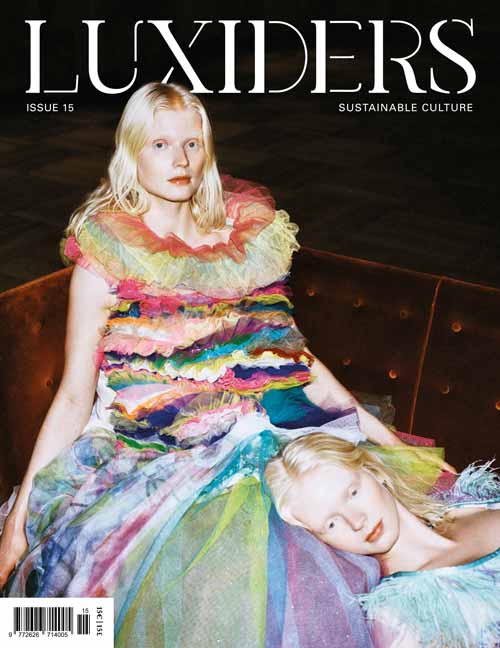
Belvis Soler, Art Director at Luxiders Magazine and co-founder of 001.Agency, expanded this perspective by focusing on the relationship between longevity, consumer trust and responsible communication. She argued that the most sustainable garment is not simply one that can be recycled, but one that remains relevant, desirable and wearable for many years. “The most sustainable garment is the one that never stops being worn,” she noted, emphasising that timeless design, quality craftsmanship and emotional durability are becoming increasingly important purchasing drivers for today’s consumer.
Soler also highlighted that sustainability alone is no longer a decisive selling argument. Consumers continue to buy fashion because of quality, aesthetics and emotional connection, but increasingly expect those attributes to be supported by transparent production practices and measurable environmental responsibility.
“The word ‘sustainable’ has lost much of its persuasive power after years of greenwashing,” she explained. “Consumers no longer want promises. They want proof.”
This changing landscape is also being accelerated by European legislation. Rather than prohibiting brands from communicating their environmental commitments, new regulations are encouraging companies to replace vague claims with verifiable information. Instead of broad statements such as “we are sustainable”, brands are increasingly expected to communicate concrete facts, from local manufacturing and certified fibres to renewable energy, repair services and product take-back schemes.
Drawing on her experience curating The Conscious Boutique at MOMAD and covering innovation through Luxiders Magazine, Soler observed that many responsible fashion brands already possess remarkable environmental credentials but often fail to communicate them effectively. “In communication there is a simple rule,” she concluded. “Value that is not communicated is value the market cannot perceive.”
Perhaps the most significant outcome of MOMAD Madrid 2026 is that sustainability is no longer being presented as a separate conversation. It is becoming part of the commercial language of fashion itself. The brands attracting attention today are not necessarily those making the loudest environmental promises, but those capable of demonstrating them through traceable materials, measurable impact, local craftsmanship and transparent production. As the fashion industry continues to navigate economic uncertainty and changing consumer expectations, events like MOMAD suggest that the future of wholesale fashion will be shaped not only by design and creativity, but by credibility, collaboration and proven impact.
The next edition of MOMAD will return to IFEMA Madrid from 4–6 February 2027, alongside Bisutex and Intergift, continuing its ambition to position Spain as a strategic meeting point for the international fashion industry.
All Images:
© Courtesy by Momad Madrid


