
The Other Fashion
Fashion is not always just high-end brands and runway shows. In its most authentic form, fashion is boundless creativity and originality. Learn more about the designers who uphold this authenticity by challenging the conventional norms and carving out the other side to fashion…
“Fashion”, derived from the Old French word ‘facon,’ meaning ‘to make or to do,’ has always been a term that connects professions across various disciplines. From its inception, it has encompassed craftsmen, artisans, inventors, and anyone else who considers themselves a maker of things.Though this original meaning of the word is still preserved, “Fashion”, as a concept has come to represent the industry that produces clothing, apparel and accessories. More often than not, fashion is associated with the cyclic nature of style –determined by the fashion houses of Paris, Milan, Berlin or New York – that drives the raging beast of consumerism. Fashion is the glamourous models clad in luxury wear strutting down the runway. Fashion is the sweatshops in third world countries where garment workers toil to produce masses of clothings to be sold in department stores on the other side of the world. Fashion is the hordes of both, old and brand new clothing accumulating in landfills and forgotten forever.
There is a general consensus, both within and outside fashion circles, that the industry must do better to preserve the values of creativity and artistry it was founded on. It must also combat the influences of capitalism, which can turn the industry into a machine focused solely on low-quality output and profit. However, ideology alone does not always lead to swift action. While the prospect of change is gradually affecting the mainstream industry, recent times have seen the rise of numerous brands and designers who prioritize environmental advocacy and ethical considerations. We can remain hopeful that although change in the fashion industry is slow, it is surely on its way. In the spirit of this optimism, we seek to explore the up-and-coming designers who are poised to be at the forefront of this transformation.
Welcome to “The Other Fashion”, where we explore the three different designers/brands that are redefining what it means to make a change in the fashion industry, for the better. Whether it is in highlighting the inherent inequalities in this celebrated industry or in creating apparel that battles the ever-present problem of waste within fashion design or even creating shoes that help you contribute positively to the environment. Join us as we uncover the stories, inspirations, and philosophies behind these unique sartorial choices, celebrating the innovators who are challenging the conventional fashion industry and carving out their own paths.
“Fashion is not something that exists in dresses only. Fashion is in the sky, in the street; fashion has to do with ideas, the way we live, what is happening.” – Coco Chanel.
HUMAN TOUCH
In her final thesis paper at the University of Edinburgh, Juliet Seger writes “the component of human agency has been identified as a link between sewing technology and clothing consumption. However, this link seems to be invisible to the wider public eye, as sales continue to grow, despite potential human rights violations embodied within garments.” (Seger 2021: 253).
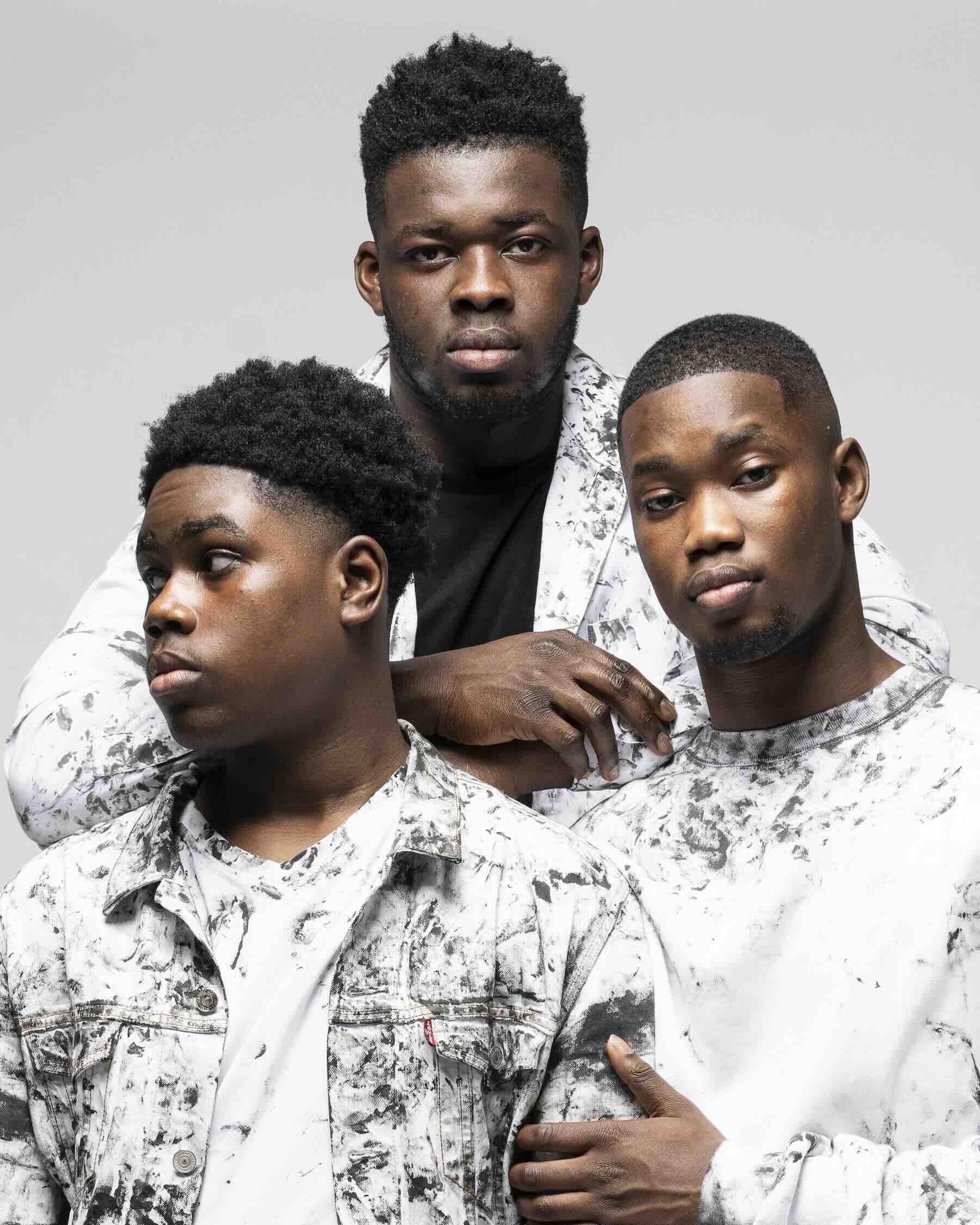
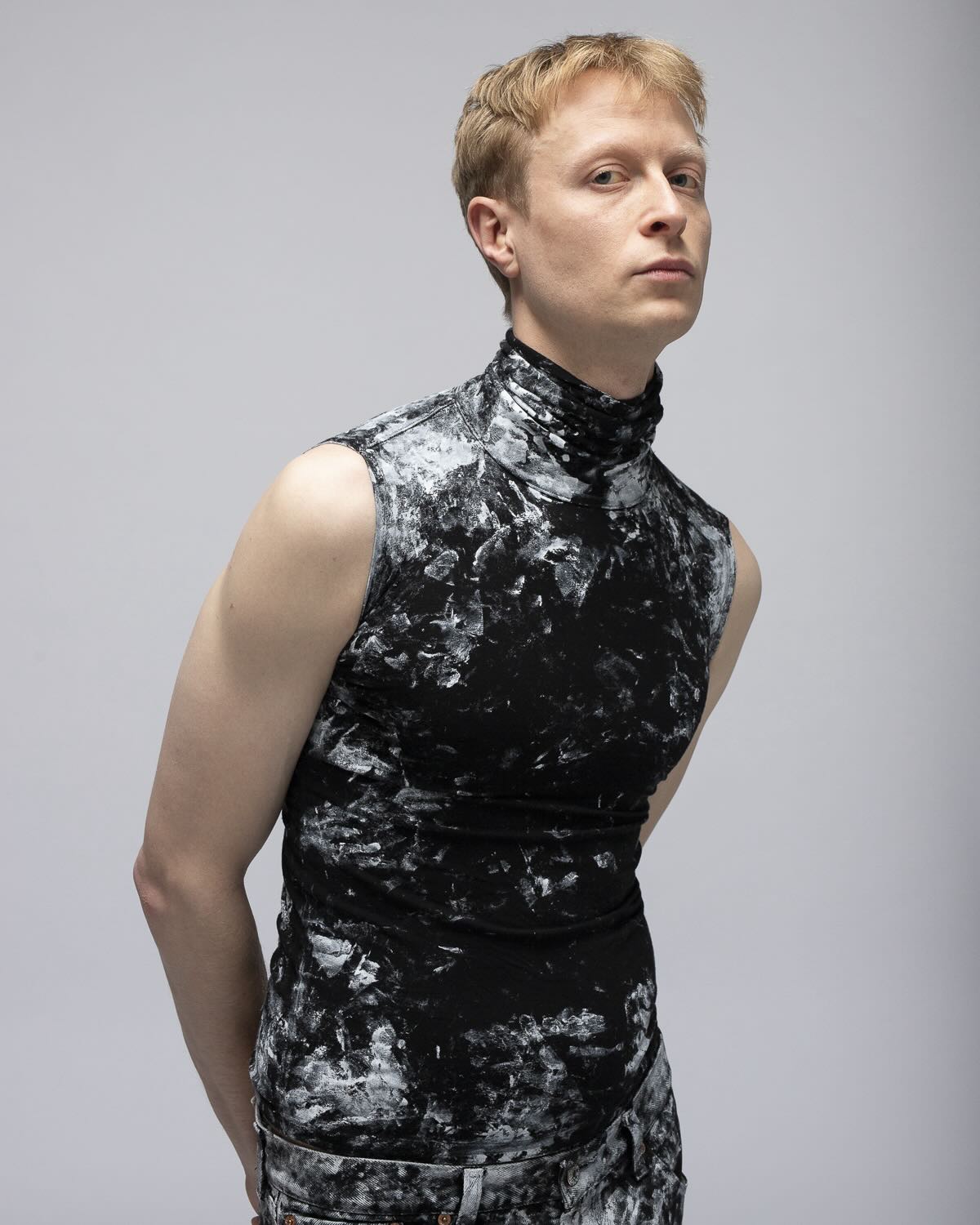
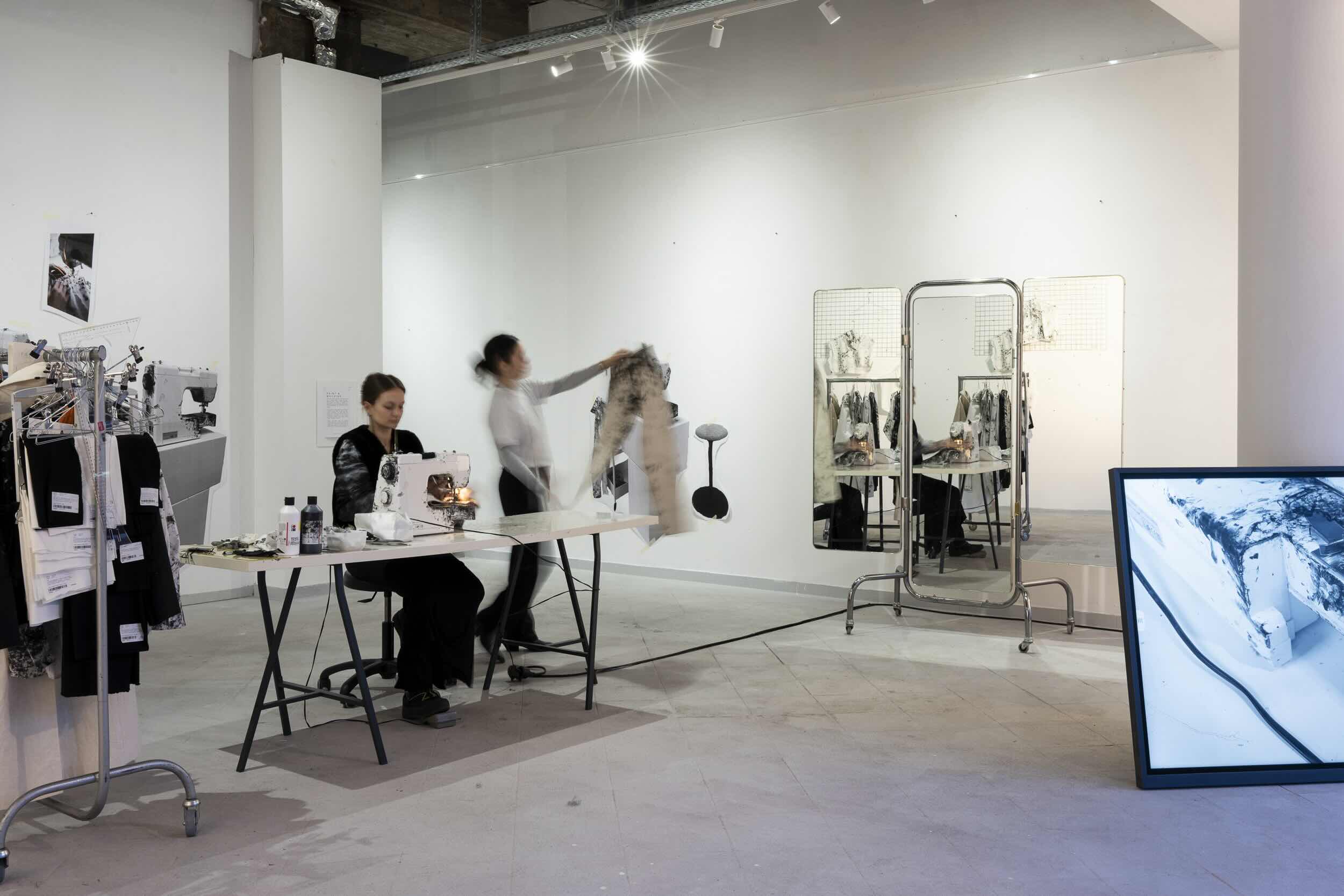
Seger’s thesis project at the time, Human Touch strove to make visible what was obvious and yet most frequently ignored in the fashion industry; that clothes are made by people and that these people work in often harsh conditions with little compensation or recognition for their labor. In the same thesis paper, Seger presents a rather unique mechanism for garment making, called “paint-sewing”. It is a process in which the tailor will cover their fingers with paint before and during the act of sewing. The end result is an article of clothing that looks otherwise normal, if not for the markings of fingerprints that illustrate with startling clarity the labor and energy required to create the clothing.
Since then, Seger has teamed with her friend and fellow designer Christina Albrecht to launch Human Touch as an independent brand that has been steadily garnering attention in the Berlin fashion scene. They operate on a unique business model, having done a variety of pop-up shops, workshops and live performances where Seger demonstrates her paint-sewing technique to audiences. This type of business model is vital to achieving the main aim of the brand, which as Seger and Albrecht say “Educating our audience about garment workers’ perspective plays a big role in this. One goal is to equip our customers with knowledge and empathy, so they relate to clothing based on its value, i.e. material resources and intellectual and manual labour, instead of its usually misleading price or brand tag. This fluid set-up enables us to try out different approaches in order to connect with our audience and also to deepen our own knowledge.”
Recently, they showed their latest work in Berlin Fashion week Spring/Summer 2024. This included pieces from their new collection as well as Human Touch Remedy, which is solely dedicated to upcycling vintage or second-hand clothes, “These pieces can be produced more quickly, which is how we can offer them at a more accessible price point, thus making the concept more accessible as well. It also feels like paying homage to the skilled person that originally manufactured the item. There are several drops per year featuring one-of-a-kind pieces that we mainly sell via our webshop or pop-ups.” The designers understand the potential of upcycling not just in achieving sustainability in their brand but also the industry at large “…upcycling fashion can sometimes feel like a drop in the ocean. However, we remind ourselves that customer demands can successfully change supply, and we are still in the beginning stage of this change. Upcycling fashion needs to become a mainstream product, so each brand and designer committed to this is vital in reaching this point.”
Their stance on upcycling once more cuts to the heart of what this brand is about, to advocate for a sustainable fashion industry, not just in terms of the environmental impact but with regard to the grave injustices and inequalities apparent in the global fashion market; “HUMAN TOUCH aims to visualize the often overlooked or “merely pitied” group of garment workers. We want to show that sewing is not a “low-skilled” task – it is so much more. With its dependency on human agency and the incredibly large amount of people sewing globally, sewing technology should be recognized as a social technology, one that is vital in examining and valuing as a lever in creating a better fashion system.”
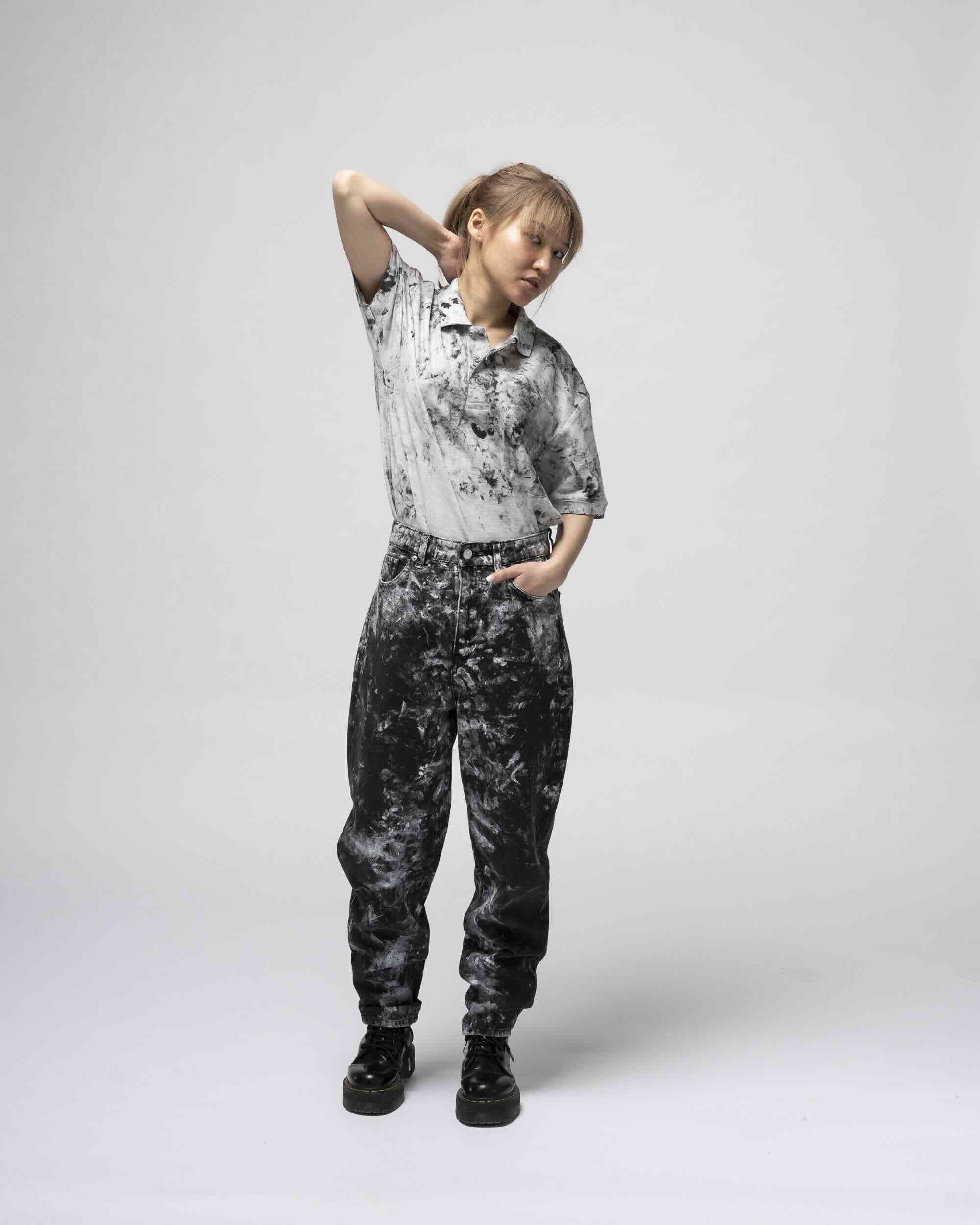
“Human Touch aims to visualize the often overlooked or “merely pitied” group of garment workers. We want to show that sewing is not a “low-skilled” task – it is so much more.”

REWILD THE RUN TRAINERS BY KIKI GRAMMATOPOULOS
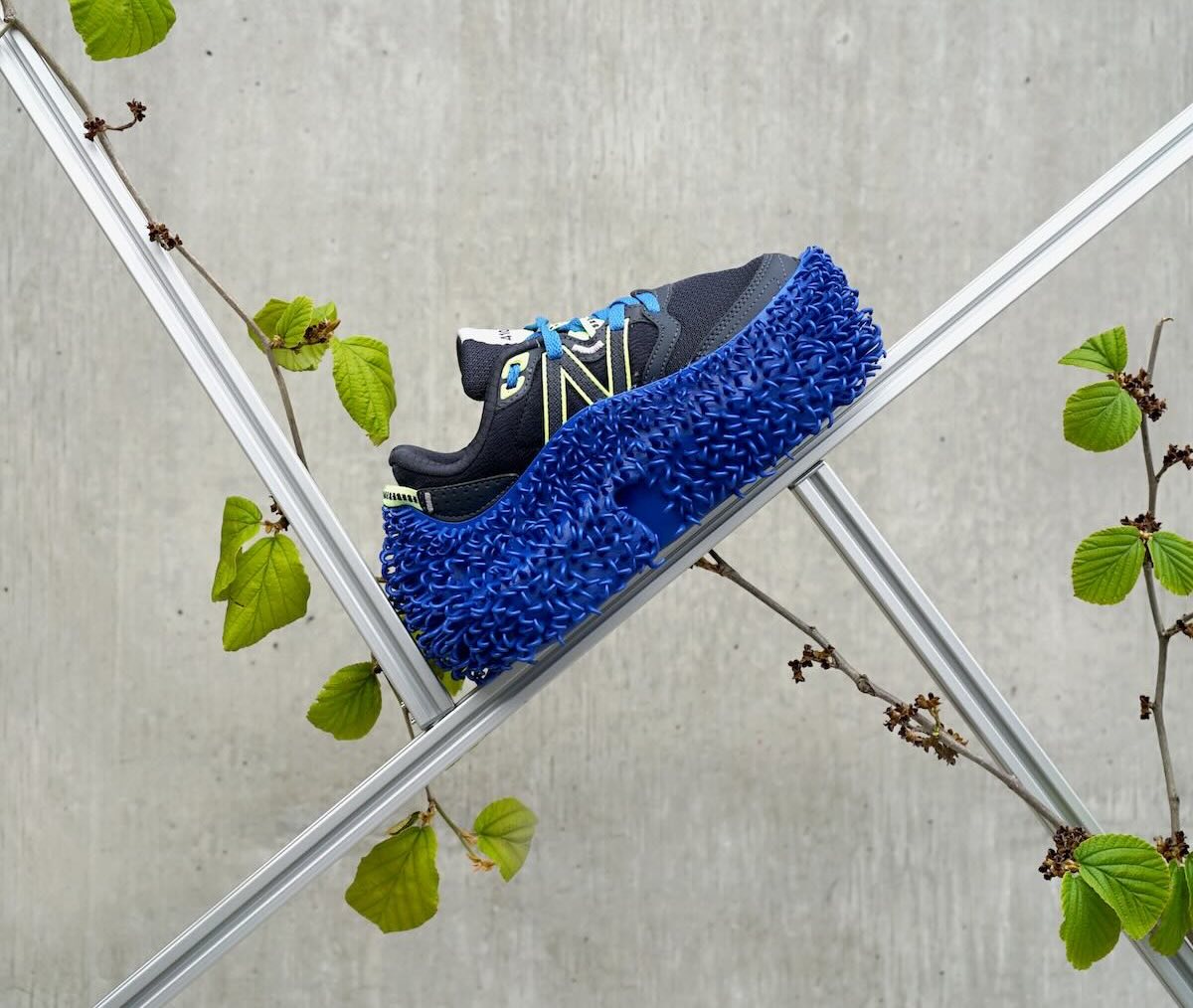
Have you ever wondered if our ordinary, day-to-day accessories or clothing could be improved to allow us to truly serve ecology? It is this line of thought that struck UK-based designer, Kiki Grammatopoulos. Kiki gained a significant amount of attention when unveiled her creation at the Milan Design 2023 and a year later, it still strikes as an original and fascinating project. Kiki calls her creation the ‘Rewild the Run’ trainers. The shoes sport thick electric blue soles with a mesh of curling spikes meant to mimic the hooves and fur of animals. The intention of these shoes is that it will enable the wearer to contribute to urban rewilding efforts, as the shoes will pick up and disperse seeds while the wearer is on their daily jog or stroll. This process of dispersing seeds is a naturally occurring part of the ecosystem, known as epizoochory, but one that is often disrupted by urban development that effectively destroys habitats and drives keystone species away.
Hence, Kiki’s word choice of ‘Rewilding’ is rather apt. It is also a reference to the larger phenomenon known as urban rewilding, of which she says “I wanted to democratize urban rewilding with these trainers. This project brings the concept to a smaller, more local level, emphasizing our often-limited connection with nature in urban settings. Our awareness of natural systems is particularly fragile in cities, so engaging individuals through fashion and sport provides a unique opportunity for personal involvement. By allowing everyone to contribute, we can foster a deeper relationship with the wild in our cities and enhance our collective impact on the environment.”
Kiki further went on to emphasize the importance of individual participation in urban rewilding efforts, with reference to London, the city in which she first developed the idea for the trainers, “…like any urban environment, London has experienced significant damage to its local ecology. This presents a challenge but also an opportunity. It’s become crucial for us to advocate for greener urban environments, no matter which city we are in, so, by encouraging individual involvement in rewilding efforts, I believe we can collectively contribute to restoring and enhancing our urban ecosystems – whether that’s London or anywhere else.”
The ’Rewild the Run’ trainers also add to the growing list of inventions or designs that have been inspired by natural structures and use biomimicry. In an earlier prototype of the shoes, Kiki used Velcro, one of the most common examples of biomimicry in design, “I began by attaching Velcro strips to my existing shoes to observe what kinds of foliage I collected during my walks and runs. This experiment reminded me that Velcro is an example of biomimicry, which sparked my interest in exploring how biomimicry can be utilized as a design tool, particularly for environmentally focused projects, although it has become an incredibly useful tool to use for all design too.”
The trainers are still conceptual and Kiki has been researching new developments that improve the design while considering factors that make the shoes impractical, such as the acquiring of seeds from invasive species. Still, Kiki is optimistic and designs such as hers reveal the possibilities that fashion accessories and apparel pose in helping better the environment.
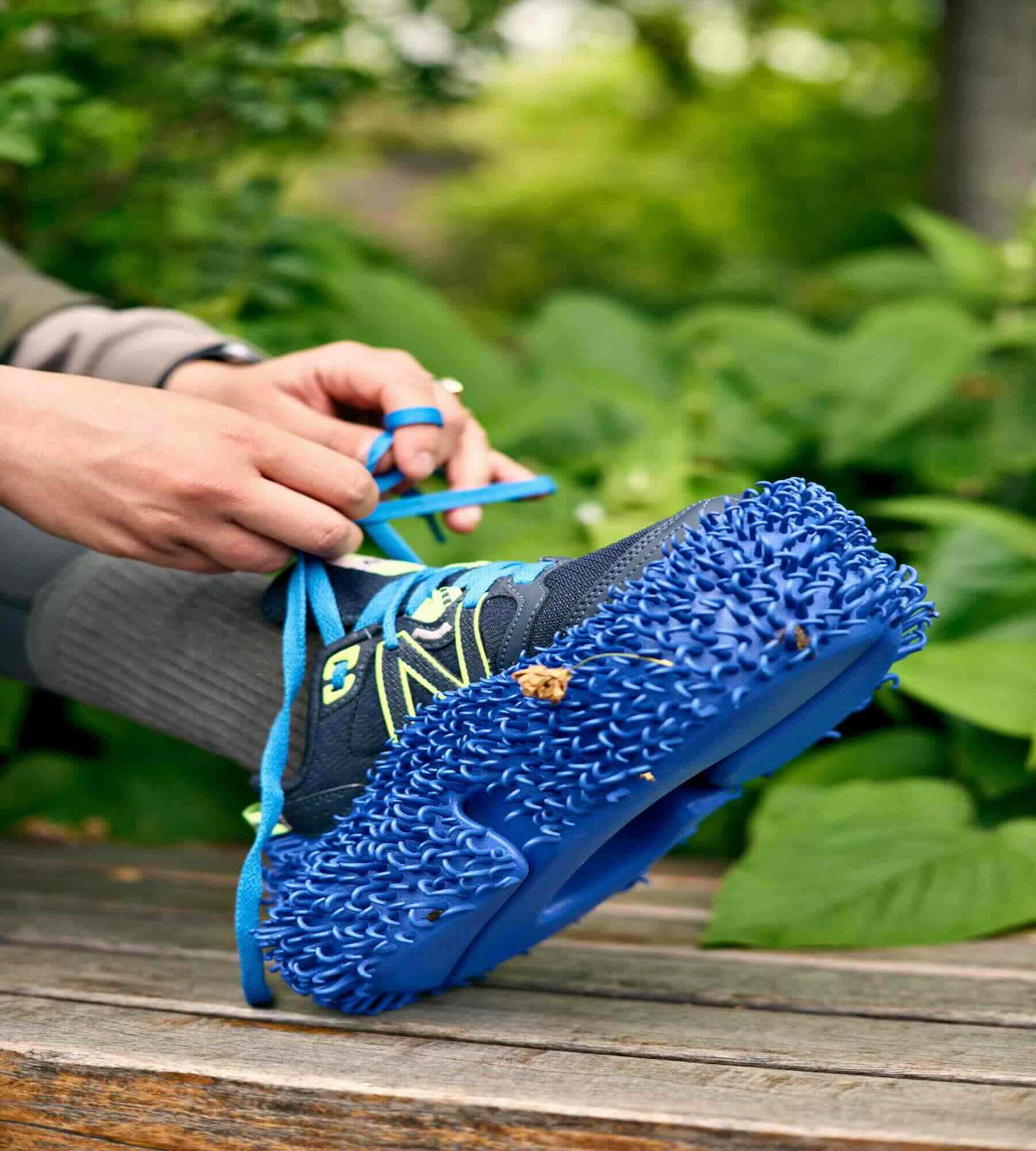
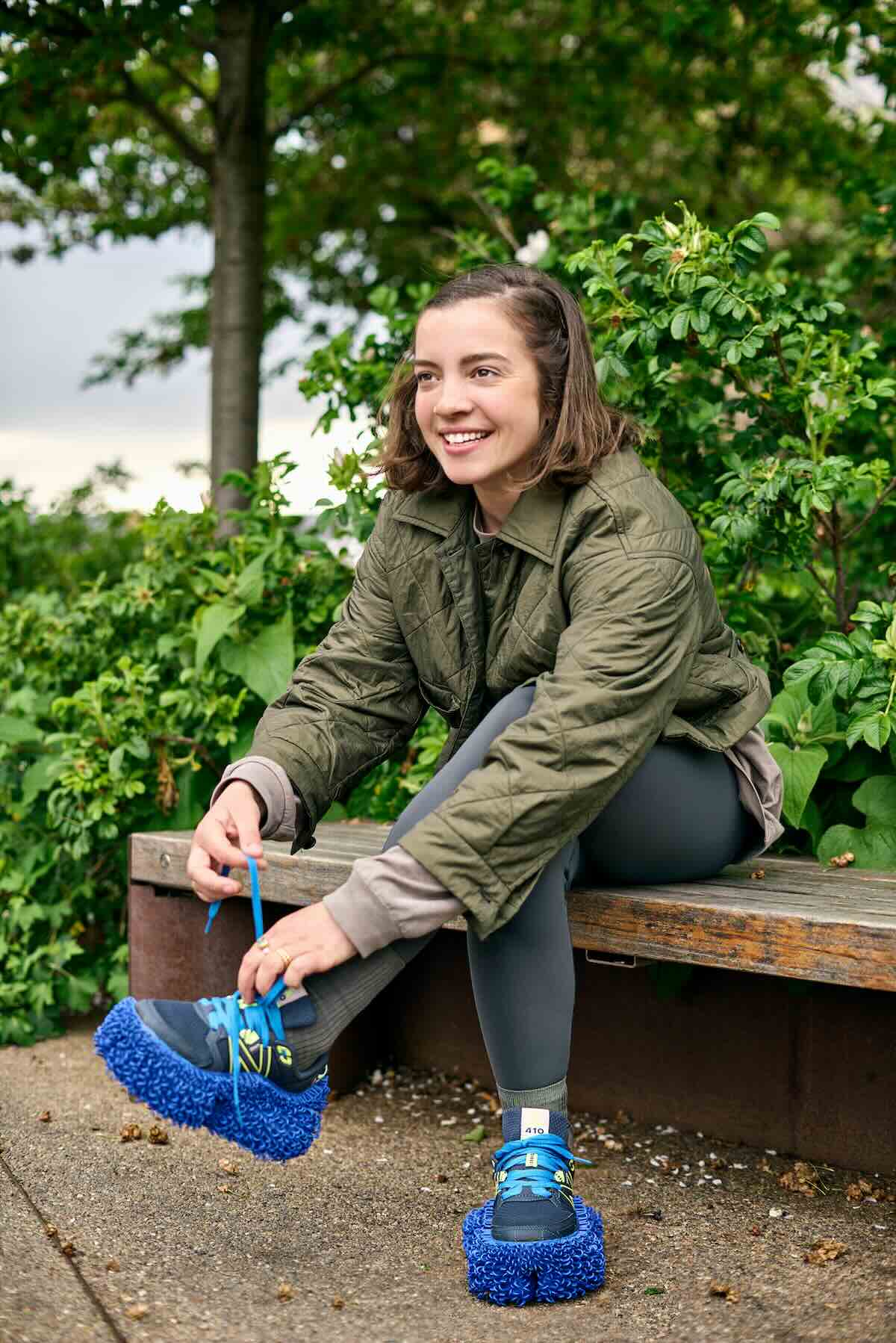
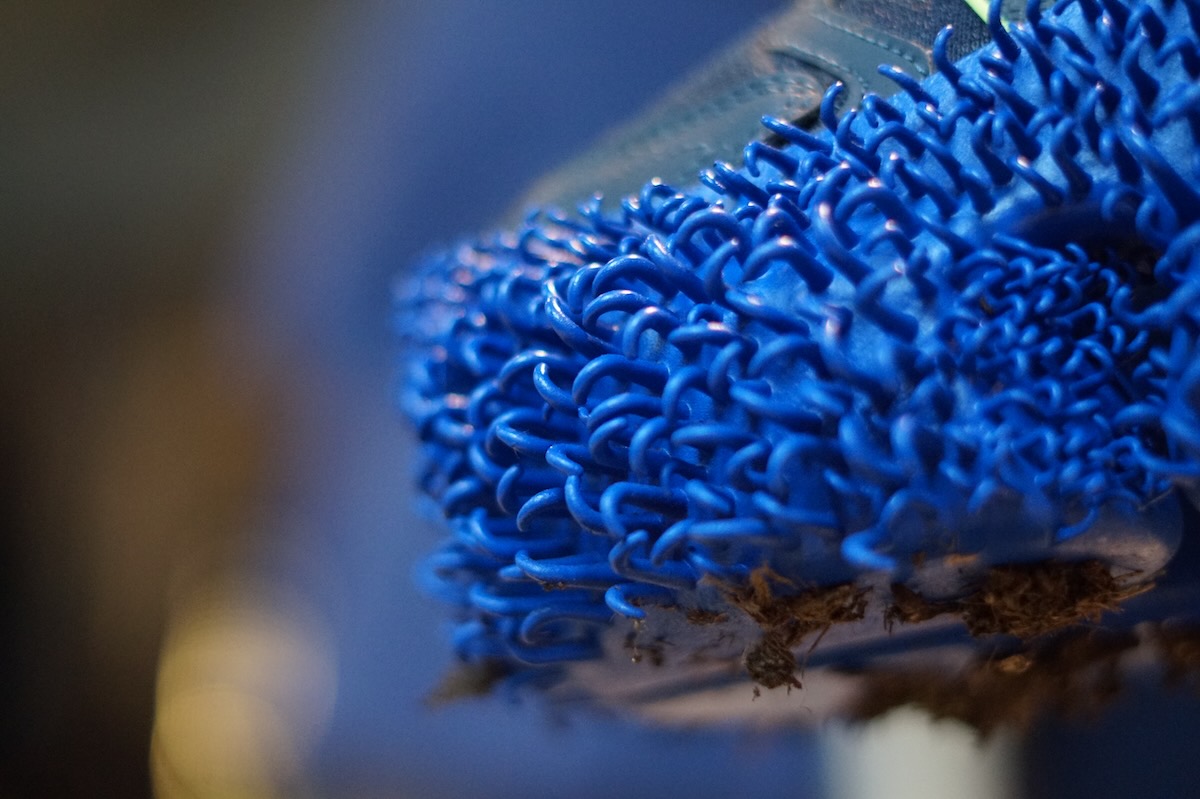
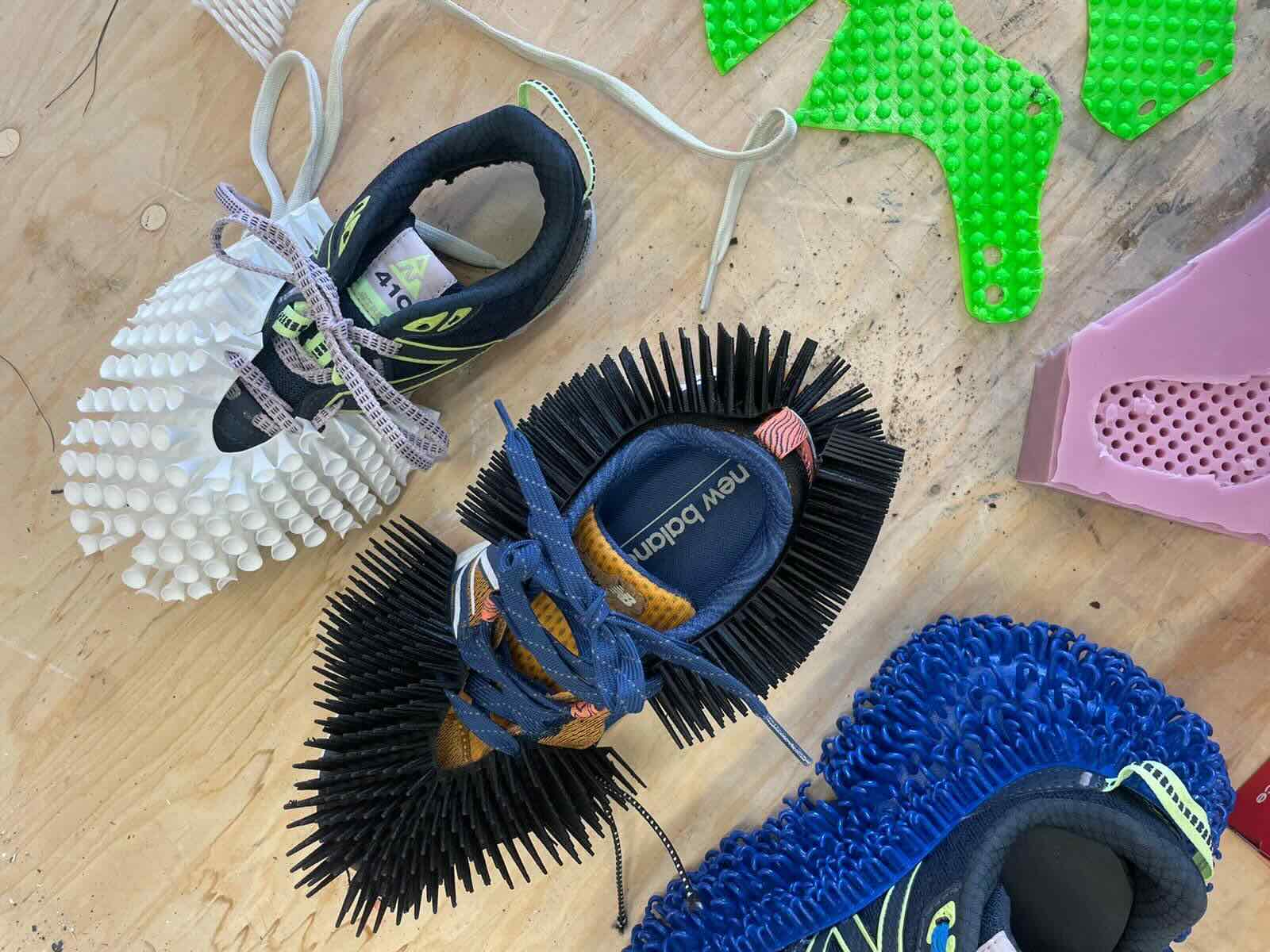
“Our awareness of natural systems is particularly fragile in cities, so engaging individuals through fashion and sport provides a unique opportunity for personal involvement. By allowing everyone to contribute, we can foster a deeper relationship with the wild in our cities and enhance our collective impact on the environment.”
HAIXI REN
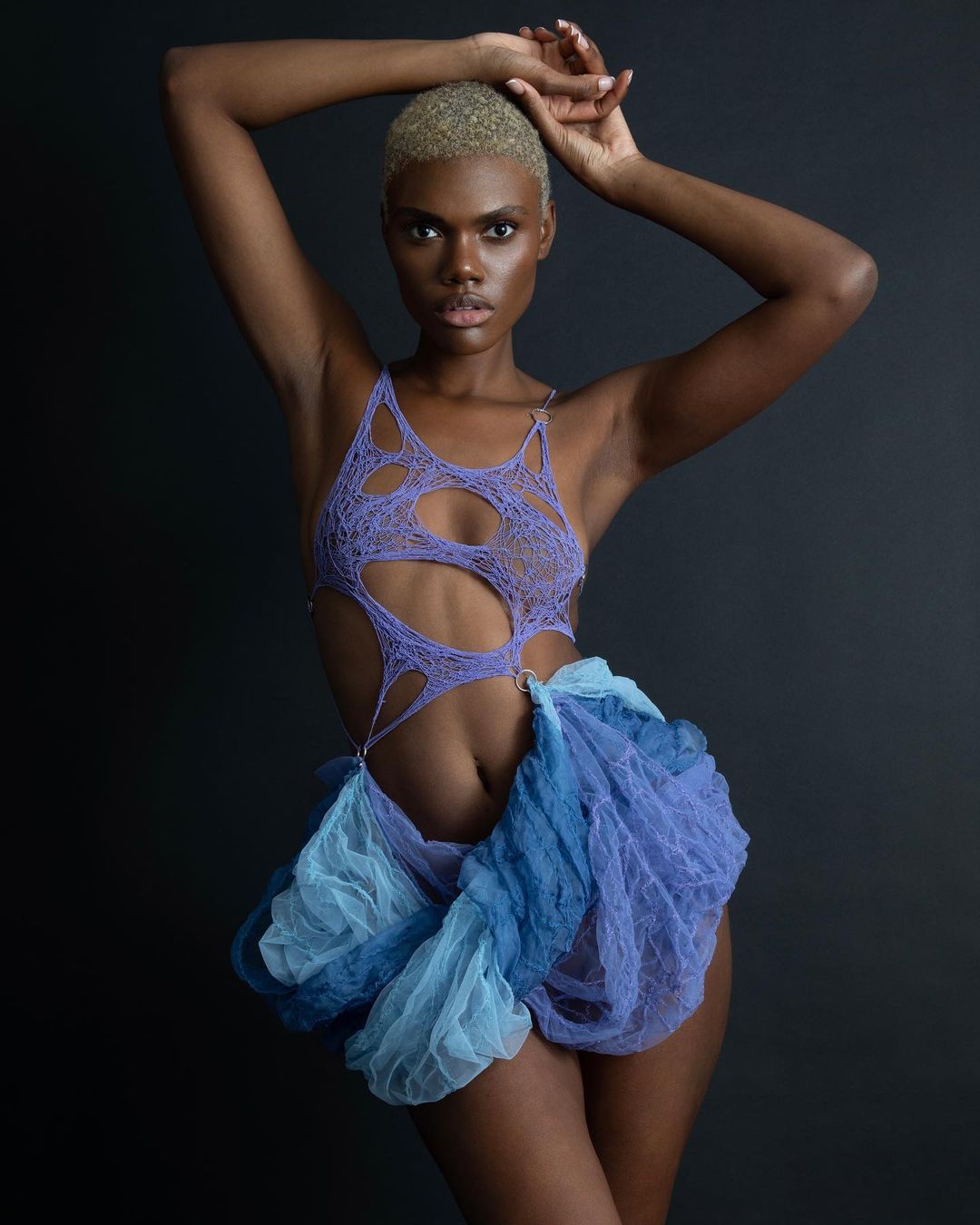
Across the pond, in New York City, the Chinese-born designer Haixi ren has been revolutionizing design in the world of haute couture by coming up with new techniques that produce little to no waste. If you have seen the viral lavender dresses worn by sisters Kendall and Kylie Jenner on Instagram, or the sheer black top work by Billie Eilish, chances are you witnessed the alluring beauty of Ren’s work.
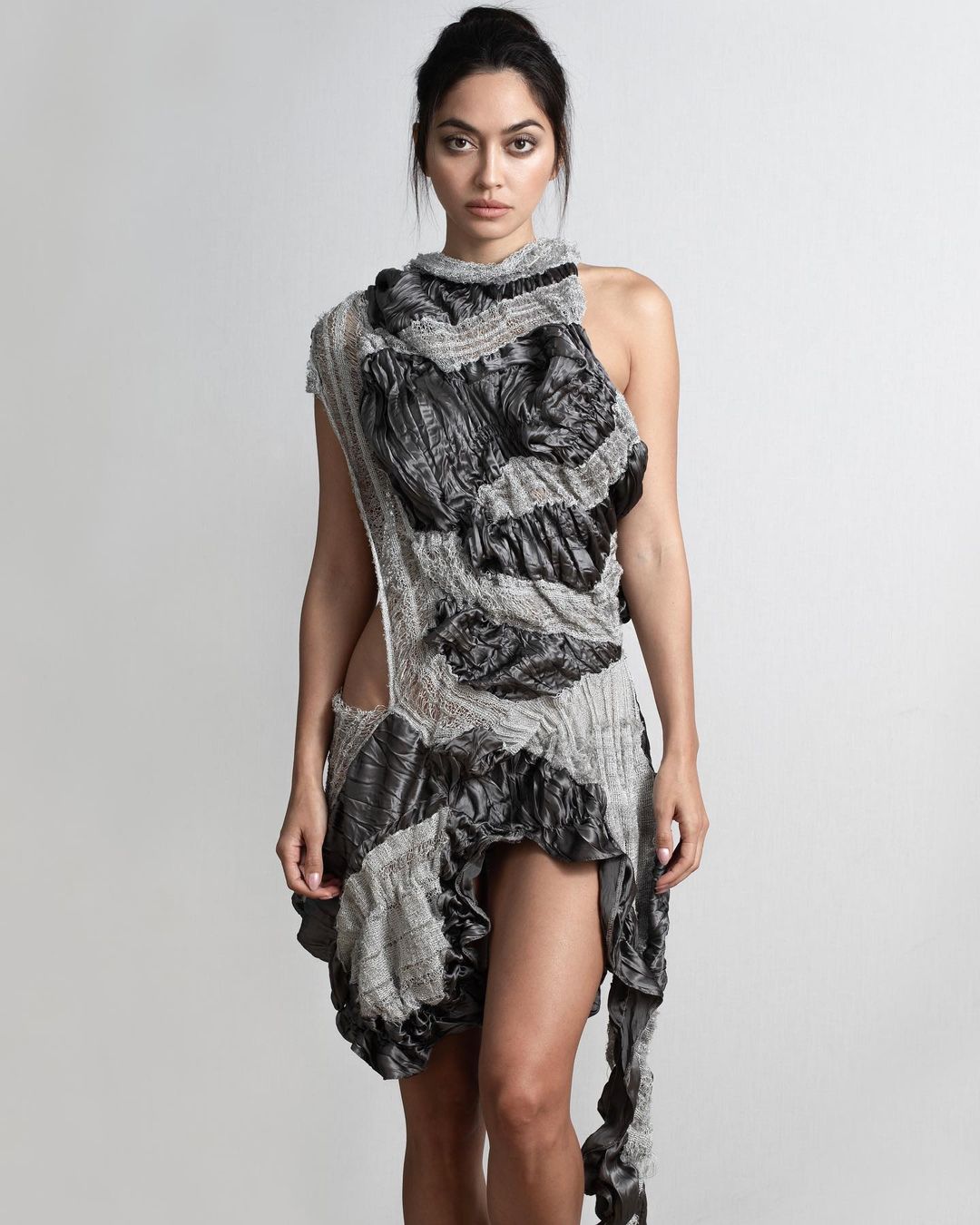
Though still at the dawn of her career, having only graduated from university 4 years ago, Ren has created collections that are rich in originality and build a remarkable signature style. A style that is sensual, soft and Ren’s own words “painterly”. For Ren, the process of garment-making is very similar to painting. Inspired by artists like Joan Mitchell or the expressionist movement, for her first collection. Ren drew heavily from “the philosophies behind pure art, which was first proposed by Clement Greenburg. Similarly to how Greenburg understands a flat canvas, I regard the body as a space to reproduce, redesign, express and analyze an existing garment form. Therefore, I created new textiles, which can be “painted” on the body.“
This technique of layering on pieces of fabric like strokes of paint becomes a vital part of Ren’s zero-waste design technique. In her prior years as a student and intern at large New York fashion houses, she noticed that, “Most brands adhere to a system that inevitably results in waste. Specifically, traditional cut-and-sew methods produce fabric scraps as a byproduct. Multiple samples, including muslin, prototypes, showroom samples, and TOP samples, are created before a style goes into production, with many of these samples and canceled styles ultimately ending up in landfills. Additionally, there are minimum order requirements for raw materials, forcing brands to order more than needed to qualify for wholesale prices. Factories also have minimum production requirements, leading to unsold garments that create financial burdens and significant waste.”
Ren is aware that there are drawbacks to the careful process by which she produces garments. For starters, she will not be able to produce at the speed and capacity of the bigger fashion houses, “Much of my work is done in-house to maintain the integrity of these sustainable practices, which can be labor-intensive and time-consuming. Balancing the demand for growth with the principles of sustainability requires constant innovation and dedication.”
Apart from fashion, Ren also expresses an interest in branching into interior design in the future, “I believe it would be very interesting to create furniture, wall paper, carpets, and home decor using my textile. By adjusting the amount of embroidery I apply to my textile I can control its stiffness. It would be wonderful to have an array of soft sculpture and shaped furniture pieces with my unique painterly aesthetic.”
The creative potential of this young designer seems boundless and there is still more to come. Her designs are becoming a fast favorite among celebrities. Still, Ren maintains her conviction that set her on the path to create: “Ultimately, I am fighting for a more sustainable future for our beloved fashion industry.”

“Ultimately, I am fighting for a more sustainable future for our beloved fashion industry.”
“I regard the body as a space to reproduce, redesign, express and analyze an existing garment form. Therefore, I created new textiles, which can be “painted” on the body.”


Highlight Image: © Human Touch


