

Nature in Romantic Literature: Why the Romantics Turned to the Wild
From Wordsworth’s daffodils to Keats’s nightingale, nature was the beating heart of the Romantic movement. Reacting against industrialism and cold rationalism, Romantic poets saw the natural world as a healer, a teacher, and a gateway to the divine. Here’s what made nature the central character of Romantic literature.
Nature in Romantic Literature
Nature is a prominent topic in the Romantic literary genre, which ran roughly from the late 18th century to the mid-19th century. This new epoch developed from a societal detachment from the Enlightenment — an era built on the premise of pure rationalism and progress — like the Industrial Revolution, when factories began to take over natural landscapes, and people began to move progressively from the countryside to the exciting, bustling life offered by cities.
Romanticism wanted to go back to the simplicity of a quieter, slower life, where soul-searching meant more than technological innovation, and literature sought a reconnection with one’s emotions and inner soul rather than the use of logic and scientific scepticism.
The works of that time exalted nature as a healer and a teacher, a companion that brings you closer to the divine, whom Romantic poets believed existed not inside man-made structures, but in the wilderness of the untouched natural world.
Romanticism: Nature vs Society
Romanticism is one of the most glaring critiques of society recorded in English literature.
Romantics opposed factories, mass production, and polluted cities, which disconnected people from their origins and created a sense of spiritual emptiness. Society required conformity, obedience, and rigid rationalism, stifling human passion, intuition, and imagination. Furthermore, they viewed social institutions and class structures as restrictive and hypocritical, corrupting human innocence.
Romanticism’s return to nature was thus an attempt on the part of those poets and authors to shield themselves from the cold, unemotional ugliness of the growing urban life. They sought refuge in the green hills, the fresh rivers, the sturdy trees, but also in something small and easily overlooked, like a daffodil:
“I wandered lonely as a cloud That floats on high o’er vales and hills, When all at once I saw a crowd, A host, of golden daffodils.”
— William Wordsworth, Poet.
How the Romantic Poets Celebrated Nature
In our contemporary world, built on a global digital overload of TikTok trends and various hypnotising algorithms, Romanticism reminds us to put our phones down, raise our heads, and gaze up at the sky. Look at the trees around us, observe the slow rhythms of a bird patiently building its nest, or a cat taking in the sun’s rays while recharging before its evening hunt.
Whether you are approaching Romantic literature for the first time or are rediscovering it, we have curated a list of some of the most prominent Romantic poets together with excerpts of their most memorable works.
“Through primrose tufts, in that sweet bower,
The periwinkle trailed its wreaths;
And ’tis my faith that every flower
Enjoys the air it breathes.”
— William Wordsworth, Poet.
WILLIAM WORDSWORTH
In his “Lines Written in Early Spring”, Wordsworth contemplates the magnificence of nature in a bittersweet way; he sees the birds hopping and playing and the flowers enjoying the sweet spring air. Yet, this beauty saddens him as it juxtaposes with the ugly ways humans often treat one another.
“’Tis not through envy of thy happy lot,
But being too happy in thine happiness, —
That thou, light-winged Dryad of the trees,
In some melodious plot
Of beechen green, and shadows numberless,
Singest of summer in full-throated ease.”
— John Keats, Poet.
JOHN KEATS
“Ode to a Nightingale” is a poem that links humanity’s inevitable fate to nature. Keats opens his work by telling the nightingale that he is not jealous of its singing, because listening to that song is a blissful experience. Yet, Keats is quickly reminded of the fleetingness of life. The nightingale here becomes a symbol of how in life, nothing lasts forever.
Keats is not entirely saddened by this realisation, though; perhaps our ability to make peace with the fact that everything eventually fades is what makes us capable of enjoying life’s moments to the fullest.
“I am the daughter of Earth and Water,
And the nursling of the Sky;
I pass through the pores of the ocean and shores;
I change, but I cannot die.”
— Percy Bysshe Shelley, Poet.
PERCY BYSSHE SHELLEY
In “The Cloud”, Shelley imagines himself personifying a cloud that constantly transforms, bringing shade, snow, rain, and storms, and who interacts playfully with the sun and the moon. The cycles of nature described in this poem bring a strong message: the cloud cannot die, because through its destruction, it always finds its rebirth. Once reduced to rain, it will eventually arise and transform once more.
“Alone I wander — Calm untroubled rest,
‘Nature’s soft nurse,’ deserts the sigh-swoln breast,
And shuns the eyes, that only wake to weep!”
— Charlotte Smith, Poet.
CHARLOTTE SMITH
In her sonnet “The Night-Flood Rakes”, Smith presents an external chaos that mirrors her internal pain as she grieves. The ocean’s rage is not beautiful but intense, and it echoes her mourning. Nature here works as a mirror to human emotion.
“There is a pleasure in the pathless woods,
There is a rapture on the lonely shore,
There is society where none intrudes,”
— Lord Byron, Poet.
LORD BYRON
In this poem entitled “Childe Harold’s Pilgrimage [There is a pleasure in the pathless woods]”, Byron exalts humans’ inherent need for solitude. Although we are social creatures, Byron believed that at some point, we could all benefit from a lonely, silent walk in nature to reconnect with ourselves and dwell in contemplation.
An Honorary Mention: Mary Oliver
Mary Oliver does not belong to the Romantic literary canon of the past. However, she was one of the most prominent poets to celebrate nature in our times. Her works teach us that no matter which century, nature always remains the best teacher we have.
“The Summer Day” by Oliver explores the theme of nature as a spiritual guide. The speaker encounters a grasshopper, and this meeting sparks a meditation about mortality and the preciousness of life.
Romantic literature reminds us that the pull of nature is timeless. Whether through Wordsworth’s quiet fields, Shelley’s ever-changing clouds, or Mary Oliver’s grasshopper, the message remains the same: nature grounds us, mirrors us, and teaches us how to live. In an age of digital noise, the Romantics’ invitation to look up at the sky might be more urgent than ever.
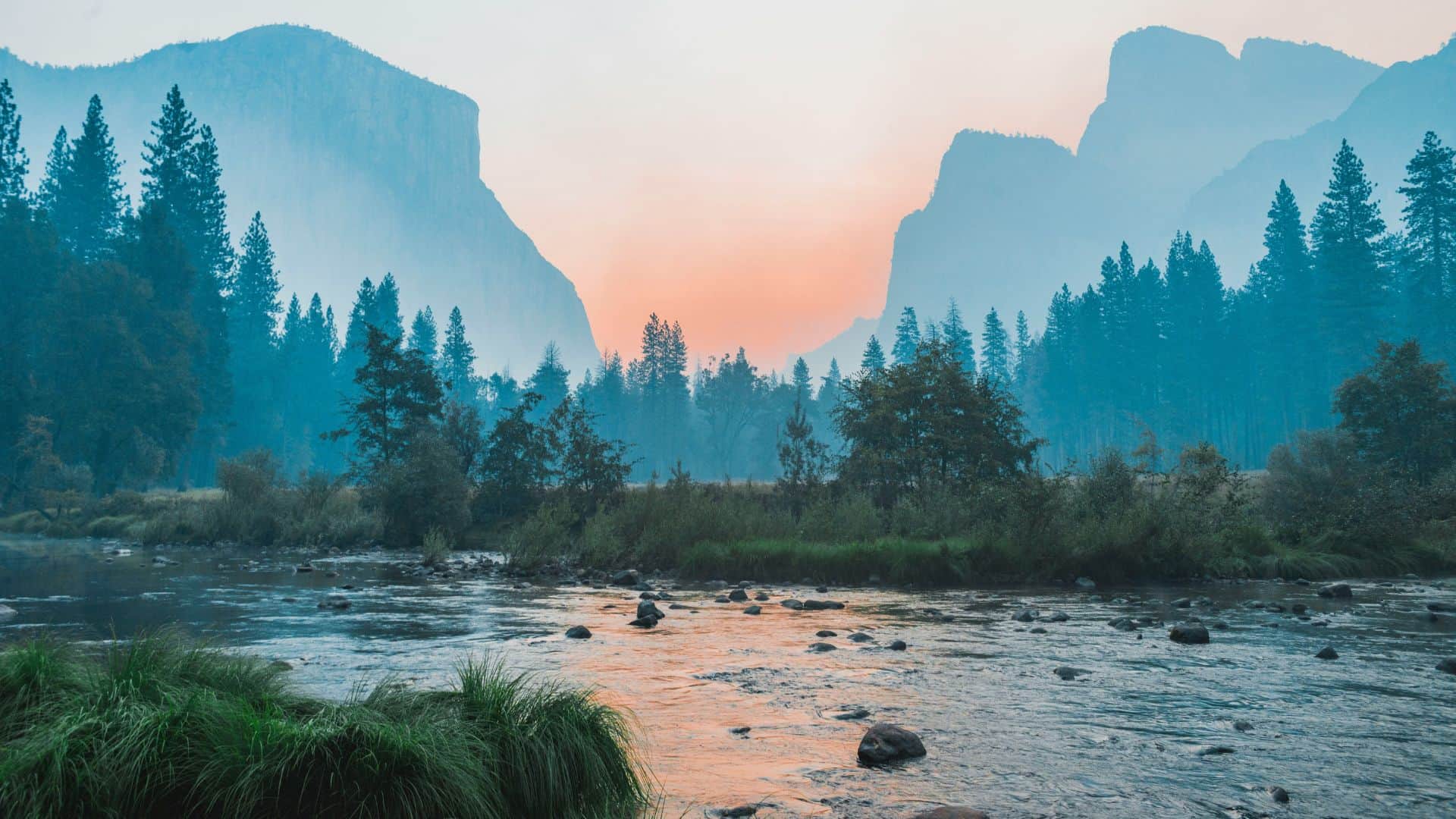
Highlight Image:
@Bailey Zindel via Unsplash
“Doesn’t everything die at last, and too soon?
Tell me, what is it you plan to do
with your one wild and precious life?”
— Mary Oliver, Poet.


