

Première Vision Paris 2026 | Where Fashion Meets Politics
From European regulation and the fight against ultra fast fashion to the Digital Product Passport, AI, competitiveness and the rising cost of sustainable transformation, Première Vision Paris 2026 revealed a fashion industry entering a distinctly political era. Yet amid regulation and technology, creativity, materials and savoir faire remained at the heart of the conversation.
We arrived to Première Vision Paris, held from 1 to 3 September 2026 at Paris Nord Villepinte, with lots of questions. Fashion is navigating one of its most politically charged moments in recent years, with European regulation accelerating, pressure mounting on ultra fast fashion, the Digital Product Passport moving closer to implementation, and questions around competitiveness, sourcing and the real cost of sustainable transformation becoming increasingly urgent.
For years, sustainability was discussed largely as a question of environmental and social responsibility. Today, many of those ambitions are moving into a different territory: regulation, compliance, competitiveness and access to the European market. At Première Vision Paris, that transition was impossible to ignore.
The conversations taking place around fabrics, fibres and manufacturing increasingly extended towards Brussels. How will European regulation reshape the way fashion products are designed and sold? How can European companies absorb the cost of compliance while competing with ultra fast fashion platforms operating under very different economic models? How will the Digital Product Passport work in practice? And who will ultimately pay for fashion’s sustainable transformation?
Première Vision dedicated the show to Innovation & Technology, positioning innovation as a driver not only of environmental transformation, but of performance and competitiveness. More than 900 international exhibitors presented solutions across the fashion value chain, from next generation materials and traceability to artificial intelligence, digital design, manufacturing and technical textiles. But some of the most important developments were happening beyond the stands.
How will European regulation reshape the way fashion products are designed and sold? How can European companies absorb the cost of compliance while competing with ultra fast fashion platforms operating under very different economic models? How will the Digital Product Passport work in practice? And who will ultimately pay for fashion’s sustainable transformation?

FROM THE PREMIERE VISION DECLARATION TO POLITICAL ACTION
One year ago, Première Vision became the setting for an unusually political moment in the European textile industry. European fashion and textile federations gathered in Villepinte to denounce the competitive imbalance created by ultra fast fashion and call for stronger European action.
This September, they returned with something tangible to discuss. The European textile and apparel industry welcomed the abolition of the €150 customs duty exemption for low value consignments and the introduction of a temporary €3 customs duty. For the federations, however, these measures represent only a first step.
Their new joint statement calls on the European Commission and Member States to introduce a meaningful EU wide handling fee reflecting the real costs generated by billions of direct to consumer parcels entering Europe. While a fee of around €2 to €4 per parcel has been discussed, the federations argue that approximately €10 would provide a more realistic benchmark for contributing to customs processing, risk analysis, logistics, market surveillance and product safety enforcement.
European manufacturers are not simply asking for protection from cheaper competitors. Their argument is that companies selling into the same market should operate under comparable rules.
Mario Jorge Machado, President of EURATEX, put the scale of what is at stake into perspective: Europe’s textile industry represents 1.3 million jobs and around 200,000 companies, the vast majority SMEs.
The federations are therefore calling for online platforms to assume greater responsibility for customs compliance, for loopholes between B2C and B2B imports to be closed and, crucially, for regulatory burdens on compliant European companies to be considered alongside tougher controls on imports.
Europe’s textile industry represents 1.3 million jobs and around 200,000 companies, the vast majority SMEs.
CLOSER DOES NOT ALWAYS MEAN EASIER
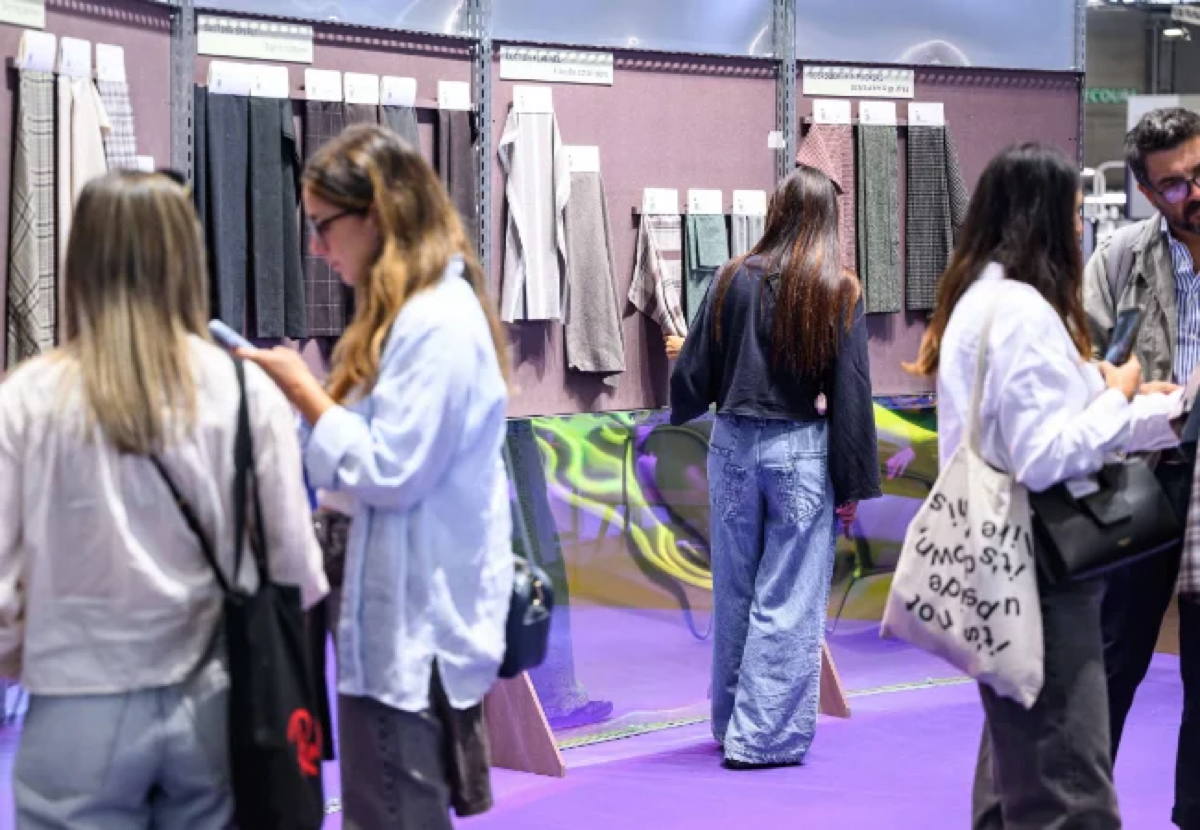
The desire to bring more manufacturing closer to European markets was another subject of the event. The logic is attractive: shorter supply chains, greater control, proximity and potentially greater resilience. The reality is considerably harder.
This explains why Première Vision’s manufacturing offer is evolving too. Near sourcing may be desirable where the necessary infrastructure exists. But distant sourcing can remain valuable when it provides exceptional expertise that cannot simply be reproduced elsewhere.
That question leads naturally towards Première Vision’s next chapter. During the September edition, the fair announced that India will become the next focus of its Territories of Savoir-Faire programme, following chapters dedicated to France, Japan and Portugal.
The project is being developed in collaboration with the Indian Embassy in France and India’s Ministry of Textiles and will take centre stage at Première Vision Paris from 26 to 28 January 2027.
The timing is significant. The initiative comes alongside a broader rapprochement between India and Europe and will place artisanal weaving, textile expertise and creative craftsmanship at the centre of the next edition.
For Luxiders, this may be one of Première Vision’s most meaningful directions. Because after years spent asking what technology can do for fashion, the industry is beginning to rediscover another form of innovation: knowledge that has survived for generations.
Mayouri Sengchanh, responsible for Première Vision for Germany, Austria, Switzerland, Netherlands, Poland, recalled the example of an ambitious denim manufacturing project in Mönchengladbach, Germany. Bringing garment production back does not automatically rebuild the ecosystem needed to support it. Fibres, spinning, weaving, dyeing, finishing, machinery, expertise and price all have to align.
THE REALITY BEHIND MATERIAL INNOVATION
Première Vision is synonymous with material innovation, but the September edition also raised a more fundamental question: does fashion necessarily need more materials, or does it need to use materials better?
At fibre and yarn level, transformation remains particularly complex.
Mayouri Sengchanh, responsible for Première Vision Office for Germany, Austria, Switzerland, Netherlands, Poland, points to a paradox. Much of the yarn industry remains closely connected to the chemical sector, particularly where elasticity, technical performance and consistency are required. More responsible alternatives are emerging, but many remain in development, carry higher prices or cannot yet compete at commercial scale.
As she explained, an innovative solution might account for a small percentage of sales destined for luxury companies, while the overwhelming majority of production continues to rely on conventional chemical based fibres. This does not make innovation irrelevant. It makes scalability critical.
Première Vision itself appears increasingly aware of this shift. Earlier in 2026, the organisation described responsible innovation as a prerequisite, but specified that it now needs to be “concrete, scalable, and immediately actionable”.
That may be one of the most significant changes in the sustainability conversation. The industry is moving from asking what is possible towards asking what can actually be implemented.
SUSTAINABILITY BECOMES AN ECONOMIC QUESTION
So, how do we make fashion more responsible without making responsible European production economically impossible? This tension also emerged strongly in our conversation with Mayouri Sengchanh. “The price of sustainability is high,” she told Luxiders. The sentence is simple, but behind it lies one of the industry’s most difficult realities.
A fashion company can introduce a bio based polymer, an upcycled material or a new cellulose based solution into part of a collection. Doing so across an entire product range is much more complicated. And the calculation does not stop with the main fabric. Yarn, buttons, zips, labels, packaging, manufacturing and logistics all form part of the product’s footprint and, increasingly, its regulatory obligations.
Première Vision has consequently strengthened its focus on packaging and accessories, precisely because these apparently secondary components are becoming part of a much larger conversation around compliance and material choices.
For Mayouri Sengchanh: “Being genuinely circular requires considering the complete life cycle of the product, from sourcing and production to packaging and marketing.And it costs a lot.”
That reality complicates one of fashion’s most repeated assumptions: that sustainable transformation is simply a question of choosing the right alternative. Sometimes the alternative exists. The harder questions are whether it can scale, whether manufacturers can work with it, whether brands can afford it and whether consumers will pay for it.
CAN FASHION REGULATE ITSELF WITHOUT REGULATING CREATIVITY?
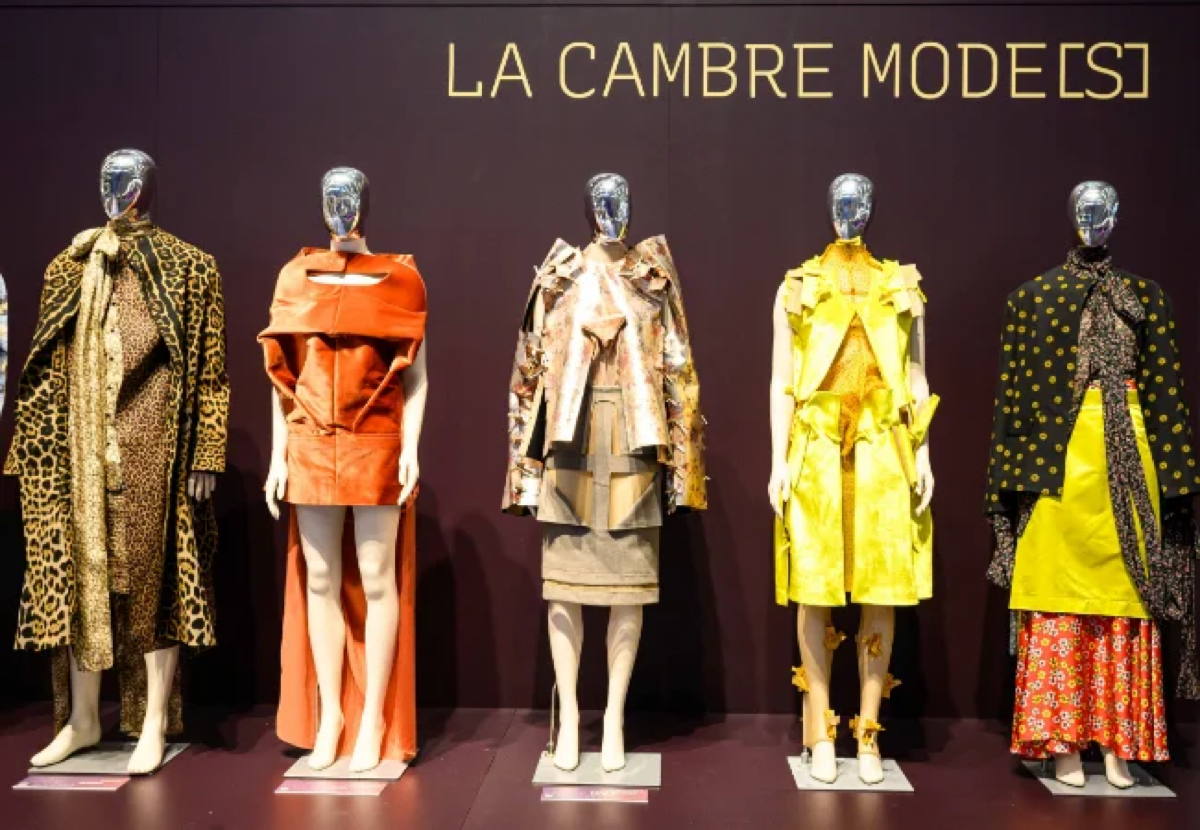
Yet regulation creates another paradox. Fashion needs new rules. But it also needs imagination. According to Mayouri, “creativity itself is increasingly under pressure from another force: data.” Brands today have extraordinary visibility over what sells, what does not, which colours perform and which products should remain permanently in stock. This improves commercial efficiency, but it can also create increasingly predictable collections.
Mayouri described brands operating within tightly controlled structures where only a relatively small proportion of a collection may be devoted to new colours, materials or innovation, while the remainder is dominated by continuity products and proven bestsellers.
Première Vision is deliberately trying to disrupt that logic. One subtle example can be found in its approach to colour. “Rather than dictating several fixed seasonal colour stories, the fashion team has begun offering broader directions from which designers are encouraged to construct their own palettes.” – said Mayouri. The reason is remarkably straightforward. “If you say, it’s pink this season or it’s blue this season, at the end, we will have everything the same in the windows.”
The objective, Mayouri explains, is to “re-boost creativity”. At a moment when algorithms can identify what consumers already want with extraordinary precision, perhaps one of fashion’s greatest challenges will be retaining the courage to propose something they have not yet asked for.
WOOL, LEATHER AND THE QUESTION OF LONGEVITY
That return to materiality also brought familiar natural materials back into the conversation. Wool emerged strongly within the winter offer.
Mayouri describes it almost as a “superhero material”, naturally antibacterial, insulating and capable of regulating comfort. Yet once again, its weakness in today’s market is not necessarily performance. It is price.
Genuine leather was also prominent, including heavier qualities associated with longevity, while discussions around real fur reopened one of sustainable fashion’s most uncomfortable debates. The question is not one Luxiders believes can be resolved through simplistic labels. Animal welfare matters. So do fossil resources, chemistry, durability, energy use, microplastics, repairability and end of life.
A petroleum based material does not automatically become environmentally preferable because it is described as “vegan”, just as a natural material cannot automatically be considered sustainable because it comes from nature. If the next era of fashion is going to be more regulated, it must also become more precise.
This perhaps explains Première Vision’s changing role. The fair remains fundamentally a sourcing destination. But increasingly, it also functions as a place where the industry attempts to decode what is happening around sourcing.
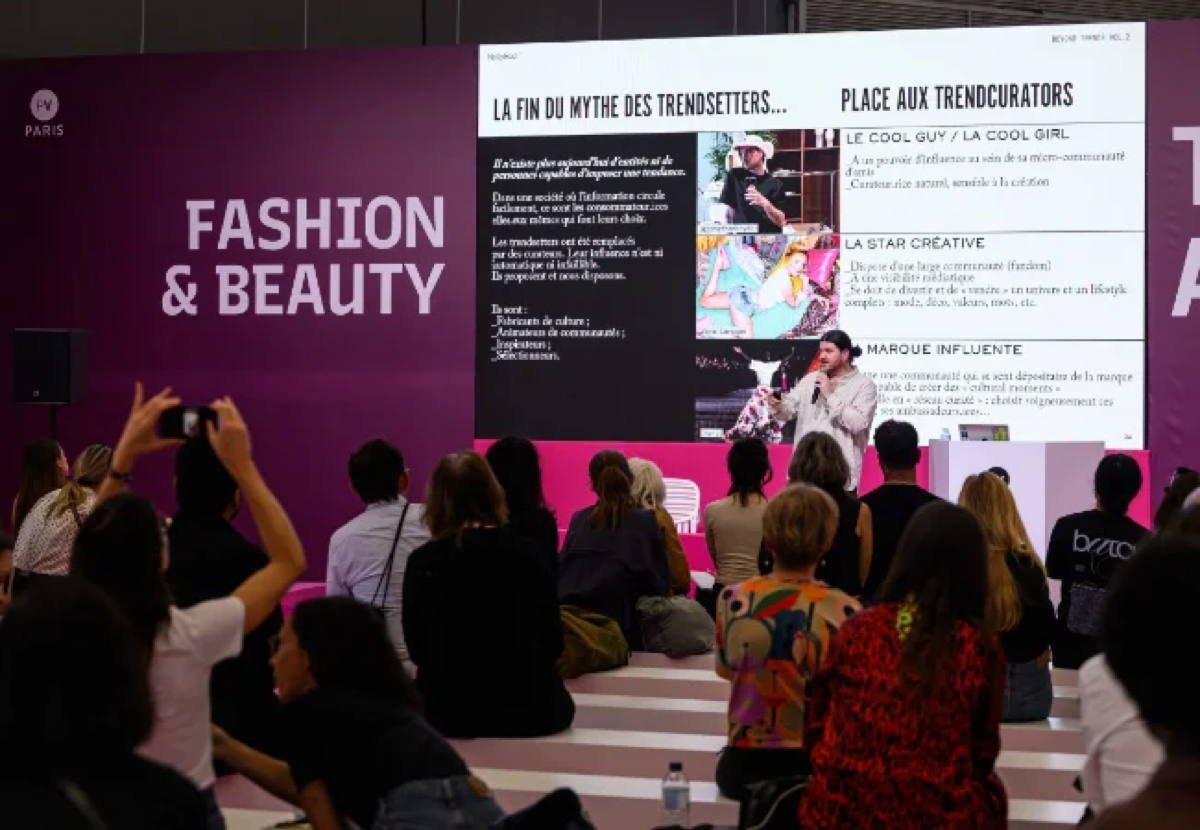
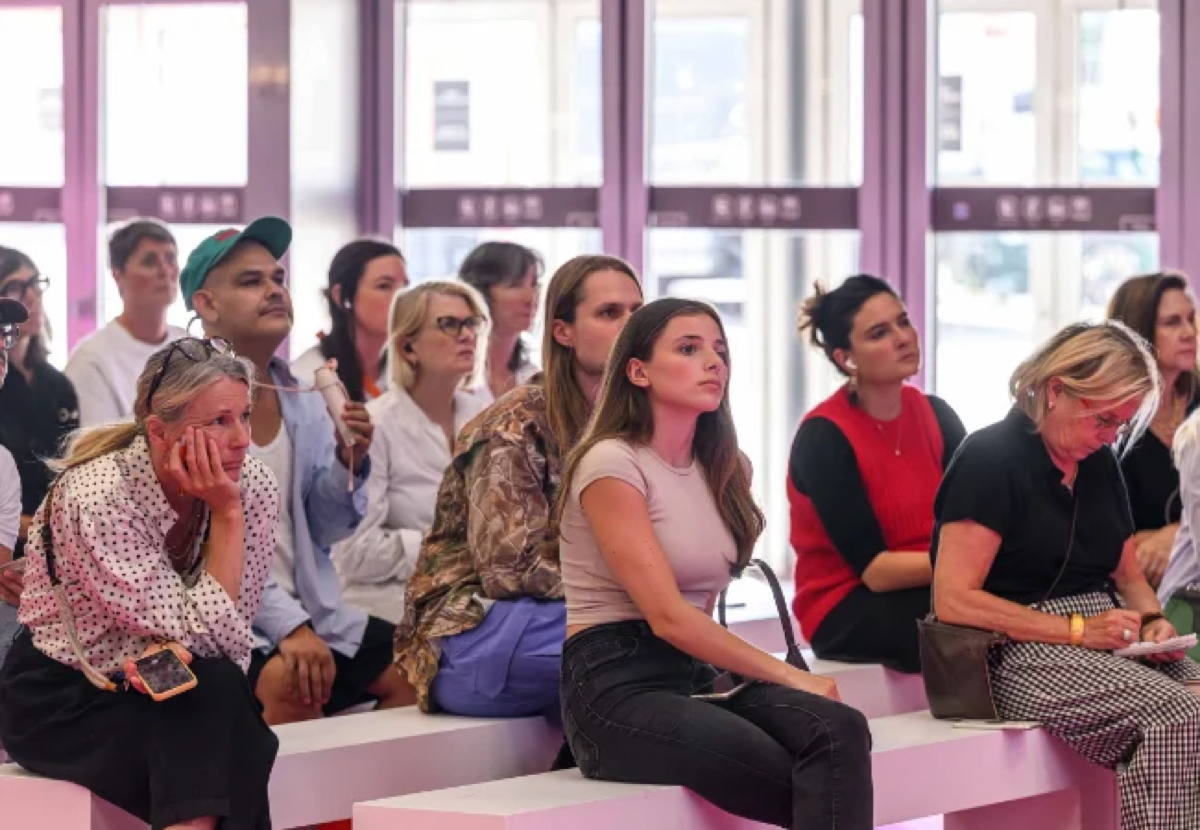
Its September conference programme brought together more than 100 international experts discussing innovation, sustainability, technology, creativity, markets and changing consumer behaviour.
The Facing Fashion Forward programme confronted profitability, margin protection, AI, chemical recycling, fossil fuel dependency and the practical implementation of the Digital Product Passport. These are not abstract questions anymore. They determine which materials brands select, which suppliers they can work with, what information they must collect and, ultimately, what products reach the market.
In that sense, Première Vision has become as much a knowledge hub for fashion’s transformation as a showcase for its materials.
All Images:
@ Courtesy by
Première Vision


