


Texworld Paris 2026 | How Innovation, Circularity and New Sourcing Destinations Are Reshaping Fashion
Dynamic aisles and an increasingly diversified sourcing landscape, garments grown with bacterial cellulose, crystals made from human sweat, technologies designed to prevent textile waste before it exists… Texworld Apparel Sourcing Paris 2026 offered a revealing snapshot of an industry in transition. For Luxiders, the most compelling message from Paris was clear: the future of fashion sourcing is no longer simply about where we manufacture, the future of fashion sourcing is no longer simply about where and how we manufacture, but about taking responsibility for production volumes, product quality, recyclability and carbon footprint.
AS THE RULES OF FASHION ARE CHANGING
The timing was difficult to ignore. As the doors of Texworld Apparel Sourcing Paris opened at Paris-Le Bourget on August 31, the European fashion industry was entering September with regulation increasingly moving from future discussion to business reality.
For years, sustainability at textile fairs could remain largely a conversation about voluntary commitments, certifications, better fibres and individual corporate targets. That era is ending.
Across Europe, new requirements around product sustainability, circularity, waste, producer responsibility and traceability are gradually changing what fashion companies will need to know about the products they place on the market. At the same time, France’s battle against ultra-fast fashion has placed another fundamental question at the centre of the political debate: should a business model built around enormous volumes of extremely cheap clothing continue to operate under the same rules as the rest of the industry?
Against that backdrop, Texworld suddenly becomes more than a place to look for fabrics or manufacturers. Because sourcing decisions that once revolved primarily around price, quality, lead times and minimum quantities are increasingly connected to another vocabulary: traceability, environmental impact, durability, circularity, compliance and geopolitical resilience.
And we could feel that transition on the ground.
For years, sustainability at textile fairs could remain largely a conversation about voluntary commitments, certifications, better fibres and individual corporate targets. That era is ending.


WHAT WE SAW AT TEXWORLD
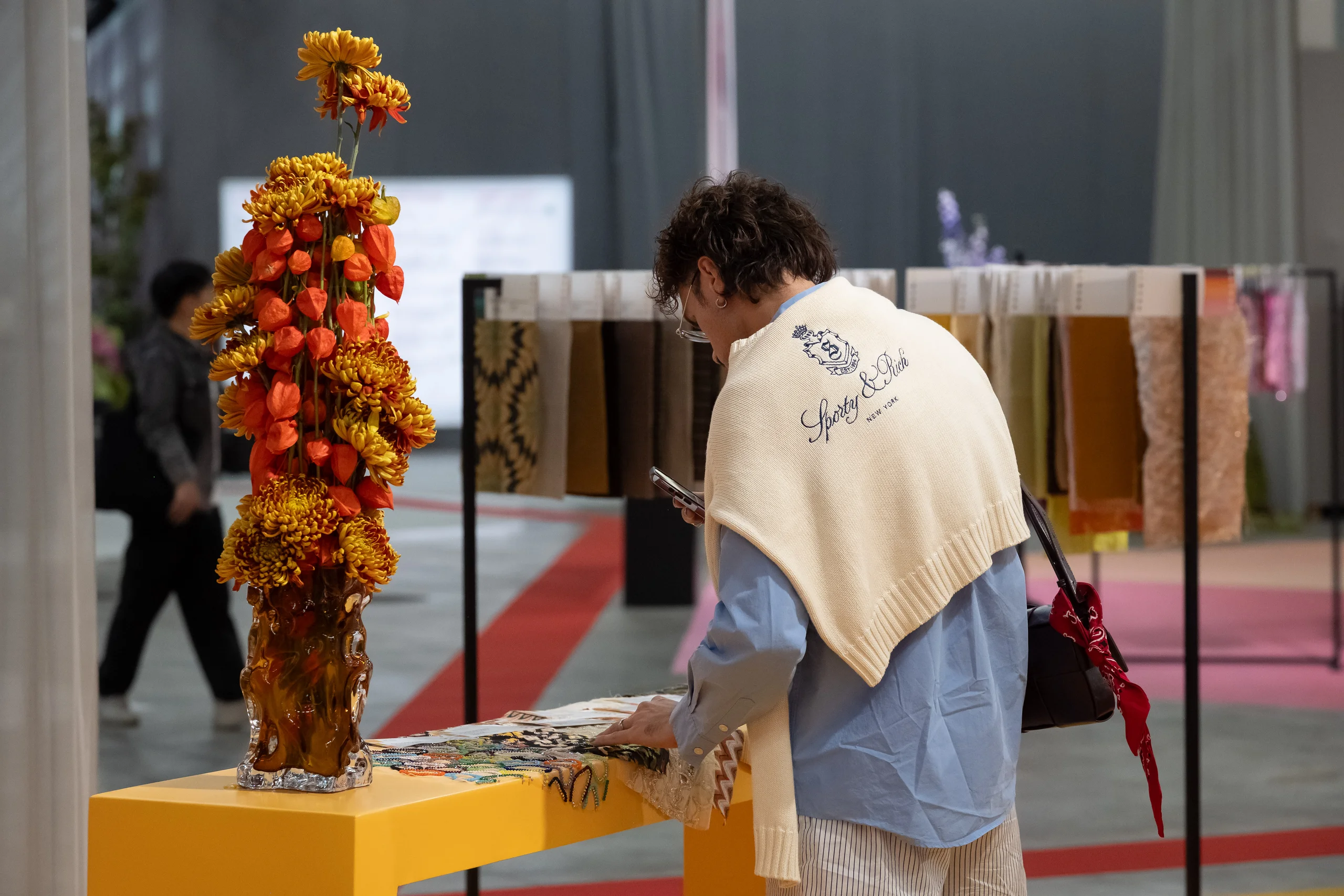
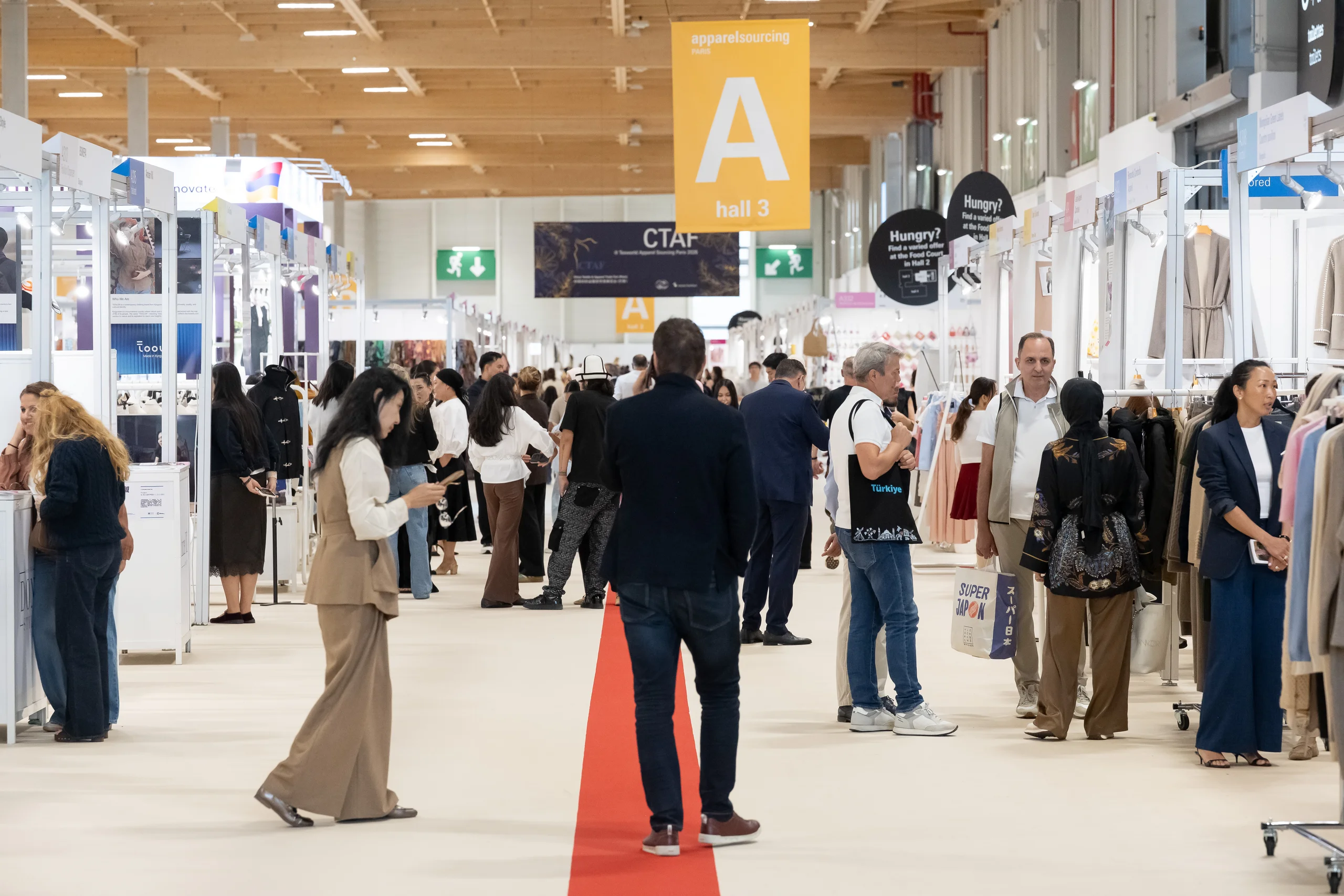
Our first impression was surprisingly immediate: Texworld felt dynamic.From the first hours of the morning on the opening day, the aisles were animated. Buyers moved continuously between stands, conversations did not stop, and the activity remained noticeable well into the afternoon.
After speaking with exhibitors and visitors throughout the fair, there was a sense of an industry that, despite considerable uncertainty, is actively looking for new opportunities.
But something else caught our attention as we walked through the sourcing halls. Texworld has historically been strongly associated with Asian textile manufacturing, and Asian producers unquestionably remain at the core of the fair. Yet this edition felt more geographically diverse. Among the established Asian manufacturers, European and near-sourcing suppliers appeared, while new sourcing destinations were entering the conversation. That observation reflects a deliberate evolution within the fair itself.
Texworld Apparel Sourcing Paris introduced or strengthened sourcing opportunities connected to countries including Armenia, Kyrgyzstan, Uzbekistan and Bulgaria, while the Near Sourcing Hub brought together alternatives closer to European brands, including Portugal, Greece, Morocco, Tunisia, Bulgaria and Romania. India, meanwhile, emerged as another important protagonist as changing trade relations with the European Union could significantly influence its competitiveness within the European textile market.
What initially appeared to us simply as a changing mix of exhibitors therefore revealed something much larger. Fashion is reconsidering its sourcing map. Not necessarily because globalisation is disappearing, but because dependence has become a risk.
Geopolitical instability, trade policy, regulation and supply-chain disruption mean that sourcing from one dominant region is no longer only an economic decision. Diversification itself is becoming a form of resilience. And this is where the central question of Texworld Paris 2026 begins to emerge.
Sourcing is no longer simply about who can make a garment. It is about where it should be made, from what, under which conditions, how transparently and what will happen to its materials when that garment is no longer wanted.
Walking from Texworld into Avantex, those questions became even more radical.
Because there, some designers were no longer asking where tomorrow’s materials should come from. They were asking what a material could be at all.
Fashion is reconsidering its sourcing map. Not necessarily because globalisation is disappearing, but because dependence has become a risk.
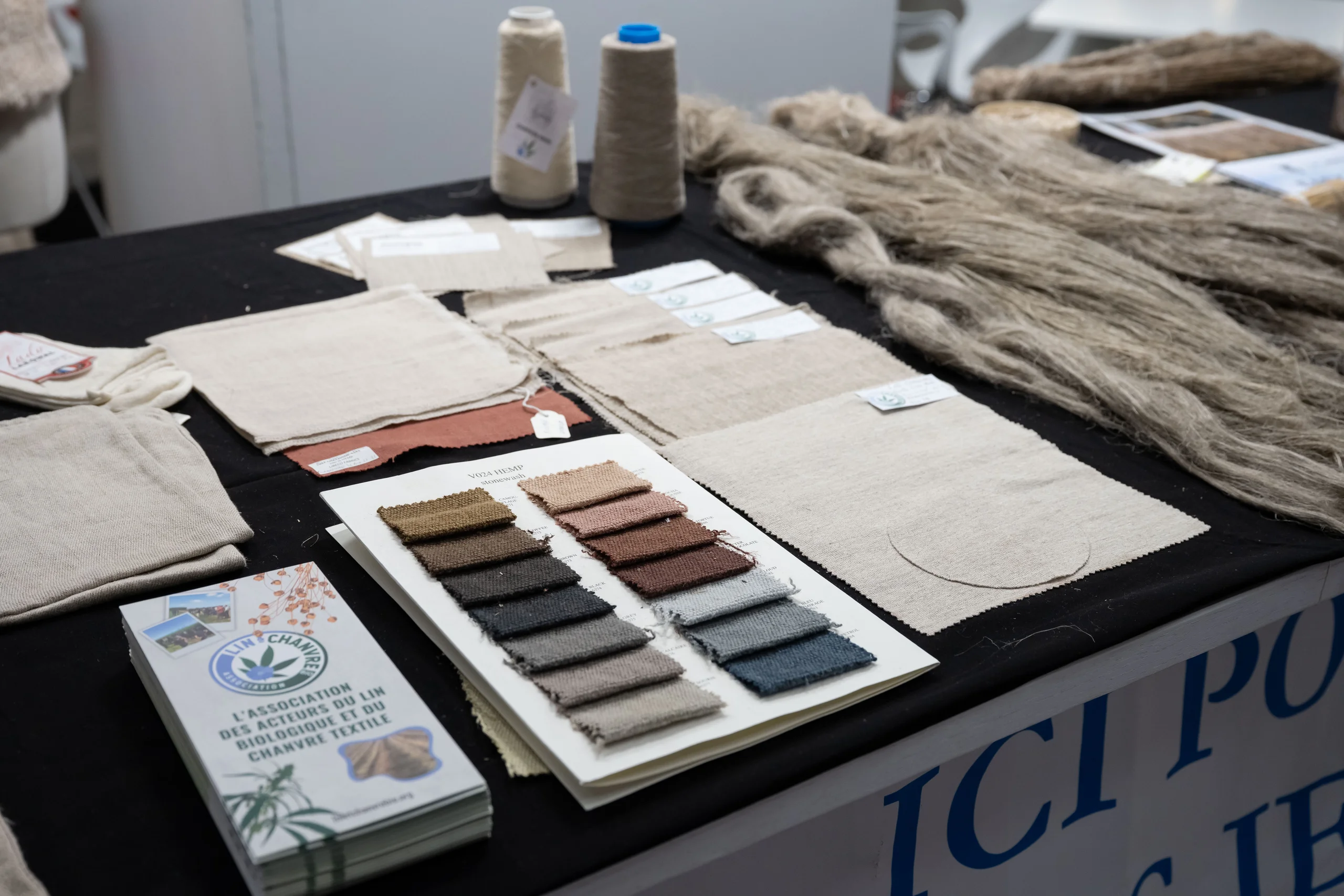
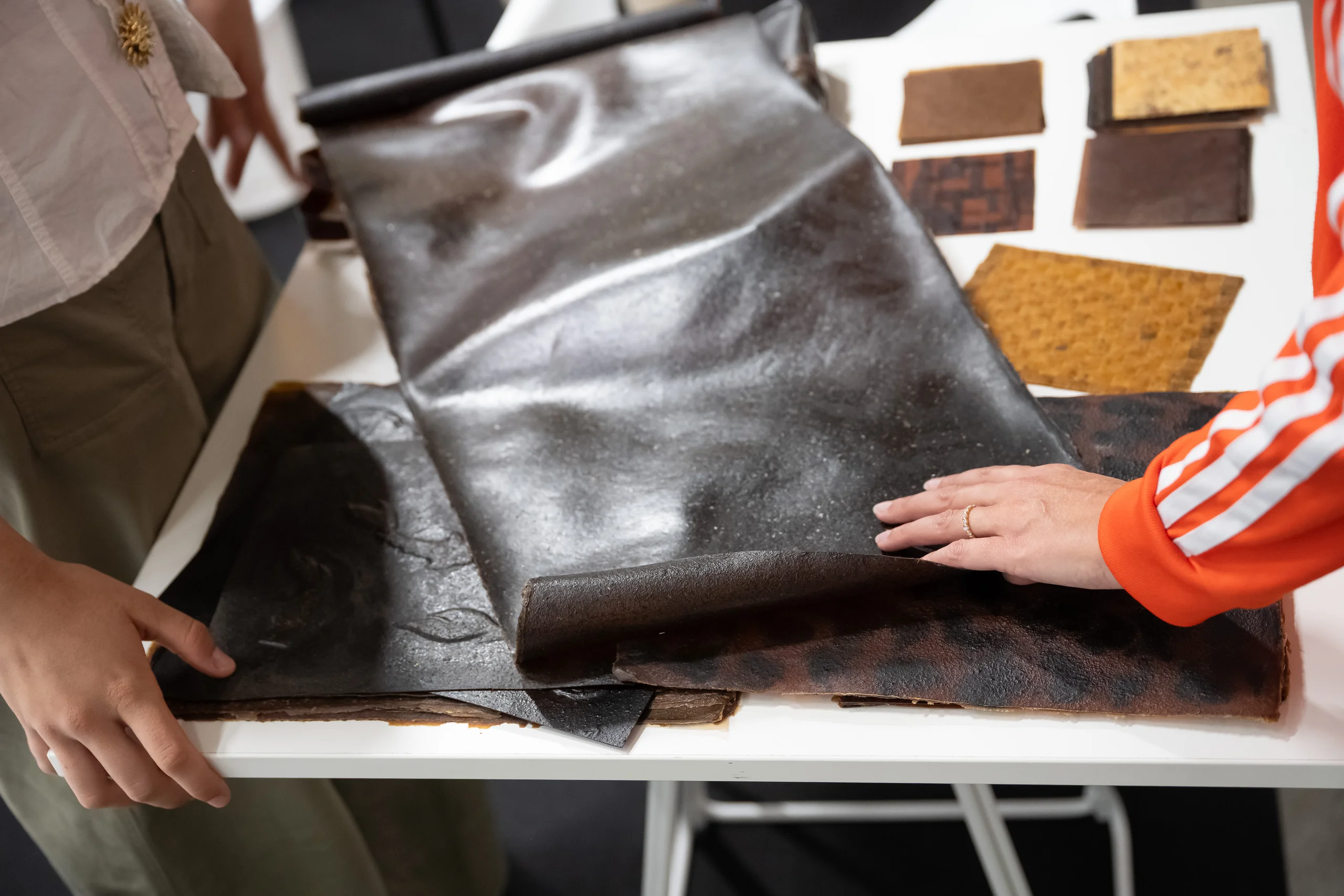
AVANTEX: RETHINKING WHAT FASHION CAN BE MADE FROM
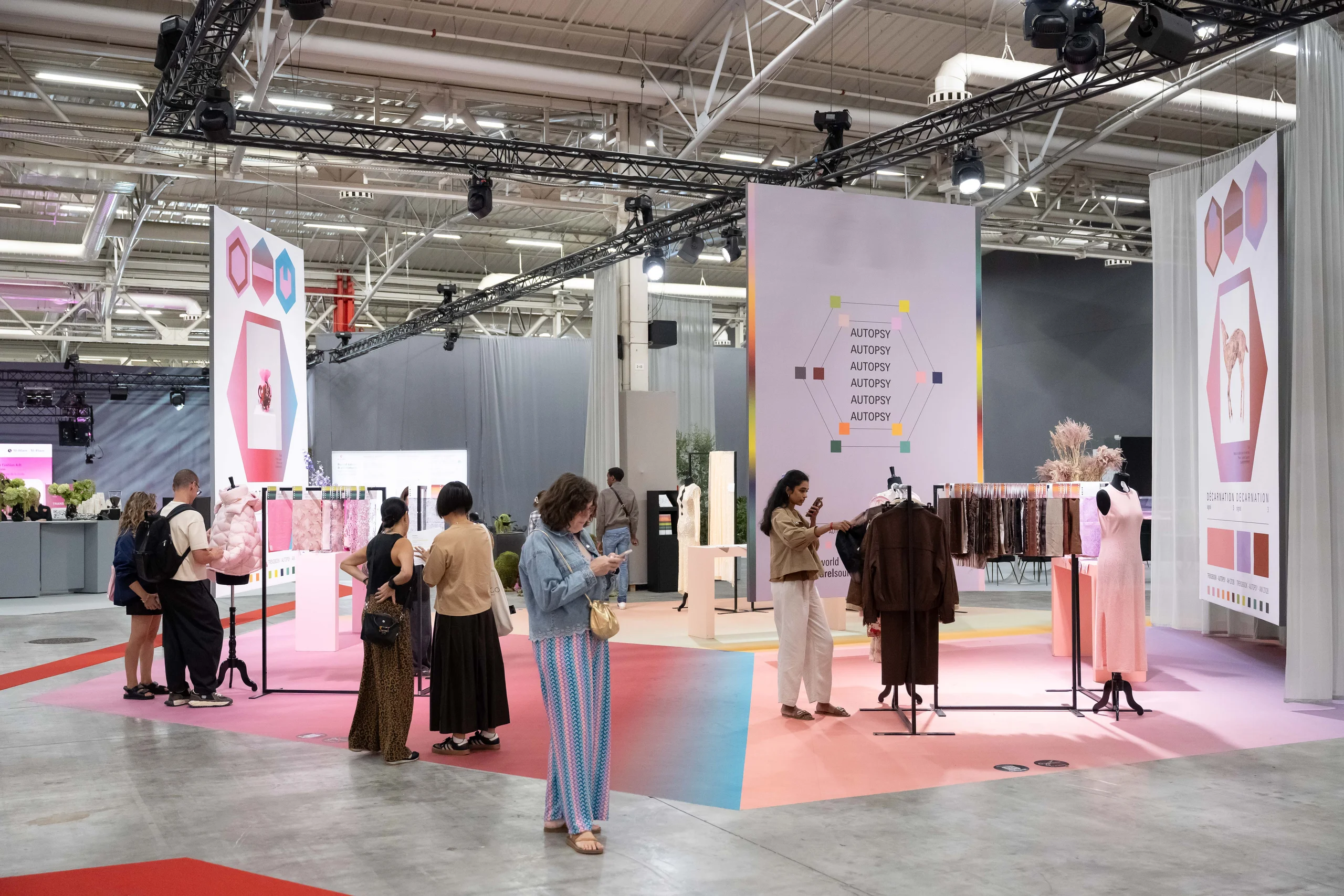
Some of the most provocative ideas we encountered at Texworld were not about where fashion should manufacture, but what it should manufacture with. Avantex brought together circularity, biotechnology and material experimentation, raising a fundamental question: what is a fashion material today?
Three projects particularly caught our attention.
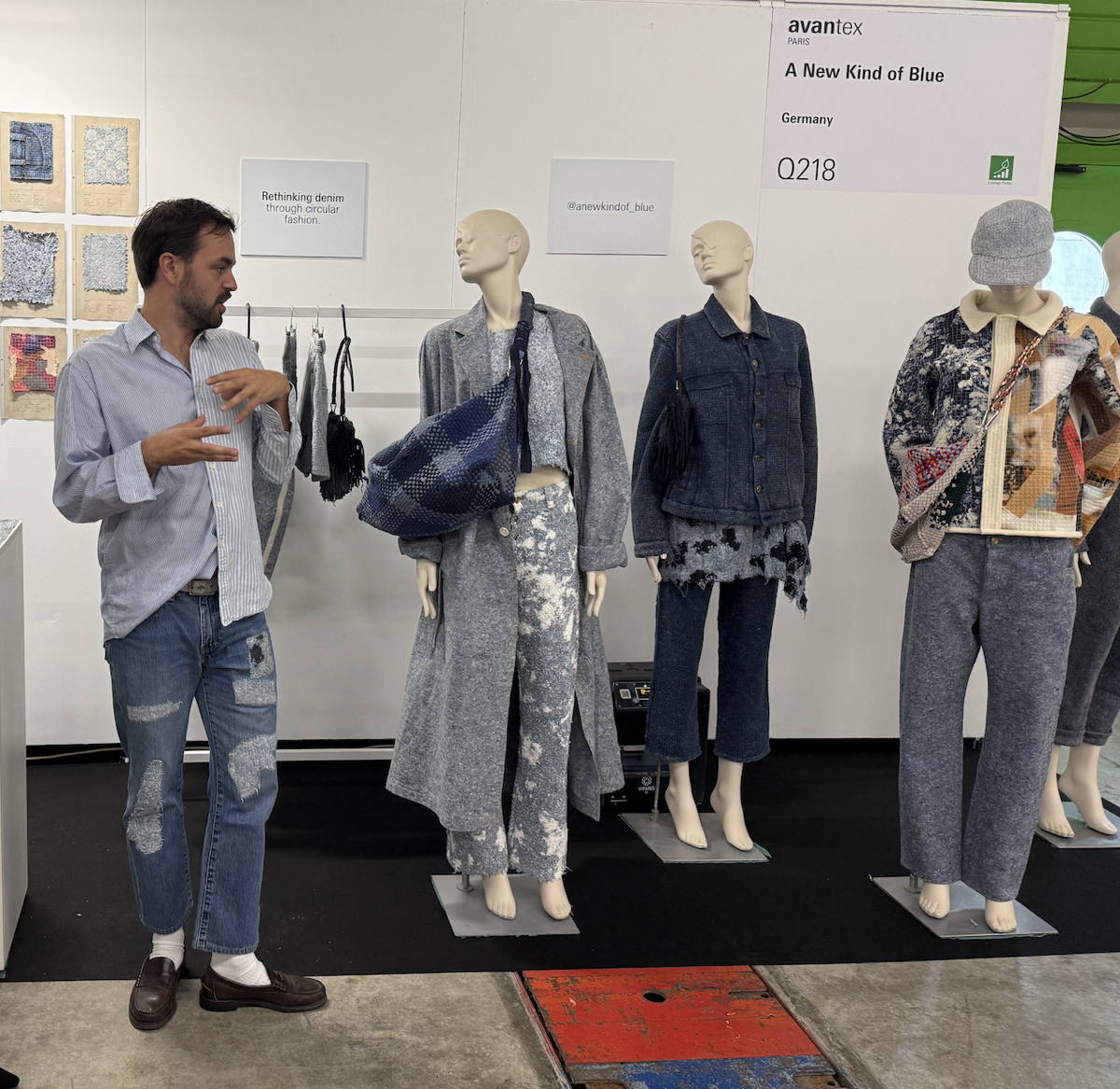
A NEW KIND OF BLUE: RETHINKING DENIM WASTE. Tim van der Loo’s A New Kind of Blue, presented with the support of 001 Agency, transforms discarded denim into new fabrics and garments by reconstructing recycled denim fibres through embroidery. The project brings circularity and craftsmanship together around a simple idea: perhaps the materials of the future do not always need to begin with something new.
ALICE POTTS: CRYSTALS GROWN FROM HUMAN SWEAT. With Sweat Crystals: The Biological Archive, Alice Potts turns human perspiration into a form of biological embellishment. Her process grows organic crystal structures directly into textile fibres, proposing an alternative to petroleum-based sequins, resins and chemical glues. In her crystallised ballet shoes, even the dancer’s individual biological profile influences the final material expression, transforming clothing into an intimate record of the body.
CITATION NEEDED: GROWING GARMENTS INTO SHAPE. Carol De Lara’s Citation Needed explores an entirely different relationship with nature. Her Khōra collection uses bacterial cellulose, a biomaterial grown through fermentation, alongside knitted scaffolds that help guide the cellulose into three-dimensional forms as it grows. Rather than simply manufacturing another textile, the project asks a more radical question: what if future garments could be grown into shape?
Together, these projects reveal perhaps the most exciting side of Avantex: innovation is moving beyond replacing one conventional material with another. It is beginning to reconsider what we call a resource, how materials are created and how much we actually need to produce in the first place.


AVANTEX FASHION PITCH: FROM MANAGING WASTE TO PREVENTING IT
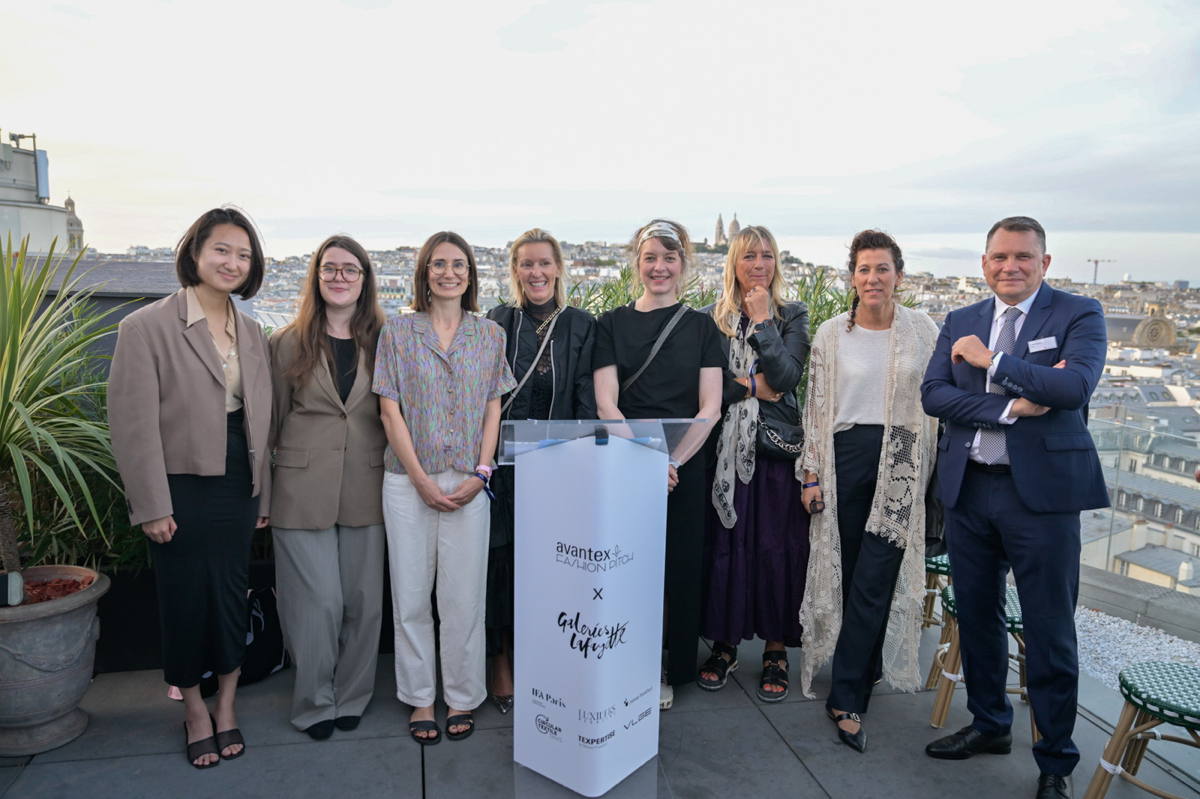
If Avantex’s experimental installations questioned what materials can become, the ninth edition of the Avantex Fashion Pitch addressed another challenge: how can promising innovation move from an idea towards industrial application?
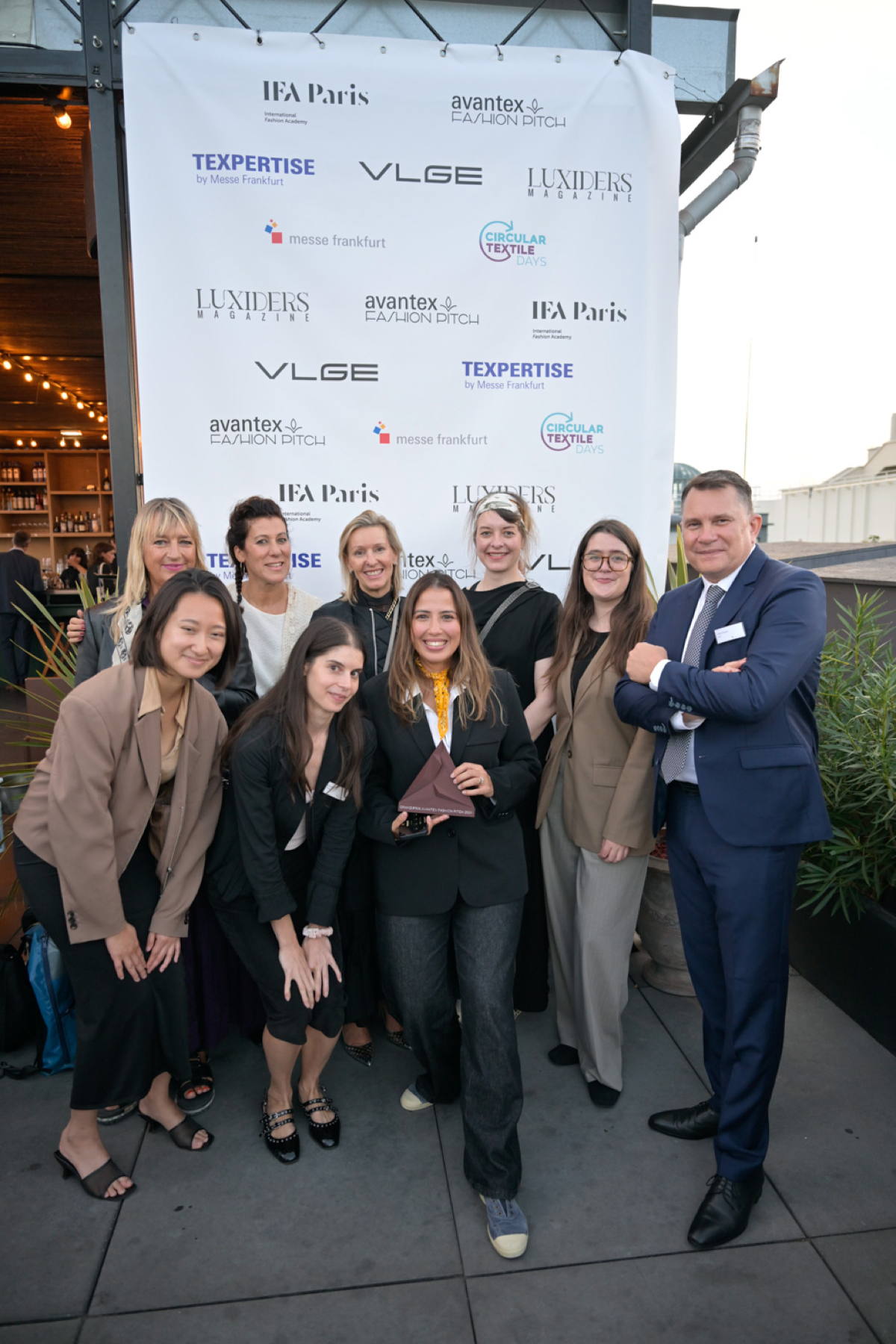
Ten finalists presented solutions. The 2026 winner, PigmentOCO, led by Amal Chebbi, tackles one of textile production’s most resource-intensive processes: dyeing. Its technology uses supercritical CO₂ to dye natural fibres such as cotton, seeking to eliminate water from the process and avoid polluting chemicals.
IROONY, which received the jury’s “Coup de Coeur”, takes another route by exploring European agricultural biomass, including crops such as hemp and flax, as feedstock for a new generation of cellulosic fibres.
Elsewhere, the finalists demonstrated just how broad fashion innovation has become.
AltMat explores underused agricultural residues as textile feedstock. Ceylook uses AI to digitise wardrobes. LeLabPlus combines AI, 3D technology and cutting automation to work with deadstock and end-of-life garments. Seconde Matière creates a B2B ecosystem for unused textile and fashion materials, while Yawya looks towards body scanning, fitting and made-to-measure technologies.
But one proposition particularly crystallised a question we believe the industry needs to ask more frequently. What if the best waste is the waste we never create? UseUp intervenes before production begins, optimising garment patterns to reduce material consumption and cutting waste. That distinction matters.
Much of circular fashion focuses on managing the consequences of production. The next frontier of innovation may be to prevent those consequences from appearing in the first place.

FROM BIOMATERIALS TO AI
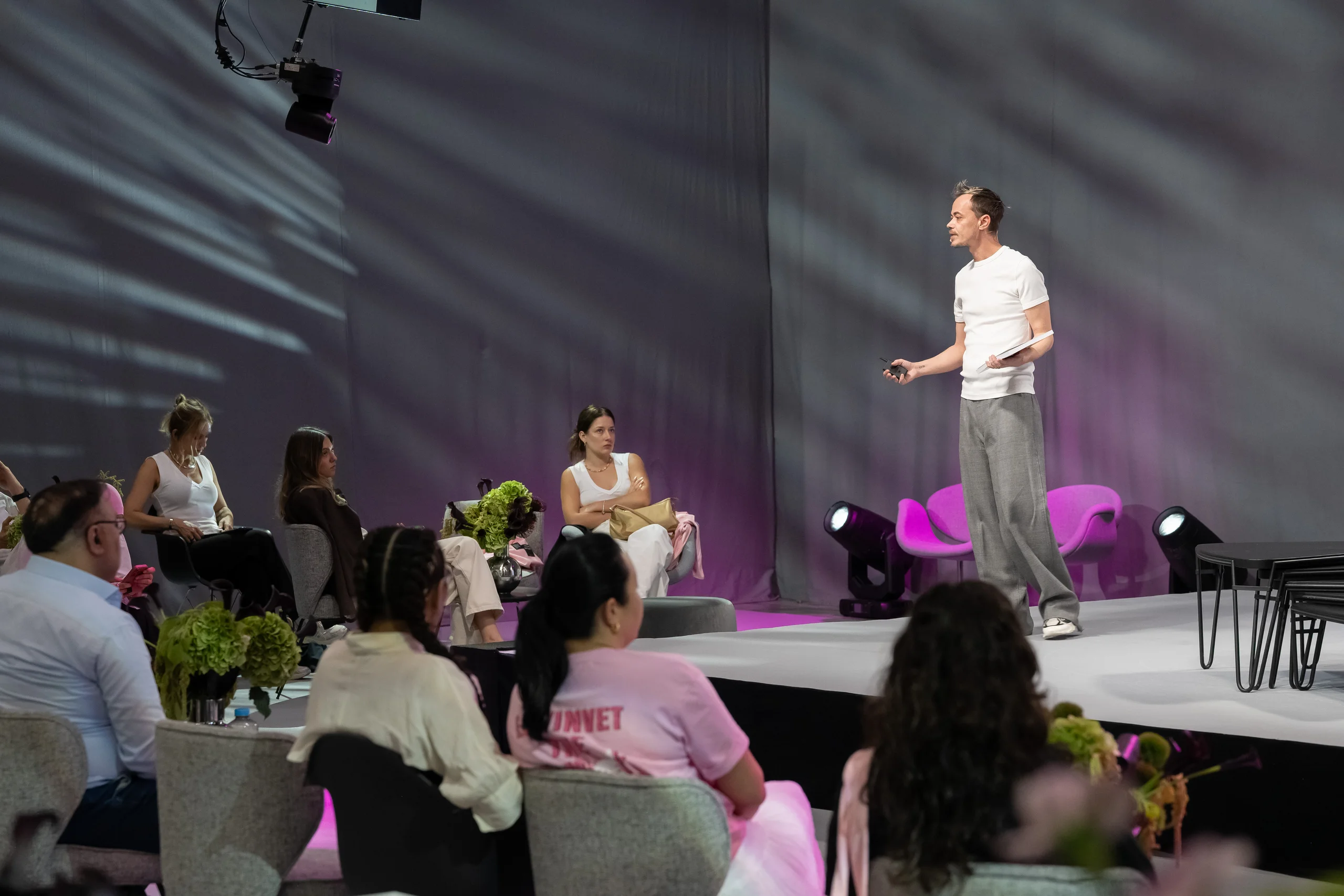
Beyond the stands, Texworld’s conference programme reinforced how rapidly the vocabulary of sourcing is expanding.
Material innovation can no longer be separated from regulation. Circularity cannot be discussed without design. Artificial intelligence increasingly touches forecasting, pattern development, stock management and manufacturing. Traceability influences both compliance and consumer trust. And geopolitical instability is making supply-chain resilience a strategic consideration rather than an abstract risk.
This is precisely why trade fairs such as Texworld remain relevant in an industry where almost everything can seemingly be researched online.
Leaving Paris-Le Bourget, it was difficult to identify a single innovation that defined this edition.
Perhaps that was precisely the point. The future presented at Texworld Paris 2026 was fragmented, diverse and sometimes contradictory. Asian manufacturing remains fundamental while new sourcing territories emerge. Near sourcing grows in relevance while international trade agreements redraw competitive advantages. Artificial intelligence promises greater efficiency while designers return to biological processes that require patience.
Fashion’s next chapter may therefore not be defined by one revolutionary material or technology. It may depend on learning to ask better questions: Do we need to extract another resource? Can waste be prevented rather than recycled? Can biology become a collaborator rather than simply a resource?
All Images:
@ Courtesy by
Texworld Apparel Sourcing Paris


