
Amber Cowan on Glass, Memory, Craft, and the Beauty of Broken Fragments
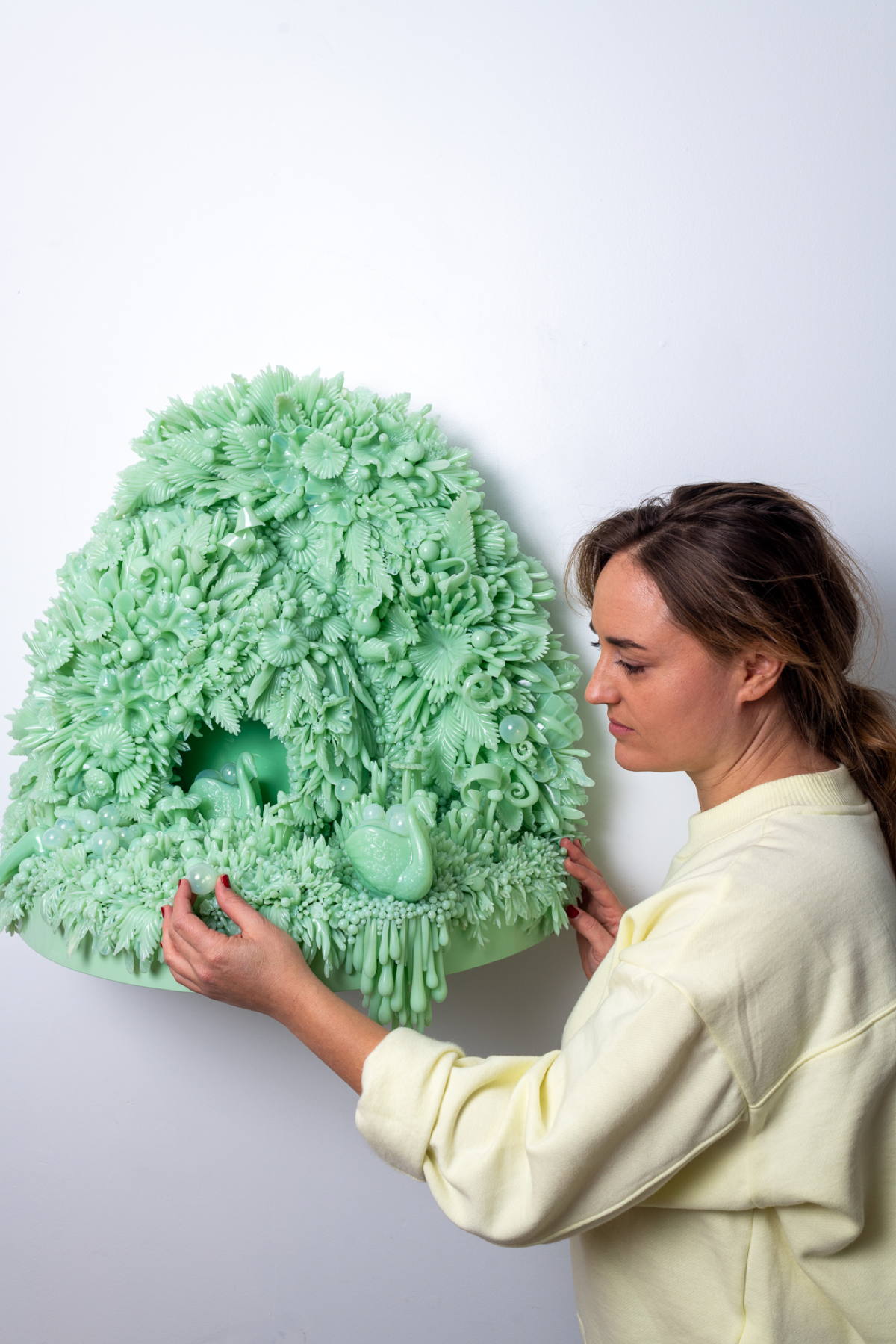
Glass artist Amber Cowan transforms industrial scrap, antique fragments, and forgotten objects into intricate sculptures that bridge history, craft, and imagination. In this interview, Cowan discusses her collecting practice, the stories embedded in discarded glass, and how broken fragments can be given new life through flameworking.
Through Amber Cowan’s work, discarded glass is transformed into intricate sculptures that bridge craftsmanship, history, and memory. Her distinctive approach gives new life to fragments from forgotten objects and defunct glass factories, inviting viewers to look more closely at the stories, traditions, and histories embedded within the material.

Your sculptures are built from fragments that once belonged to someone else. Do you ever feel a connection – or tension – between that piece’s new and past lives?
I have gotten some very interesting donations in the past. A woman in Michigan sent me a sugar bowl that was won at a state fair and given to her great grandmother in the late 1800’s. The dish was broken and she didn’t just want to throw it away. I used it in a piece and highlighted the bowl. For that piece I felt like I was honoring the donation.
You don’t simply recycle glass; you give it a brand new identity. What makes you decide on a particular fragment to rescue? Are you driven by practicality, feeling, or a mix of the two?
I am a collector and am constantly looking for pieces that I think could find their way into a piece. I have a wall of shelves in my studio of pieces in color coordinating order that I will potentially use one day. Sometimes it is practical, that it fits in the piece for scale and other times it is a feeling I have about the piece or I am drawn to the texture. I love glass that has an interesting texture or pattern.

There is something paradoxical in your work: glass appears fragile, yet it survives generations. Have your own artistic experiences changed the way you understand vulnerability?
I have learned to let go much easier. Glass is such a fickle material that in the process I am always breaking stuff. I had to learn a long time a go to just let go and say next! But, when my pieces are finished they are very stable and yes, will survive generations. I take pride in my craftsmanship.
Your sculptures are dreamlike, resembling instances from fairy tales. You describe them as instinctively leaning towards horror vacui – what is it about this type of aesthetic style that moves you artistically?
I was always drawn to this type of look from childhood until present day. I loved Where’s Waldo and other books and art where you can look at something over and over again and see something new every time.
Loss seems to exist beneath the surface of your practice; not only the disappearance of glass factories, but also the disappearance of memories and traditions. Has creating become a way of mourning, or is it more about healing?
I don’t really think of it in terms of mourning or healing. I think of it as telling forgotten stories. Giving the viewer a backstory they can dig into if they want to explore the piece on more than a surface level. And also honoring the pieces that are rare and will never be made again.
Working with broken fragments means accepting that perfection is impossible. Has your relationship with imperfection in art changed the way you relate to your own imperfections as a person?
I am not sure if I have ever thought about how my imperfect glass has affected how I relate to my own imperfections … I know that the material is very challenging to work with and that every color I use has its own specific tendencies that I have to work with. Some colors are much more challenging than others from a technical standpoint. I am quite literally using glass trash and making it into something beautiful. In that sense I guess I can see a lot of good in something that other people look at as garbage.
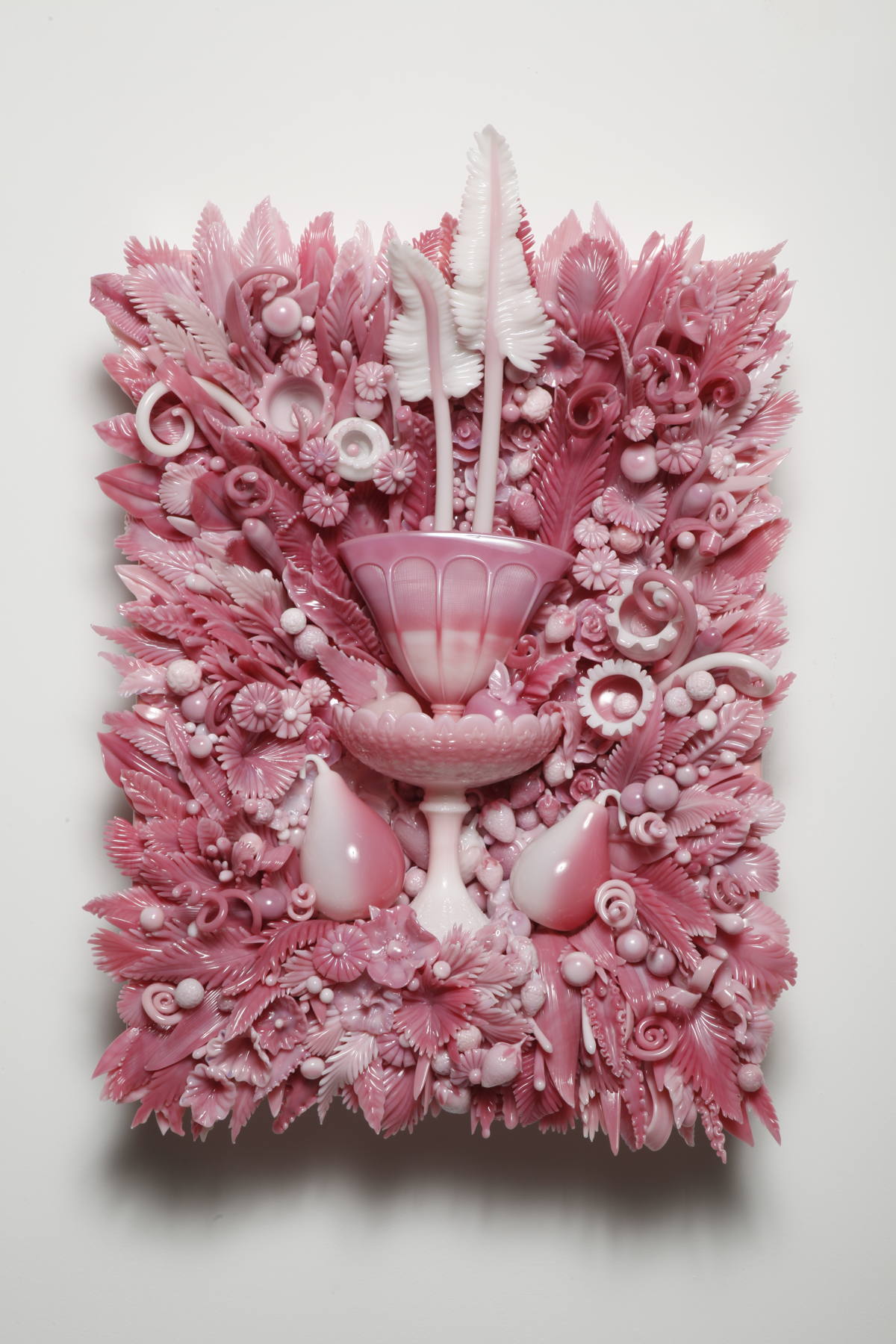
Flowers, vines, and organic forms repeatedly emerge from your sculptures, almost as if nature is taking possession of what industries left behind. What does the encounter between the manufactured and the organic mean to your art?
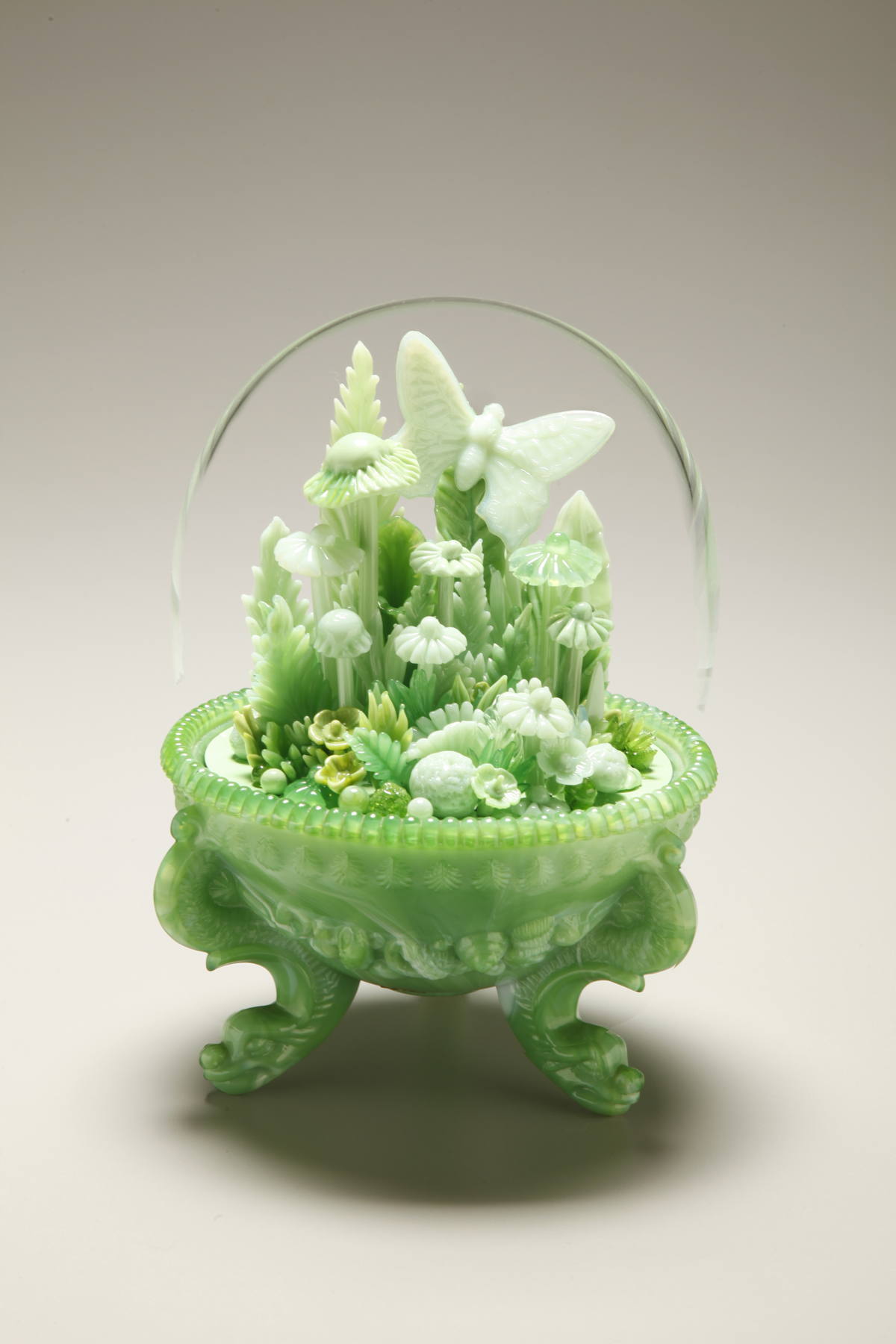
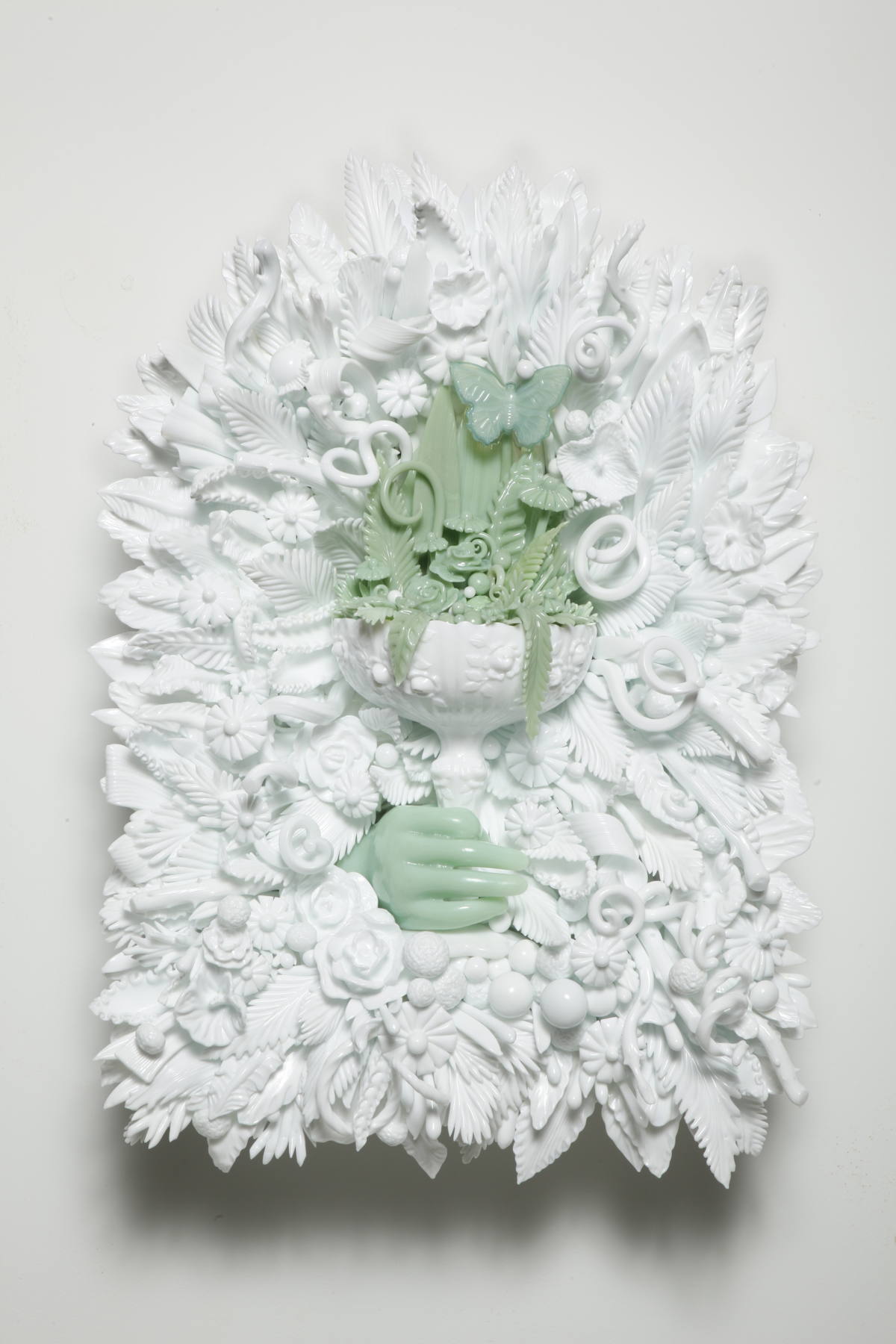
I think that the juxtaposition of the organic and inorganic glass shapes give life to the pieces. A lot of my work is a vase with organic matter coming out and around the piece. Just as you would see a vase on a table with flowers. But, then the viewer has to acknowledge that this is all glass. I also often add drips or butterflies or birds to give movement to the piece. I want the viewer to experience life and movement when viewing the work and to be reminded that the glass was fluid when I work with it.
When you’re immersed in the process of creating one of your artworks, which emotion dominates within you? And does this change for each piece?
My pieces are like a puzzle, I am always trying to figure out how this fit together and complete the full story. I get excited about figuring out this puzzle. It is very satisfying when pieces work together and I can envision the final look.

Your work invites us to slow down and notice what has been overlooked. In a culture obsessed with constant novelty, do you think we have forgotten how to emotionally connect with what is right in front of us?
I think people are starved for slowing down. Craft in general reminds us that the handmade is so important. I think with the rise of AI especially in art that people are looking more to craft to give them that sense of tactility that they are missing.
Imagine that one hundred years from now, someone discovers one of your sculptures without knowing your name or your story. What message would you hope remains preserved inside the glass for them to read?
I think on the surface level people will appreciate the beauty of the pieces with the intricacy or forms. On another level understand the level of technical skill working with the material and commitment to practice that it took to bringing something like my pieces into existence. And finally they will hopefully understand the reverence for history in the different eras of glass used in each piece.
I would like to add that the bulk of the material that I use is cullet or industrial scrap glass from now defunct glass factories. The material looks like broken shards or even glass rocks. I heat these pieces up and melt them down and shape them to make most of the pieces you see in a sculpture. The antique pieces are collaged into these forms to give it a seamless look. It is a kind of hind and seek of antiques and pieces that I create through flameworking the broken scraps.
All Images:
© Courtesy of Amber Cowan


