

Can Fashion Dye Cotton Without Water? PigmentOCO Is Working to Make It Possible
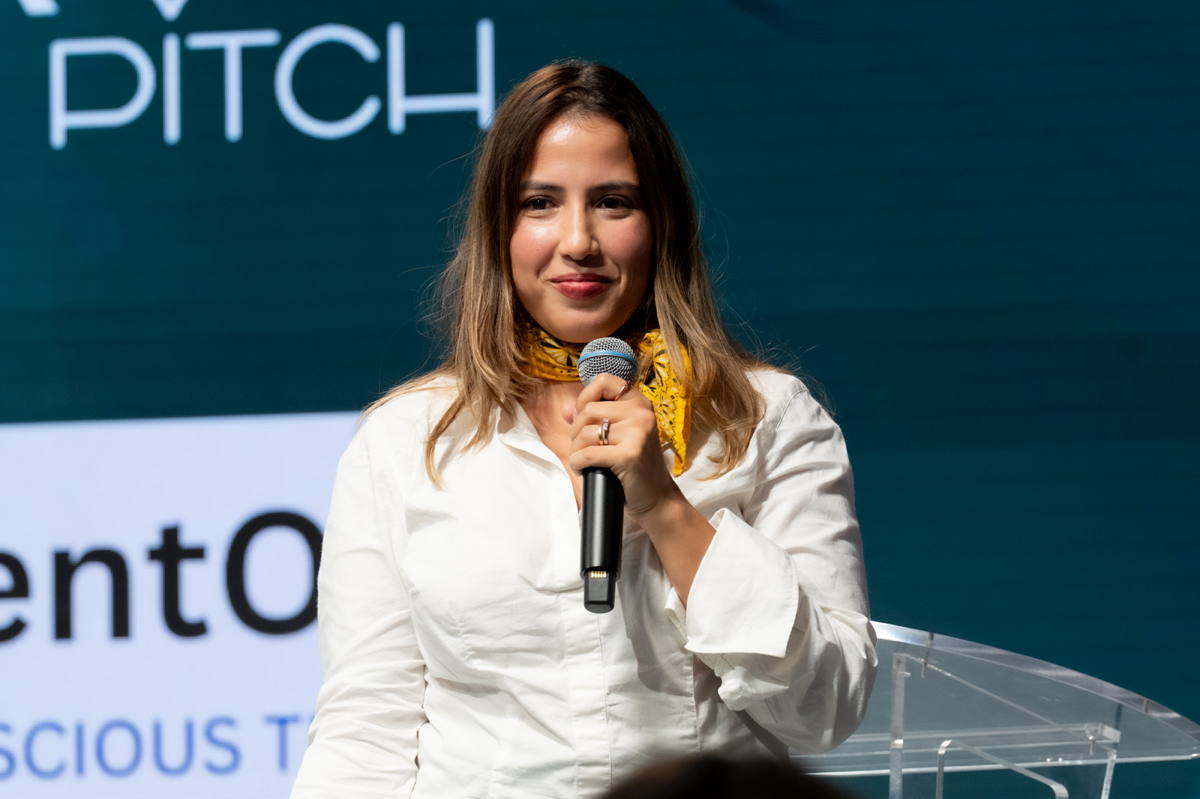
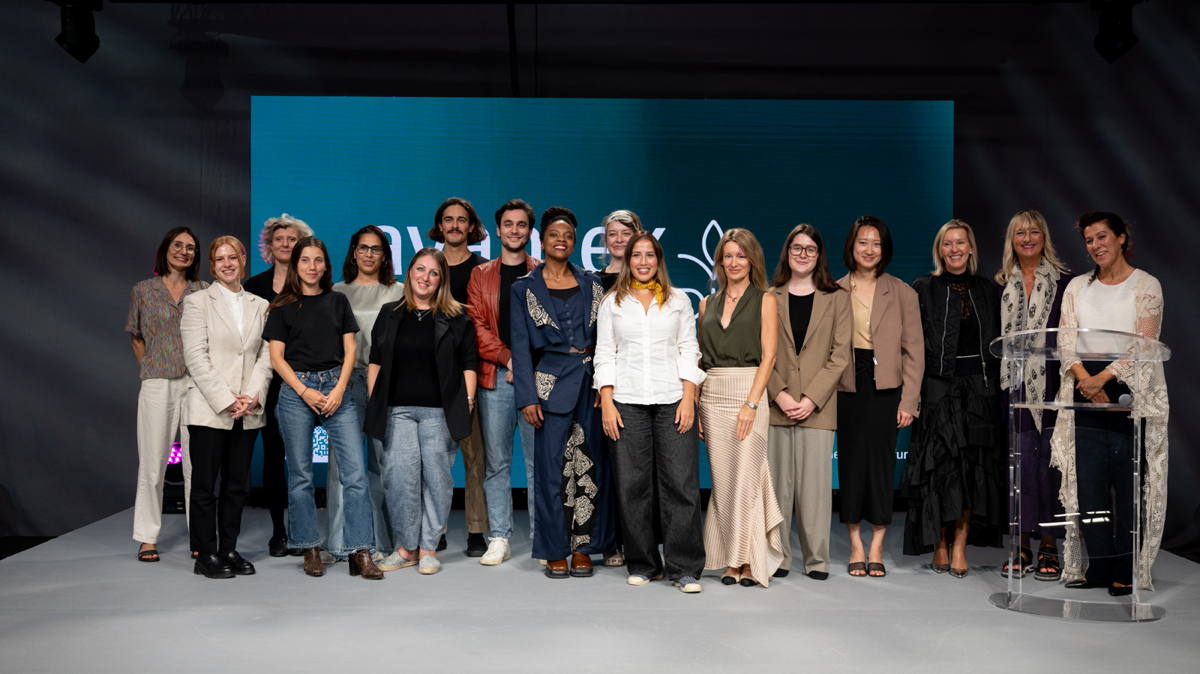
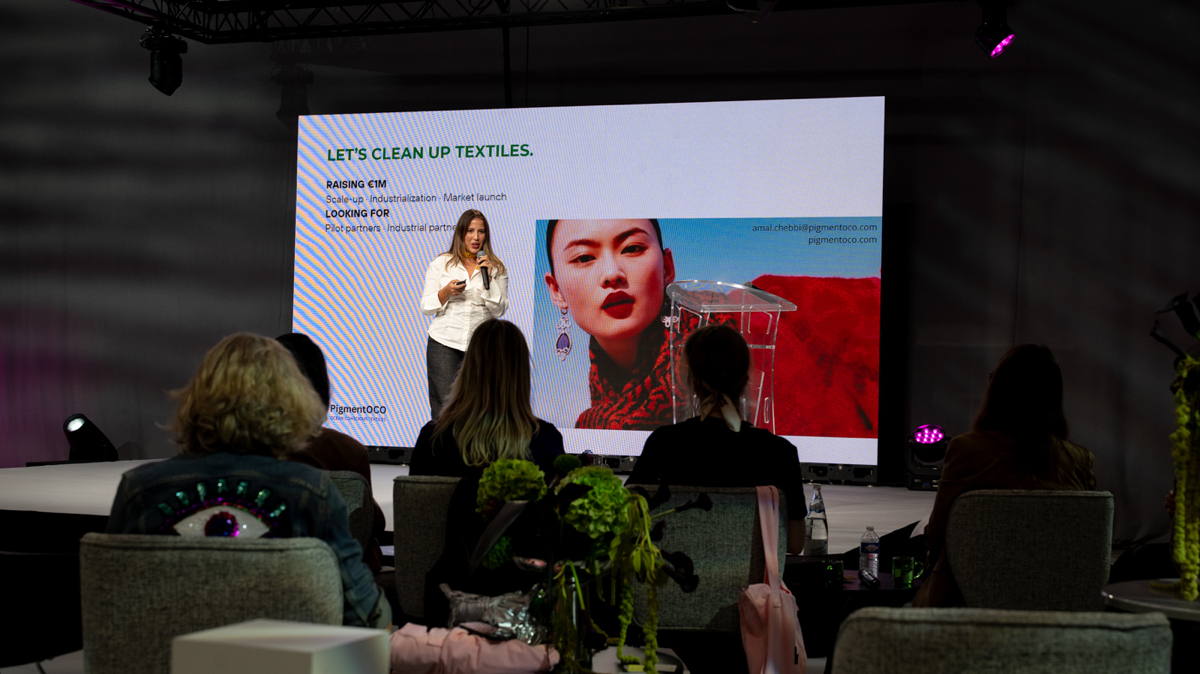
Winner of the latest Avantex Fashion Pitch at Texworld Paris, PigmentOCO is developing a technology that could tackle one of fashion’s most persistent environmental challenges: the enormous amount of water involved in dyeing cotton. By combining supercritical CO₂ dyeing with a proprietary near-zero-water pretreatment for natural fibres, the company is now working to take its promising laboratory results into industrial production. Luxiders interviews Amal Chebbi, founder of the company, not know all details about the process.
Colour is one of fashion’s most powerful forms of expression, but behind it lies an industrial process with a considerable environmental footprint. Cotton is particularly challenging. While supercritical CO₂ dyeing has already demonstrated its potential with synthetic fibres, natural fibres require a different approach. PigmentOCO believes it has found part of the answer.
Its proprietary pretreatment prepares cotton to accept colour through supercritical CO₂, allowing the dyeing stage to take place without a conventional water bath and without the salts, mordants and other auxiliaries commonly used in traditional processes. The company has already achieved promising results with both 100% cotton and cotton-elastane blends, making denim a natural starting point.
But winning an innovation award and transforming an industry are two very different things. PigmentOCO is now entering the more difficult chapter: proving that its technology can move beyond the laboratory, perform consistently at industrial scale and make economic sense for the mills expected to adopt it.
We speak with Amal Chebbi, PigmentOCO’s founder, about waterless dyeing, the future of denim, the challenge of scaling sustainable technologies and why innovation alone cannot solve fashion’s environmental crisis.
Interview with Amal Chebbi, founder of PigmentOCO
Supercritical CO2 dyeing is not entirely new. Technologies such as DyeCoo have already demonstrated waterless dyeing at industrial scale, particularly for polyester, while other companies are now extending the process to cotton and natural fibres. What does PigmentOCO bring to the market that these previous technologies have not yet been able to achieve?
PigmentOCO is bringing waterless dyeing closer to one of fashion’s most widely used fibres: cotton. Supercritical CO2 dyeing uses CO2 instead of water to carry colour into fabric, then recovers it for reuse. The process has shown its potential with synthetic fibres, but cotton is more difficult to dye this way.
Even before dyeing begins, conventional fibre preparation can use considerable water. Our answer is a proprietary, near-zero-water pretreatment that prepares cotton to accept colour in the CO2 process. We have achieved promising colour fixation and stability in laboratory tests using dyes already available on the market. The dyeing stage uses no water bath and does not require the salts, mordants or other dyeing auxiliaries used in conventional processes.
We have worked with both 100% cotton and cotton–elastane blends, making denim a natural place to start. The next step is to reproduce these results consistently on larger fabric loads and prove that the process makes economic sense for mills. At the same time, we are developing a separate cleaner fading technology. Together, the two solutions target dyeing and fading, two water-intensive stages in making
denim.
One of the great challenges of supercritical CO2 dyeing has not necessarily been proving that the technology works, but making it commercially viable at scale. DyeCoo is an important example of how technological success does not automatically translate into a sustainable business model. What have you learned from previous attempts, and how are you designing PigmentOCO differently from the beginning?
The biggest lesson is that a breakthrough has to work for the people who will use it every day. A mill needs consistent quality, reliable production and a return that justifies changing its process. Earlier advances proved that waterless dyeing is possible; the next challenge is making it a sound industrial decision.
The timing is different today. Water stress is making both water supply and wastewater management more pressing concerns for textile producers. That changes how we should calculate the cost of dyeing. A conventional process does not end when the colour is fixed: the water it uses must be treated, and treatment brings equipment and operating costs of its own. With CO2 dyeing, our intention is to prevent dye wastewater from being generated in the first place.
That thinking shapes how we are building PigmentOCO. We are developing our proprietary cotton pretreatment for repeatable industrial use and working with partners to test quality, production capacity and cost per kilogram beyond the laboratory. We intend to supply proprietary materials and process know-how through industrial partnerships, rather than manufacture every metre of fabric ourselves.
We also see dyeing as one part of a wider challenge in denim. Our ambition is to reduce water use and pollution both when fabric is dyed and when garments are faded. Our fading solution is designed for equipment laundries already use, allowing us to run industrial trials and build relationships while CO2 dyeing moves through its more capital-intensive scale-up. Both solutions will have to earn their place through quality, measurable impact and economics that work for factories.
PigmentOCO is initially focusing on cotton, which is technically much more difficult to dye with supercritical CO2 than polyester. What breakthrough allowed you to work with natural fibres, and what remains the biggest technical obstacle before reaching full industrial scale?
Cotton needs to be prepared differently from polyester before it can take up and retain colour in supercritical CO2. We developed a proprietary pretreatment and adapted the dyeing process to work together. In laboratory tests, we have seen promising colour fixation and stability on both 100% cotton and cotton–elastane fabrics.
The immediate challenge is getting that work onto industrial equipment. We need to move beyond small samples and test full fabric loads, where we can assess whether colour remains even across the material and consistent from one cycle to the next. Those trials will also show us what needs further refinement.
That is why partnerships matter so much at this stage. Working with mills and operators of supercritical CO2 dyeing systems will give us the production setting we need to validate the process and a direct path from a laboratory result to something the industry could actually use.
“The larger mission is to protect water. There are many environmental problems in fashion, but we chose to work on one of its most essential resources and on processes where pollution can be prevented before it is created.” – declares Amal Chebbi, founder of PigmentOCO.
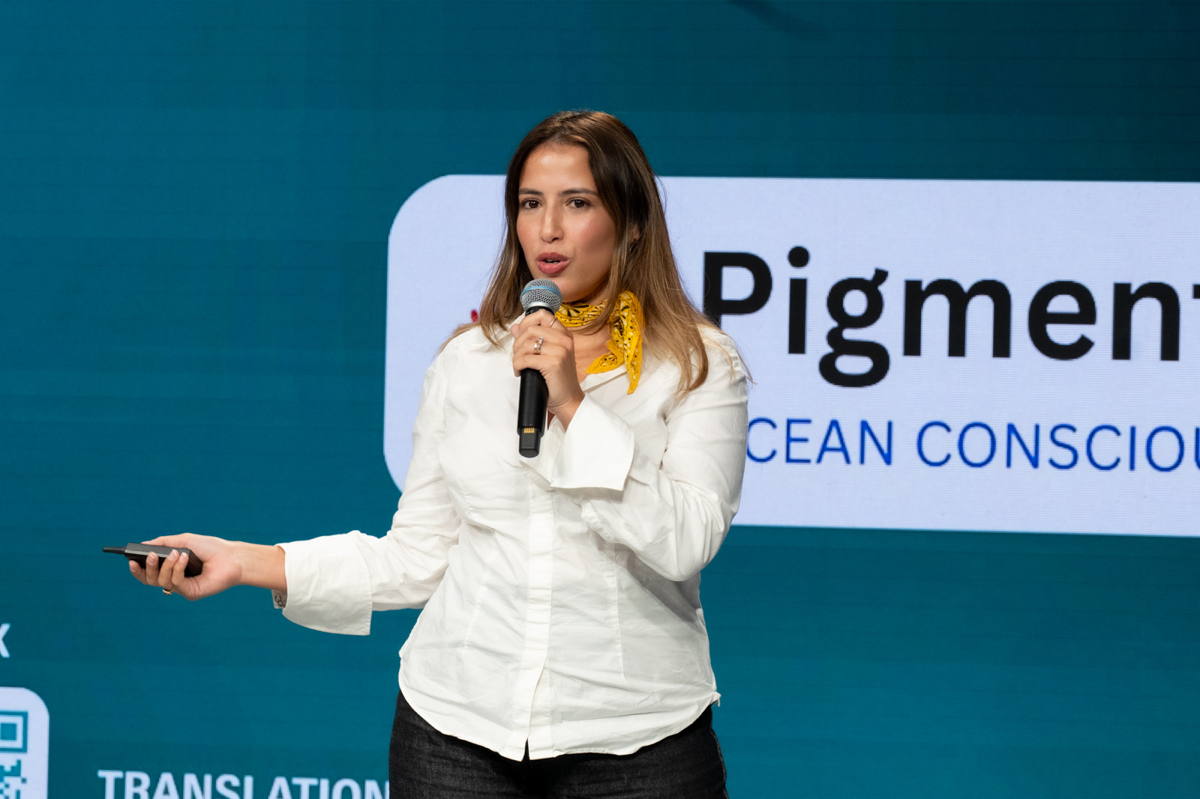
Your process aims for zero water in dyeing, no liquid discharge and drastically reduced chemical use. If you could implement PigmentOCO tomorrow in only one segment of the fashion industry, where would it create the greatest environmental impact: denim, T-shirts, home textiles, workwear or another category, and why?
I would start with denim. It gives us the opportunity to address two water-intensive stages in the same production chain: dyeing the fabric and creating its faded finish. Our CO2 process is being developed to colour cotton and cotton–elastane fabric without a water-based dye bath or liquid dye effluent. Our separate fading solution aims to reduce water use and replace conventional chemicals during finishing.
The larger mission is to protect water. There are many environmental problems in fashion, but we chose to work on one of its most essential resources and on processes where pollution can be prevented before it is created.
Denim is where our two technologies come together most clearly, and where mills and
laundries can help us measure their impact against the methods used today. Beyond denim, we believe supercritical CO2 dyeing has a much wider role to play. We want to help advance its use for natural fibres, then follow the evidence from industrial trials and the needs of the market to decide where it can create the greatest impact next.
Water savings are an extraordinarily powerful argument, but sustainability cannot be measured through water alone. What does the full environmental equation look like when energy demand, pressure, CO2 sourcing, machinery, dye chemistry and the carbon footprint of the process are included?
I don’t think “waterless” is enough to call a process sustainable. CO2 dyeing still takes energy to run, and manufacturing the equipment has an impact. We have to count those costs too. What matters is the full dyeing cycle. The process can be faster, the fabric comes out dry, and CO2 and unused dye can be recovered for reuse. It also avoids producing liquid dye effluent at the dyeing stage.
The question is how those gains compare with the energy and materials the system requires. An earlier life-cycle comparison we carried out showed promising results across several impact categories. Our goal now is to repeat that assessment at a larger scale, with our cotton pretreatment included and data from industrial trials. That will tell us what the overall gains are in water, energy, climate impact and toxicity and where we still need to improve.
You are currently moving from laboratory prototype to semi-industrial scale. What is the hardest part of that transition? Is the main challenge still scientific, or has it shifted towards capital investment, industrial partnerships, machinery and convincing mills to change systems they have used for decades?
For our supercritical CO2 dyeing technology, the immediate barrier is access to an industrial machine and the right partner to test it with. We have demonstrated the process in the laboratory, but we cannot prove that it works at production scale without running larger fabric loads on equipment designed for that scale.
Securing that access and funding a rigorous trial is the hardest part of the transition right now. The trial has to answer the questions a mill would ask before changing its process: Is the shade uniform across the load? Does the colour hold up? Can the result be repeated, and at what cost? We expect to keep refining the process as we learn from those tests. What we need now is the opportunity to do them.
Our denim fading solution is at a different stage. We have begun semi-industrial trials at a denim finishing mill in North Africa, where we achieved good, uniform fading results. We are now carrying out further tests to characterise the treated fabric and the process, while continuing to prepare the solution for industrial use. It is encouraging to see the result on a larger scale, but we still need to establish consistency and performance across different fabrics and production conditions.
If anyone reading this operates supercritical CO2 dyeing equipment, or produces cotton fabric and is interested in an industrial trial, we would love to hear from you. The right partnership could help take our dyeing technology from a successful laboratory result to a process mills can use.
One of the industry’s greatest contradictions is that we continue developing cleaner technologies while global clothing production remains extremely high. Can technological innovation genuinely make fashion sustainable if production volumes continue to grow, or does the industry also need to confront how much it produces?
I think we have to be honest about volume. If each garment becomes cleaner to produce but we keep making and buying more of them, the total environmental impact may still rise. Innovation matters, but it cannot solve that arithmetic on its own.
This is a personal view, but I believe the industry and consumers share responsibility. Brands need to make fewer unnecessary products and make clothes that last. As consumers, we can buy less, choose better quality and pay attention to how our clothes are made. The simplest rule may also be the hardest one for fashion to embrace: less, but better.
That does not diminish the need for cleaner technology. Clothes will still be made, and we should prevent as much water use and pollution as we can when they are. PigmentOCO is working on that part of the problem. But I would never want a cleaner dyeing process to become a justification for producing or consuming without limits.
“Clothes will still be made, and we should prevent as much water use and pollution as we can when they are. PigmentOCO is working on that part of the problem. But I would never want a cleaner dyeing process to become a justification for producing or consuming without limits.”
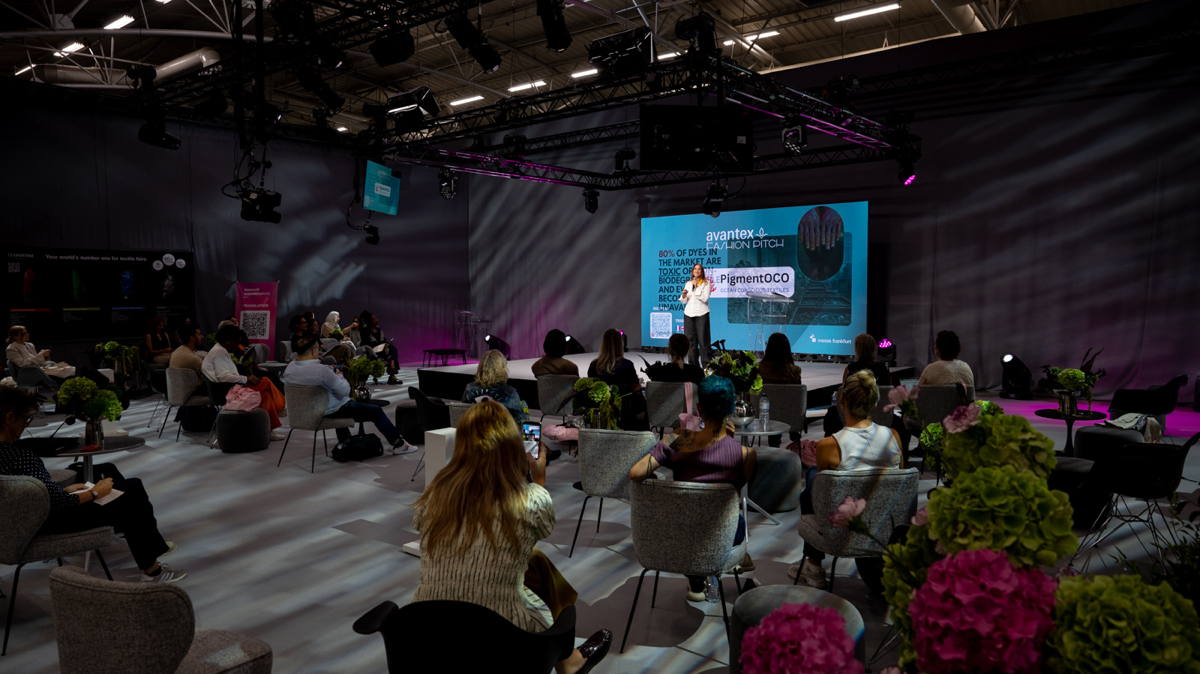
Looking at the technologies emerging today, from waterless dyeing and fibre-to-fibre recycling to AI-driven waste prevention and biomaterials, do you believe innovation is advancing quickly enough to reduce fashion’s environmental impact before climate and water pressures become substantially more severe? Where do you feel we are still moving too slowly?
I’m encouraged by how much is being invented. What worries me is the time it takes for an invention to reach a factory. Fashion can move from a sketch to a new collection in months, yet changing how the fabric is made can take years. That difference in speed says a lot about where the industry puts its attention.
The slowest step is between a promising result and a real production decision. A new process needs equipment, trials, quality approval and a customer prepared to buy the output. If those pieces are organised one after another, progress is painfully slow. We need mills, brands and technology developers working through them together much earlier.
So my concern is less that we will run out of ideas. It is that good ideas will arrive too late, or stay too small, while water and climate pressures intensify. The industry needs to become as ambitious about changing its methods as it is about creating its next product.
There is often a considerable gap between a sustainable technology winning awards and being adopted by a factory at scale. What needs to happen for PigmentOCO to move from an innovation recognised at Avantex Fashion Pitch to something that thousands of garments are actually being dyed with? Who needs to take the first risk: brands, mills, investors or policymakers?
The award has given us visibility, but thousands of garments will only follow from production results. Our next step is a trial on industrial supercritical CO2 equipment, using cotton fabric supplied by a mill and quality requirements set with a potential customer. We need to establish consistent colour and fastness across larger loads, then measure the cost and environmental impact per kilogram of fabric. If those results hold, the question becomes how to run the process repeatedly and who will buy the output.
I don’t think one party can take that risk alone. The equipment operator and mill make the trial possible. Investors or public programmes can help fund the expensive step from laboratory work to industrial validation. But brands can make the biggest difference by saying, in advance, what quality they need and that they are prepared to purchase fabric if the trial meets it. That gives everyone else a reason to invest their time and resources.
What we need first is a committed group around one well-designed pilot, with clear standards and a route to a commercial order. That is how we hope an award becomes fabric someone actually wears.
You started PigmentOCO with the ambition of changing one of fashion’s most polluting industrial processes. Building a deep-tech company around that ambition is particularly challenging. On a personal level, what has been the hardest moment so far, and if PigmentOCO succeeds at the scale you imagine, what is the change you would most like to be able to say you helped create?
I grew up in Tunisia, one of Europe’s leading suppliers of jeans. Denim manufacturing is part of our economy, while water is a resource we cannot take for granted. Our manufacturers are being asked to produce more cleanly, both because of the environmental pressures we face at home and the expectations of the European brands they supply.
I love fashion. Its creativity, its craft, the way it lets people express themselves. But I could not ignore what can happen behind a finished garment. I started PigmentOCO because I wanted to be useful in changing that, even if we began with one part of the process.
The hardest part has been learning how long it takes to turn something you believe in into something a factory can use. A laboratory result can show what is possible; taking the next step requires equipment, funding and people willing to test it with you. At times, that distance feels enormous. If PigmentOCO succeeds, I hope we will have helped make cleaner dyeing and fading an ordinary choice for denim manufacturers around the world. I would like a pair of jeans to carry less of a burden on the water and communities involved in making it. That is the change I want to help create. And despite the difficulty, I know in my heart that I’m on the right path.
“The hardest part has been learning how long it takes to turn something you believe in into something a factory can use. A laboratory result can show what is possible; taking the next step requires equipment, funding and people willing to test it with you. At times, that distance feels enormous.” – says Amal Chebbi.
Images:
@ Courtesy by Texworld Apparel Sourcing Paris


