

The Perfect City: How Environmental Psychology and Urban Design Can Improve Wellbeing
What if the places we live in could actually make us feel better? As cities grow denser, faster and increasingly disconnected from nature, environmental psychology is revealing how urban design can influence our mental health and wellbeing. Trees and green spaces, walkable streets, natural light, quieter buildings and even the patterns surrounding us can influence how we feel. So what would happen if we designed a city around both the planet and the human mind?
As urbanisation continues to grow, questions about how city life affects mental health and wellbeing are becoming increasingly important. Our lifestyles matter, but so do the environments in which we live. Environmental psychology examines the relationship between people and their surroundings, offering insights into how urban spaces can support both psychological and physical wellbeing. From access to nature and walkable neighbourhoods to natural light, biophilic design and reduced noise pollution, certain elements of urban design may help create healthier, more sustainable cities.
The world is becoming increasingly urbanised each year. Over 55% of the world’s population lives in urban areas, and this statistic is set to rise to 68% by 2050. People are choosing to live in cities because of the economic and job opportunities, cultural attractions, and (usually) better transport than rural areas. In cities, there is usually better access to healthcare and education. However, data from the Community Life Survey shows that people living in urban areas report feeling lonelier (7%) than people in rural areas (5%).
However, moving to rural areas could result in financial losses, longer commutes or reduced access to cultural activities. Environmental psychology research has focused on the key aspects we need in our surroundings to support our mental and physical wellbeing. With these resources implemented into towns and cities, feelings of loneliness may reduce and subjective wellbeing may increase.
“We affect our environments, and our environments affect us.”
– Ethan McMahan, Environmental Psychologist.
The Power of Nature: Bringing Nature into Urban Environments
What if bringing nature into cities could help us feel better? Reconnecting with nature could be done as easily as living near trees, green areas or public parks. Having access to nature that we can touch, see, hear and smell can help us to recharge and calm down. Nature reduces the ‘clutter’ that exists in cities and the constant hustle in everyday city life.
Overcrowding, noise, and other city-living conditions can increase the risk of mental disorders, such as anxiety or depression. In contrast, living in suburban areas is associated with feeling happy, a greater sense of meaning and life satisfaction. Trees, shrubs and other vegetation affect our air quality. By trapping pollutants and harmful gases on their surfaces and reabsorbing these through their leaves, trees reduce levels of gases and particulate matter. This reduces levels of harmful gases and particulate matter, thereby reducing air pollution. According to the World Health Organisation, 91% of people living in urban areas breathe polluted air.
What happens when we breathe polluted air in the long term? It can increase the likelihood of strokes, heart disease or lung cancer. Almost every organ in the body can be impacted by air pollution. Even something as small as planting trees in cities can make a big difference to the air quality, which could decrease people’s chances of getting sick.
Nature in cities has other benefits too. Vegetation, especially trees, acts as natural air conditioning in the summer by shading buildings, and can therefore make urban areas cooler. This also helps with coping with rising temperatures worldwide. In turn, this reduces energy demand, which could also reduce air pollution. Small factors such as planting trees and plants in urban areas could make big changes to the citizens’ quality of life.
Spaces for sensory engagement are very important for feeling connected to the environment and psychological restoration. To promote health and wellbeing in ‘the perfect city’, people should have access to close-to-home green spaces (i.e., public gardens, forests) or recreational spaces where people can walk barefoot, like beaches. In a recent experiment, participants walked barefoot versus with shoes in a public garden and a beach. The barefoot walkers reported higher connectedness with their environment. Spaces to walk barefoot in nature can facilitate feelings of connection and psychological restoration, which is vital in areas where anxiety and depression rates are growing (i.e., cities).

Nudged and Automatic Movement
The more we move, the more serotonin we release. However, exercising can be difficult in busy city life. Gyms can be overcrowded and people have busy schedules. What if everything was within a short distance? Citizens wouldn’t need to rely on cars, they could walk or bike – exercising without the purpose of exercising. Citizens would be physically healthier, without the intention of becoming healthier – they need to exercise in order to get to the places they need.
When public transport and facilities like grocery stores and green spaces are all within short walking distances from each other, this promotes walking over driving. Data from a countrywide US experiment found that moving from a less walkable to a more walkable city increased daily steps by an average of 1,100. In turn, this reduced the risk of cardiovascular disease, cognitive impairment, and promoted positive wellbeing. Not only could this reduce traffic, and in turn reduce noise pollution, this gets citizens moving, promotes social interaction and builds communities.
The same can be said for cities where people cycle a lot. Other than close proximity to facilities, there are other considerations to promote biking and walking. A study from 2010 found that increased cycling (over driving) was associated with fewer hills, less highways and arterials, cyclist traffic lights, higher intersection density, large bike paths and bicycle signage. Combined, these factors could influence automatic or ‘nudged’ movement, which would get people exercising more, socialising and forming close social ties.

Sensory and Environmental Infrastructure
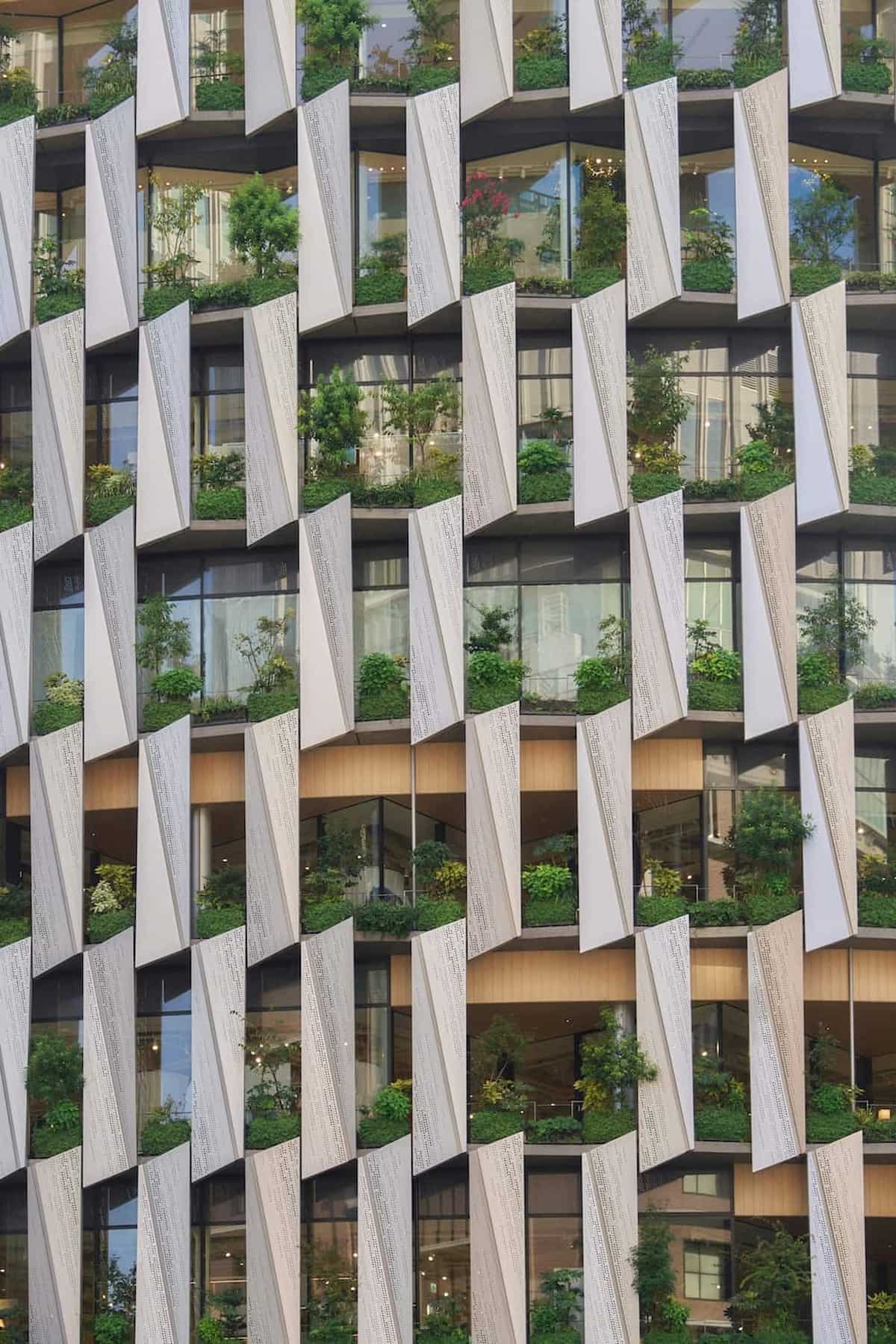
Environmental psychology says that the designs on the buildings around us can influence how we feel. Some designs can make us feel relaxed or relieved and as a result, promote positive wellbeing. A lot of cities don’t use these – many cities focus on fitting as many people as possible and aren’t designed for sustainable living. For a ‘perfect city’, architecture needs biophilic design, lots of natural light, views of nature and sound insulation.
Using biophilic design (using nature in design) is very important to boost serotonin, create a relaxed environment and give exposure to natural light. In a scoping review from 2025, 136 studies on biophilic design were analysed. Throughout the studies, biophilic design had a large impact on people’s psychological restoration (i.e., keeping people calm or relaxed).
Additionally, using fractals in design is very important. Fractals are patterns that repeat themselves at smaller scales. These can be seen in leaves, flowers, or living walls (i.e., where plants grow on walls). When we walk down a street, we are constantly processing visual stimuli. One of the first things our brains notice is how it looks, its beauty and whether the stimulus is ‘satisfying’ to look at.. Biophilic fractals are thought to be powerful in design because the natural world is easier for us to visually process and puts less strain on our visual and cognitive systems. Similarly, the brain will notice the fractal patterns first because of their clear aesthetic (i.e., patterns repeating themselves getting smaller). Famous fractal designs include The Lotus Temple in New Delhi and the The Alhambra in Spain. For these reasons, biophilic design is very important, as well as the use of natural fractals.
Windows are also good for promoting wellbeing and productivity. In a study on patients in a rehabilitation centre, windows (especially with natural light and views of nature) enhanced patient wellbeing and improved their subjective physical and mental health. Similarly, in a review of the effects of windows on wellbeing, workplaces that had windows with views of nature increased employees’ job satisfaction and decreased their intention to quit. In a sustainable city, windows with natural light would be built into bedrooms, rehabilitation centers, hospitals and workplaces.
Natural light is better for our wellbeing than artificial light because it can boost vitamin D. Vitamin D helps with restorative sleep, protects brain function and emotional balance, and helps to regulate the body’s stress hormones. Daylight also offers natural lighting that doesn’t put a strain on the eyes. Sunlight can also trigger the brain to release serotonin. In a sustainable city, city design would prioritize natural light and only use artificial lighting when necessary.
Finally, sound insulation is very important. According to the European Environment Agency, more than 20% of Europeans are exposed to noise pollution. This is linked to a wide range of health issues, such as cardiovascular disease, mental health issues, diabetes, and premature death. A literature review from 2024 suggested that changes in brain tissue can be a consequence of noise pollution (i.e., neuroinflammation or dysregulated immune cells). Sound-insulated buildings would be very beneficial, particularly for schools and workplaces. This would reduce harmful noise for the majority of people’s days, on average for five days a week.
Looking at public activities and infrastructure that can improve our wellbeing is so important in this age of loneliness. Even in the busiest cities, you can attain aspects of ‘the perfect city’ by going to green spaces, using biophilic design in your home and choosing to walk rather than drive. These small changes can drastically improve our wellbeing.
Highlight Image:
@ Buddy AN via Unsplash


