
Sofie Aaldering | On Slow Craft, Deadstock Textiles and the Power of Handmade Art
Dutch artist Sofie Aaldering transforms deadstock textiles, glass fibres and painstaking handwork into sculptural works that explore vulnerability, growth and connection. In this interview, she reflects on the meditative power of making, the value of discarded materials, and why handmade craft matters more than ever in an age of AI.
Through Sofie Aaldering’s work, the value of slow, handmade craft is brought into focus, transforming discarded textiles into intricate sculptures that explore vulnerability, growth and connection. Her delicate yet labour-intensive practice invites viewers to look beyond the finished object and consider the time, material and human touch embedded within each piece.
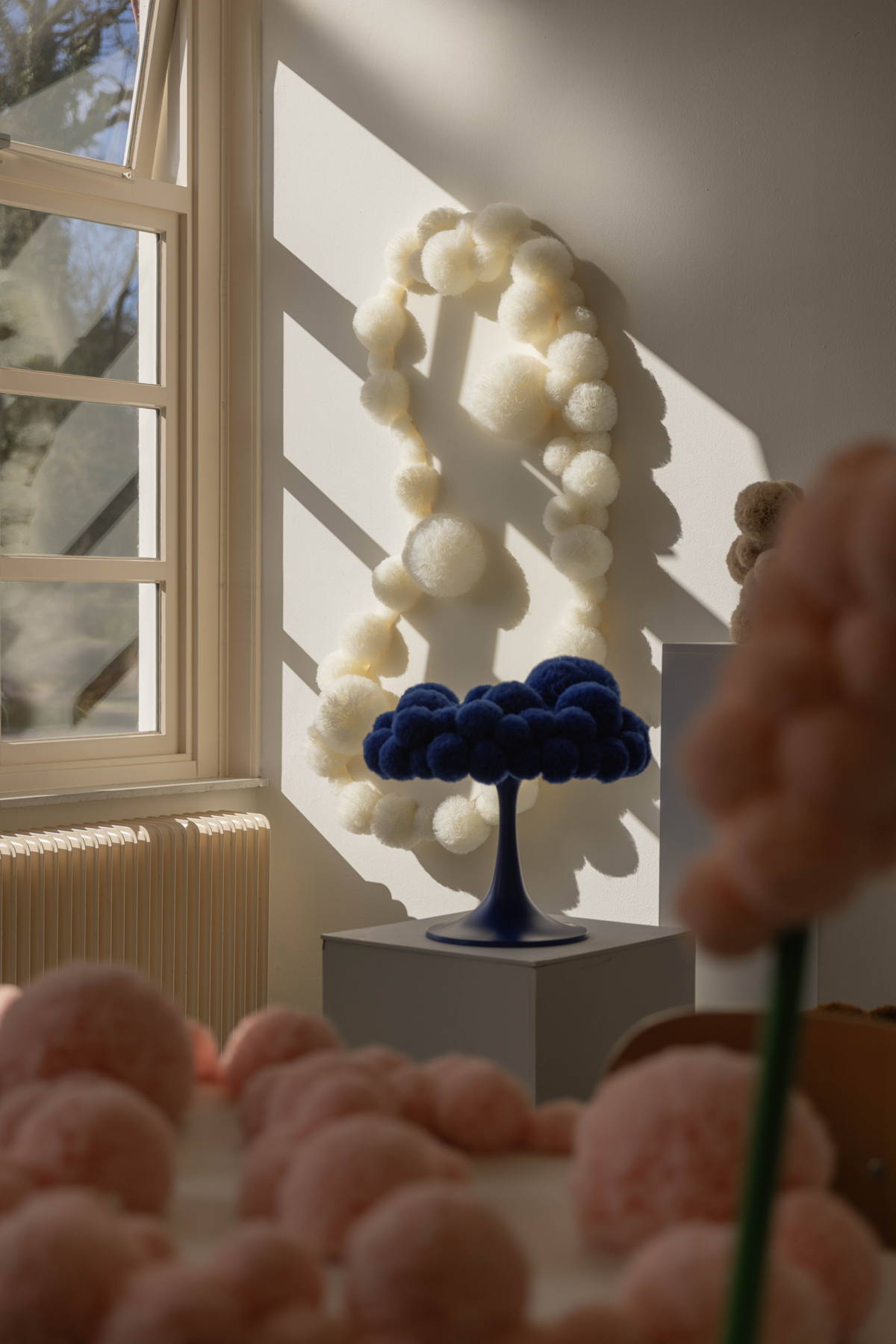
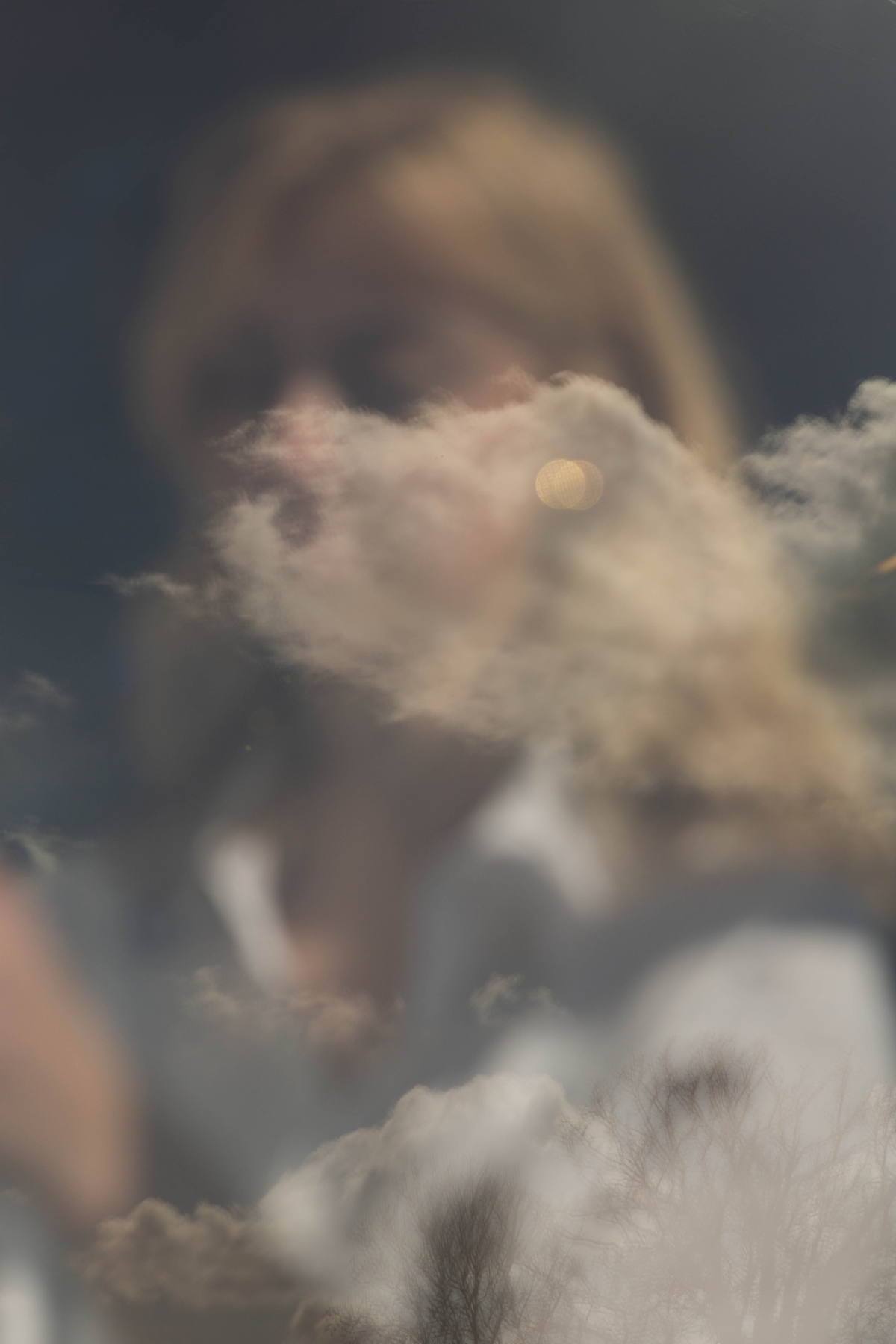
Your work is built through a slow, labour-intensive hand process in a world obsessed with speed. What goes through your mind – emotionally – in the hours of repetition? Is it a form of meditation?
For me, the handmade aspect is very important. I think people often don’t realise how much time and labour goes into a single piece. You can see the final object, but not necessarily all the hours that are hidden inside it. Emotionally, it really depends on where I am mentally.
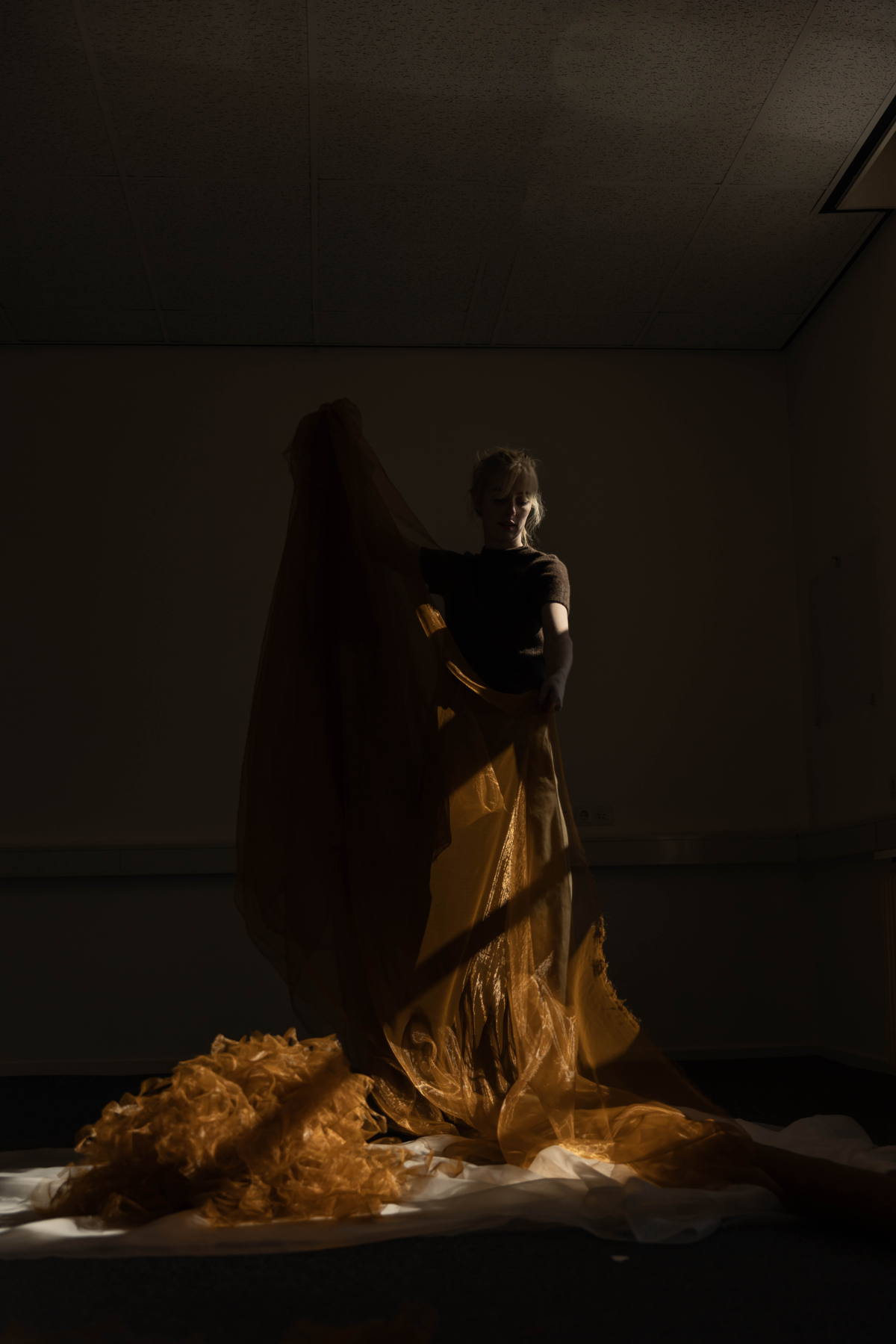
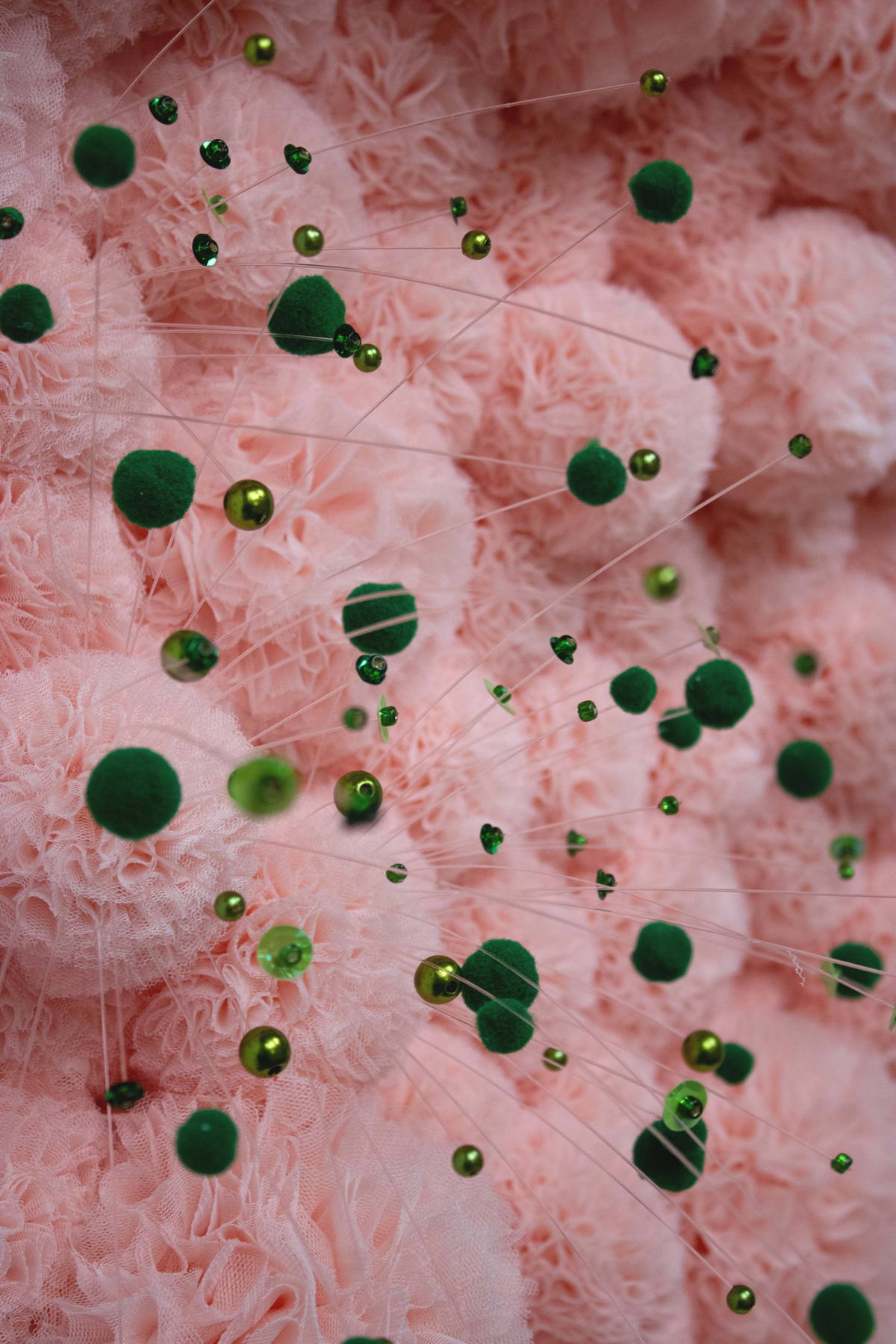
For certain works, like fixing beads into the glass fibres, I need to have a quiet mind. I actually prefer to work on those pieces completely alone in the studio. When I’m in that state, I can work for hours and it becomes very meditative. I usually have music playing quite loudly, sing along, and just switch my brain off. I really love that feeling.
But when I’m restless or there is a lot going on in my head, the repetition can have the opposite effect. Instead of calming me down, all my frustrations and thoughts can come to the surface. When that happens, I usually move on to another piece and come back to the repetitive work when I feel more at peace with myself.
So for me, repetition isn’t always meditation. Sometimes it actually shows me what is going on inside my head. I think that’s also part of what I find interesting about working slowly and by hand.
You transform deadstock materials – fabrics that were discarded, unwanted, leftover. Do you feel you are rescuing them, or mourning them? Is there a grief in the material that you’re trying to turn into something else?
I feel like I’m giving these materials a new chance rather than mourning them. So no, I don’t really feel grief when I work with them. I’m actually happy when I find a material that I can work with and give a new life to.
I think what interests me is that these materials are often still beautiful and perfectly usable, but because they are leftover or no longer needed within the industry, they are suddenly seen as less valuable. For me, working with deadstock is a way of showing that value again. I want people to see how beautiful the material is and to think about why it was no longer wanted in the first place. It makes me question how the industry decides what has value and what doesn’t.
Tulle and mesh are delicate, translucent – they reveal as much as they hide. Do you feel your work holds a kind of vulnerability, like skin or memory? What part of yourself do you leave in the fabric?
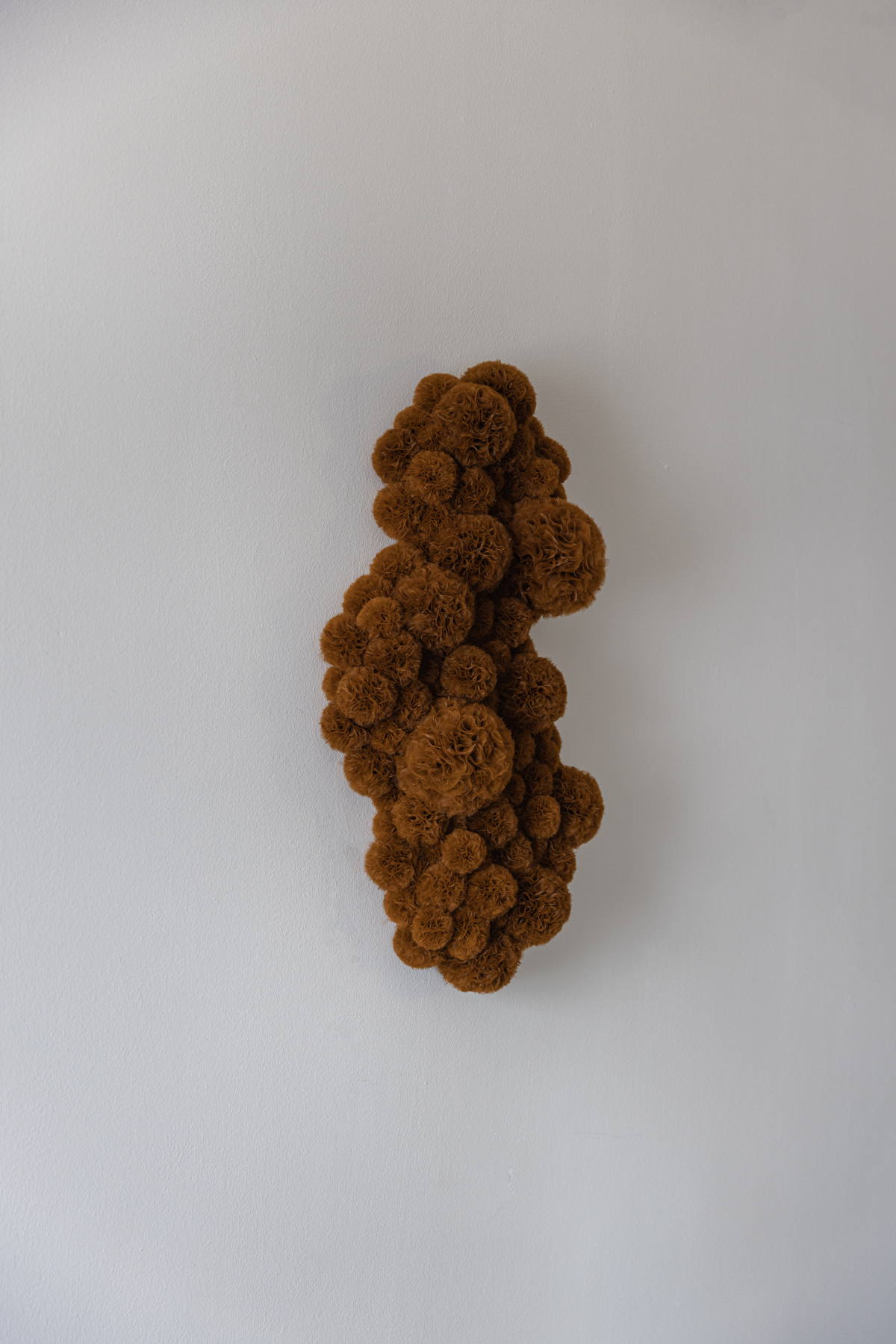
That’s a beautiful way of describing it. I do think the material has a certain vulnerability to it, but at the same time, tulle and mesh can be incredibly strong. I’m really interested in that contrast. The material is transparent, so you can see through it, but when you start building up layers, it can also become almost completely opaque. It reveals something while hiding something else at the same time.
I think that contrast reflects something in me as well. There is a part of me that can be very open and vulnerable, but at the same time there is also a strong part that protects and hides. Maybe that is what I leave in the fabric — not necessarily a specific memory or story, but something of that tension between showing and protecting
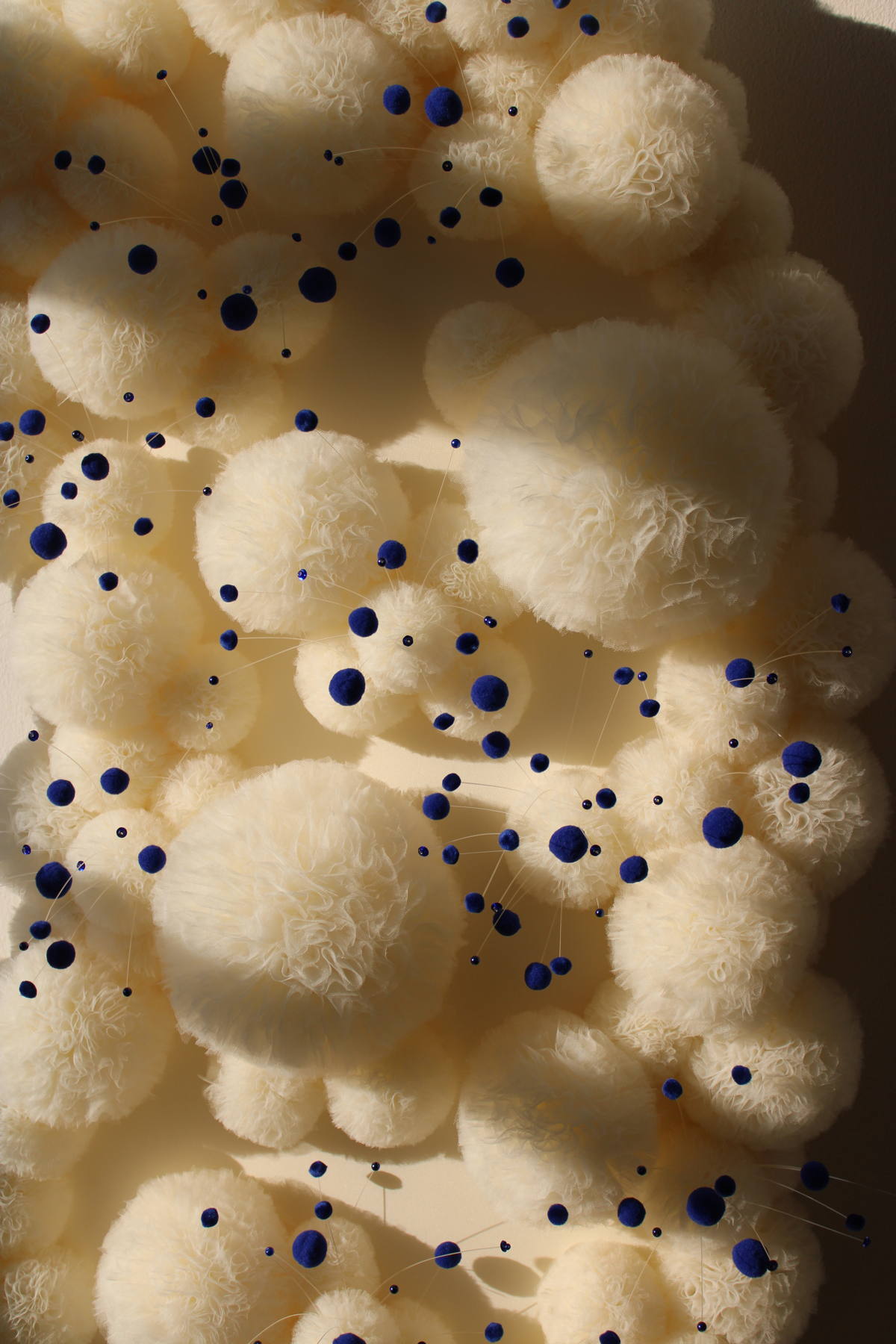

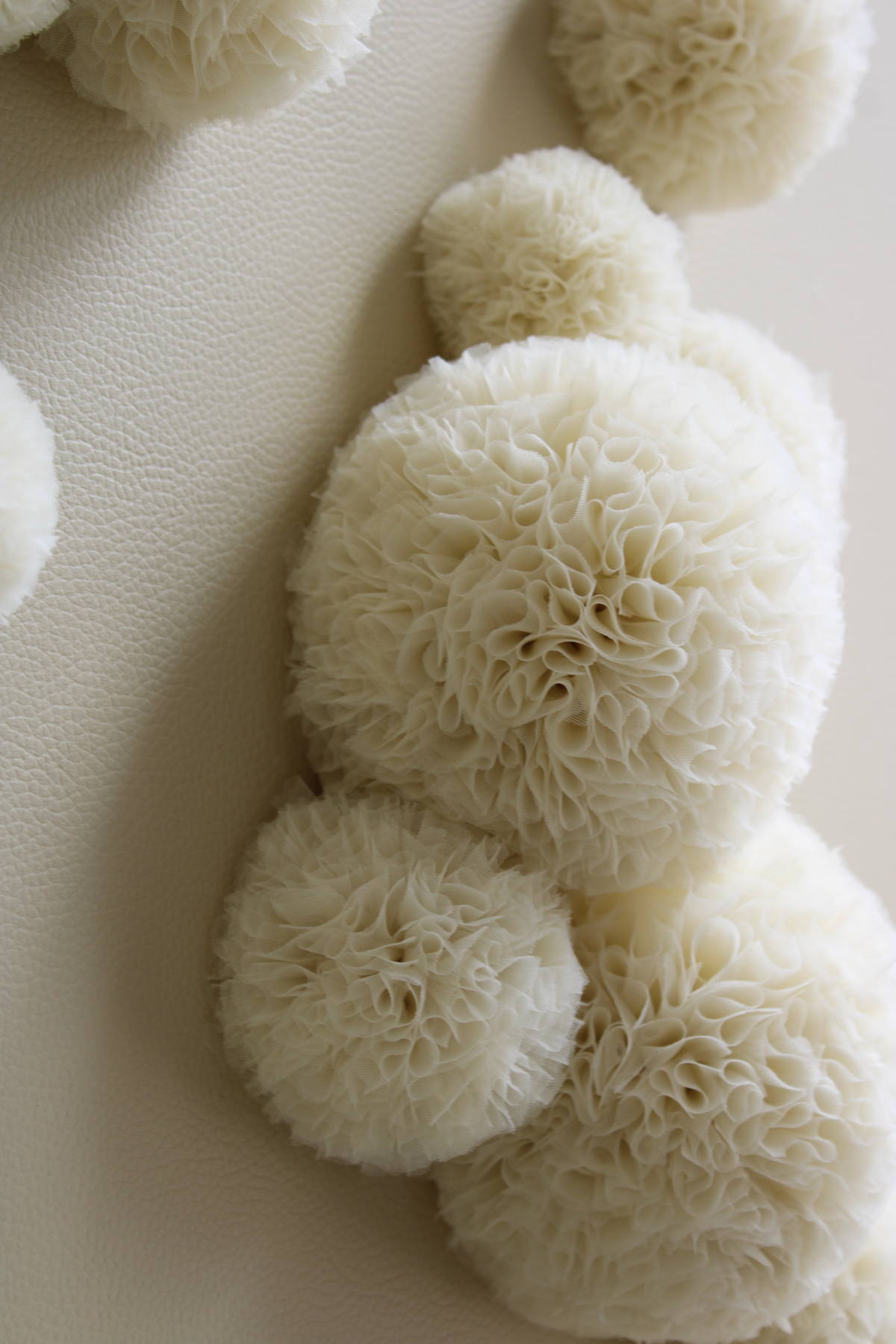
Can you tell us about some of the artists that inspire your creativity and why?
I don’t really have one specific artist who inspires me. I find inspiration more in the craft itself. I still love watching haute couture shows, especially looking at all the incredible handwork and textile techniques that go into the pieces. I can spend a lot of time looking at the details and thinking about how something was made. I think that process of making, and seeing what is possible with textiles and your hands, is what inspires me the most.
Let’s explore your collections. The title Unravel suggests coming undone – a release, or a breaking. Was there a moment in your life or your practice where you had to let something fall apart before you could rebuild it?
Yes, definitely. There was a turning point that became really crucial for both me and my work. At the time, I was still working part-time as a stylist in a intertior store while building my practice as an artist in the evenings and during the weekends. It could be quite difficult sometimes, especially when I was in a good flow with my work and then had to stop because I had to go to my other job.
At the same time, I was in a relationship that had lasted eight and a half years, and that relationship came to an end. It really broke me for a while. But strangely, that also gave me the courage to make a decision I don’t think I would have made otherwise: to work completely for myself as an artist.
I quit my job that same month and started looking for a studio. Luckily, that all happened very quickly. I remember thinking, if everything is going to change anyway, I might as well give this a real chance and see what happens if I fully commit to myself and my work. And after that, things started moving very quickly. I got new opportunities with galleries, fairs and sales, and my practice really began to grow. So for me, Unravel is very much connected to that idea of things falling apart, but also creating the space to rebuild something that feels more true to yourself.
Sometimes you have to let go of the life you thought you were going to have before you can discover what you actually want.
Inflore evokes blooming, opening, becoming. Is there a fear that comes with growth? That the thing you’re making might outgrow you, or that you might not recognise yourself in it?
Yes, definitely. But interestingly, I don’t really feel that fear when I’m in the middle of the growth. When there is a lot happening and I’m in that momentum, I don’t have a second to be afraid. I’m just doing, making and moving forward.
The fear usually comes when things become quiet and I have time to reflect. Then I sometimes think: what if this was the peak? Can it get better from here? And do I always have to want it to get better? I’m also learning that it’s okay if my work outgrows me.
That’s how life works — you change, and your work changes with you. I try to enjoy where I am for as long as I can, while knowing that I still want to do so much more. And not everything has to happen within the next few years. I often try to look at the bigger picture. If I live to be a hundred, then this moment is still just the beginning. Thinking about it that way helps me put less pressure on myself and be a little less hard on myself about where I should be.
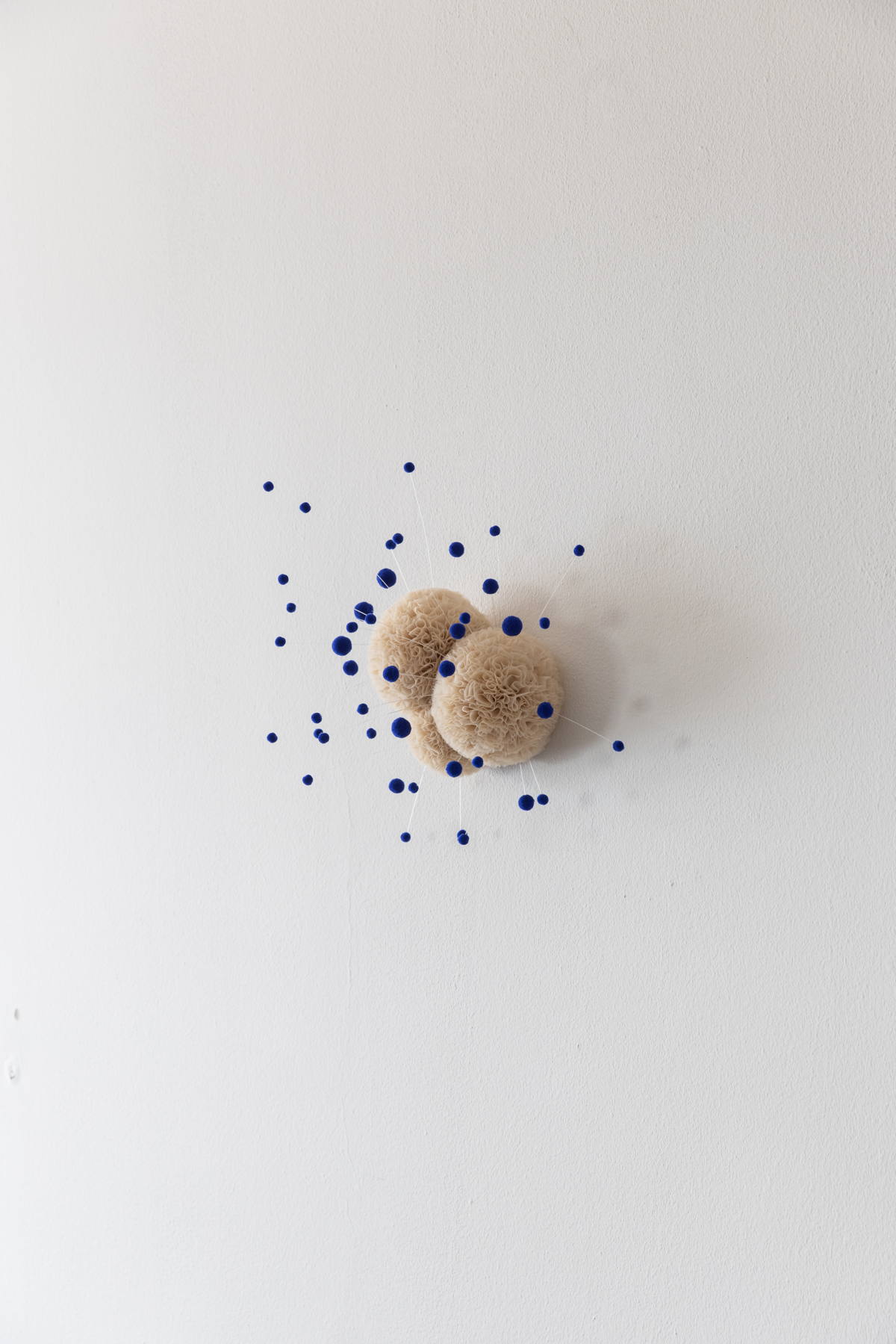
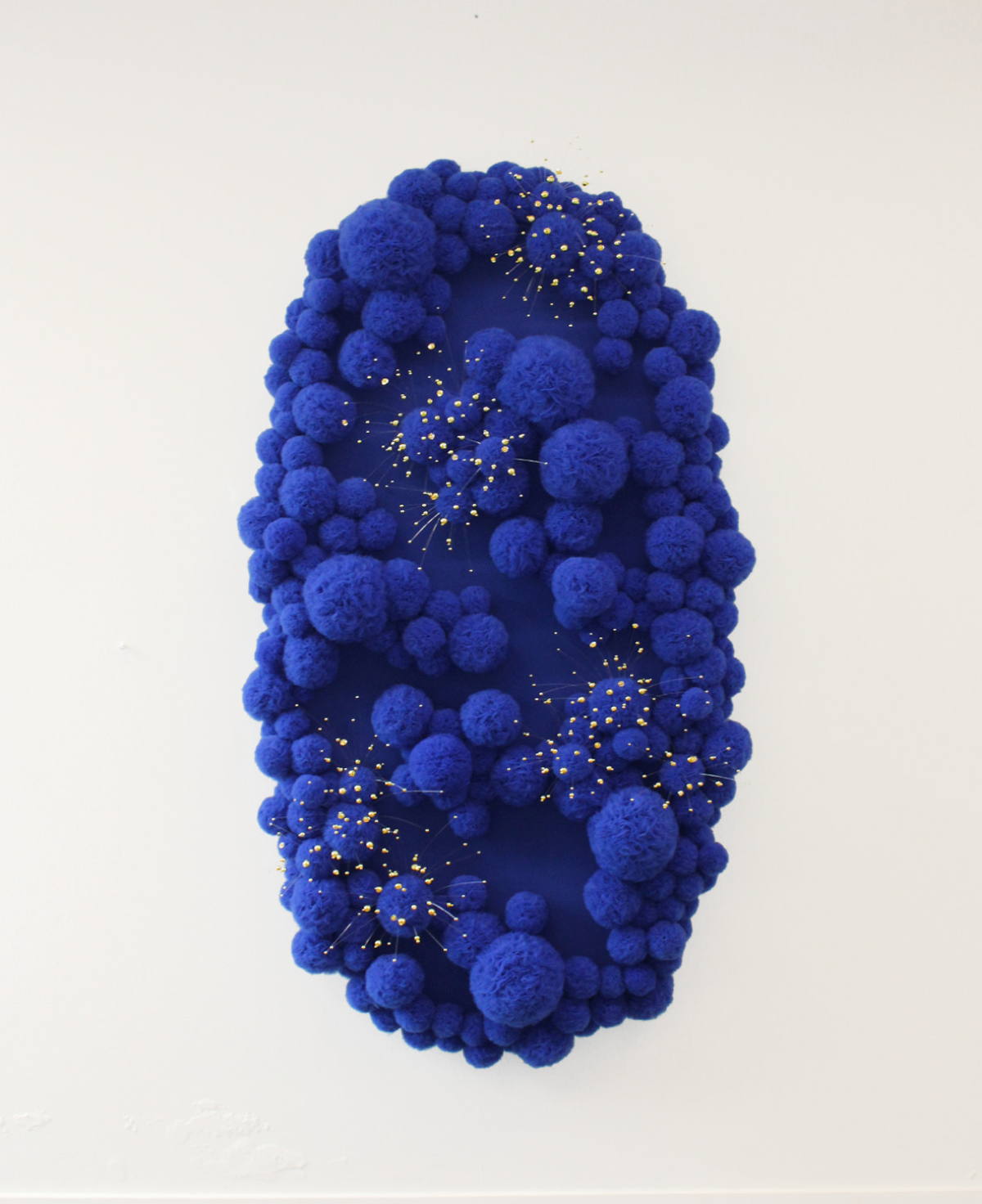
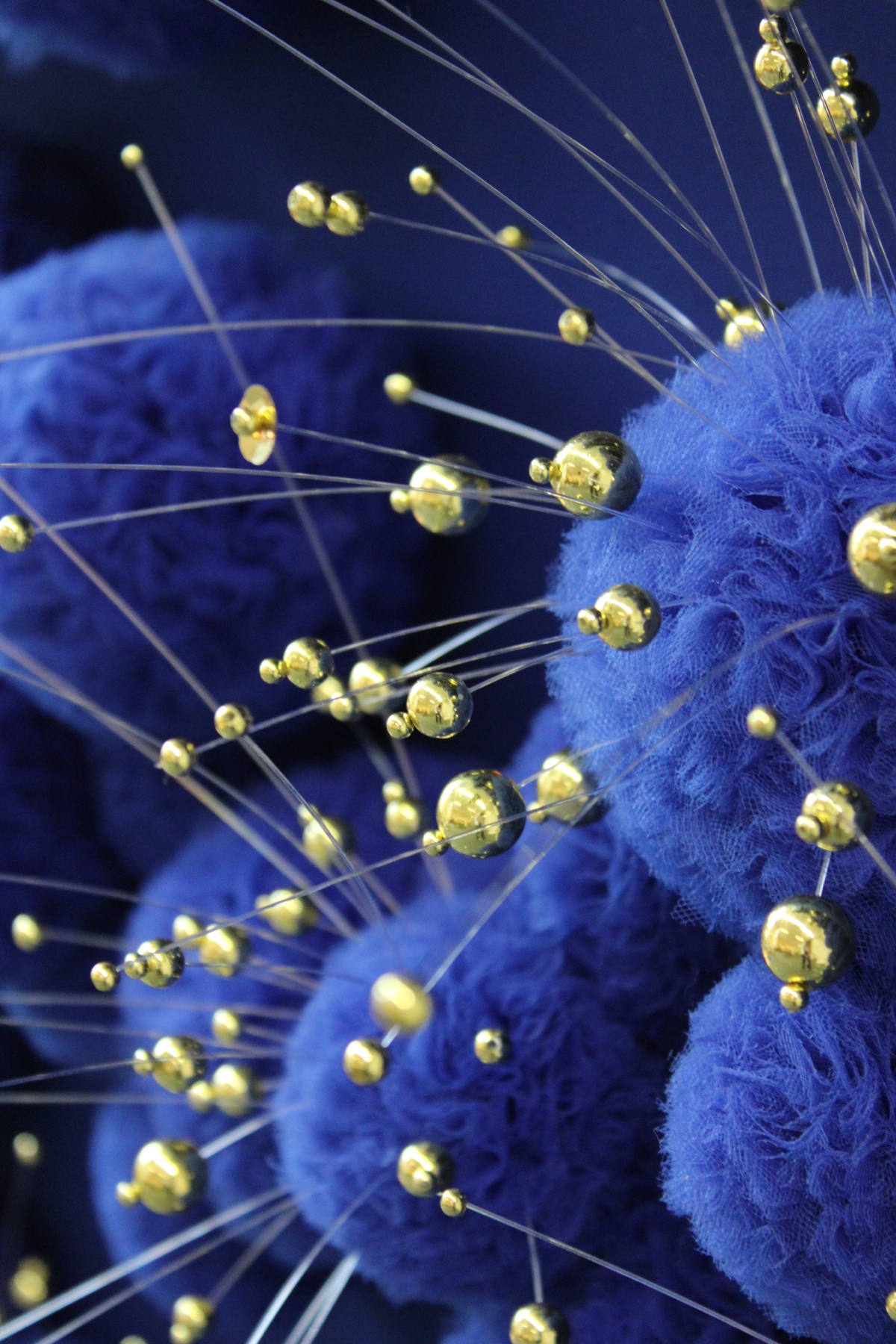
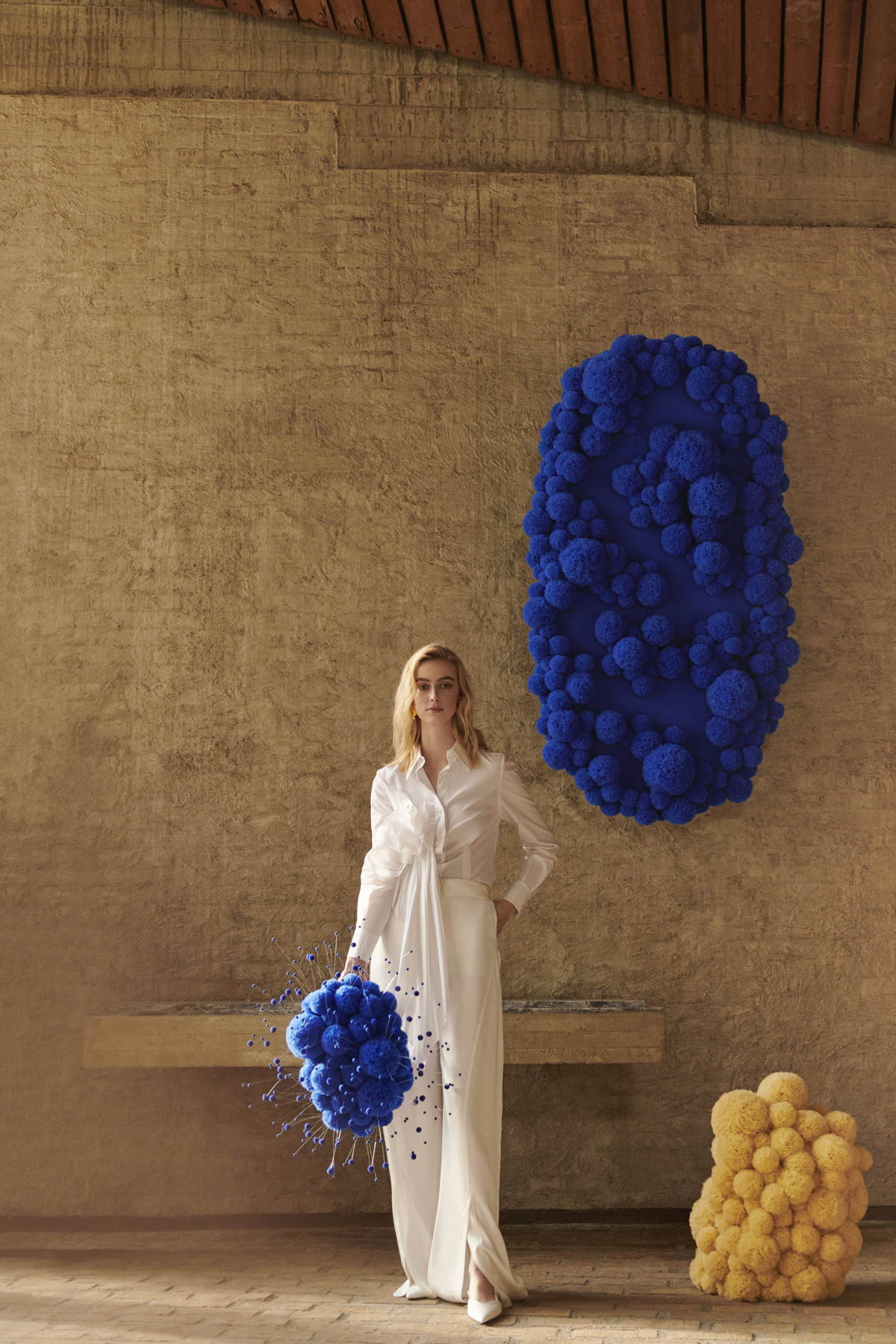
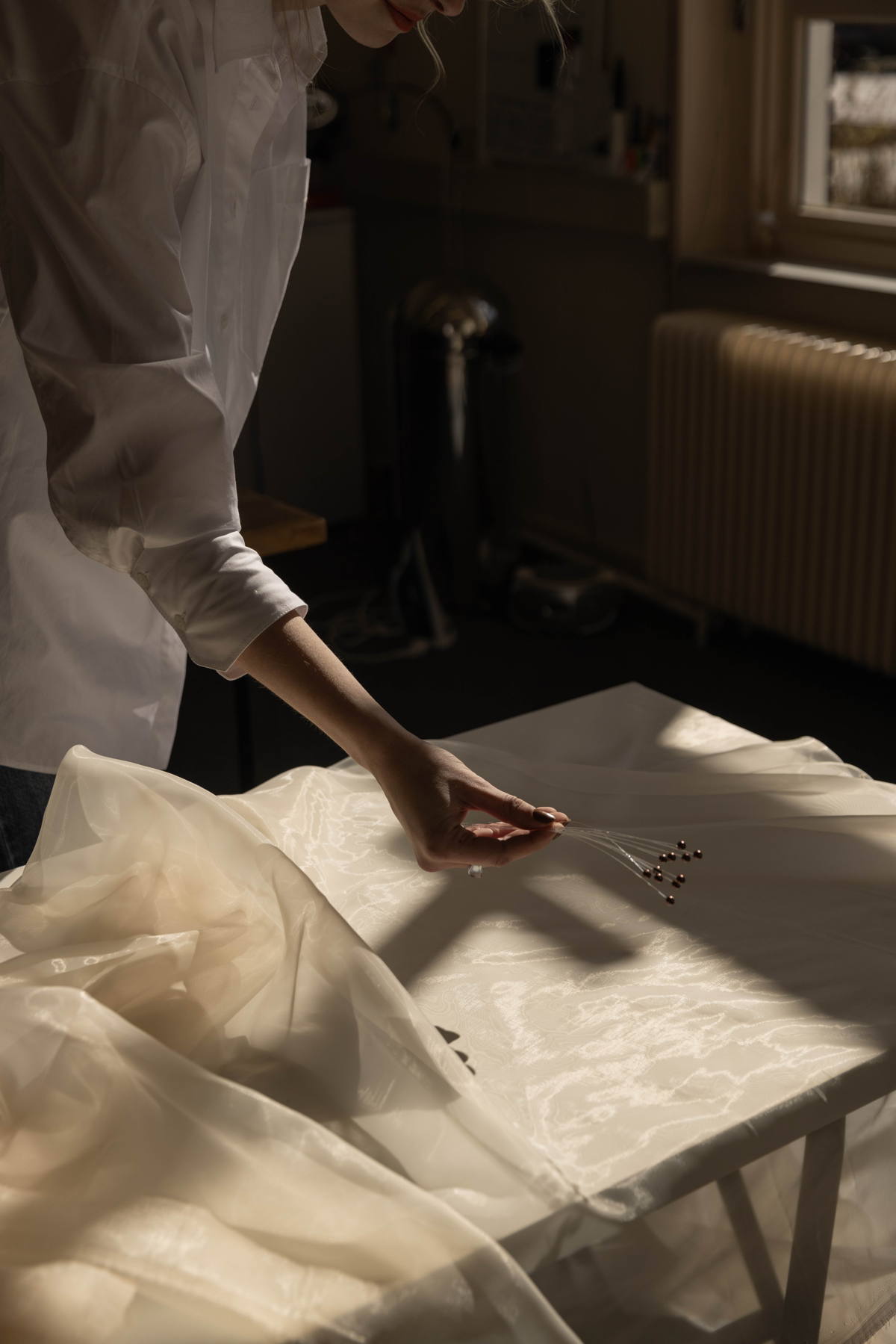
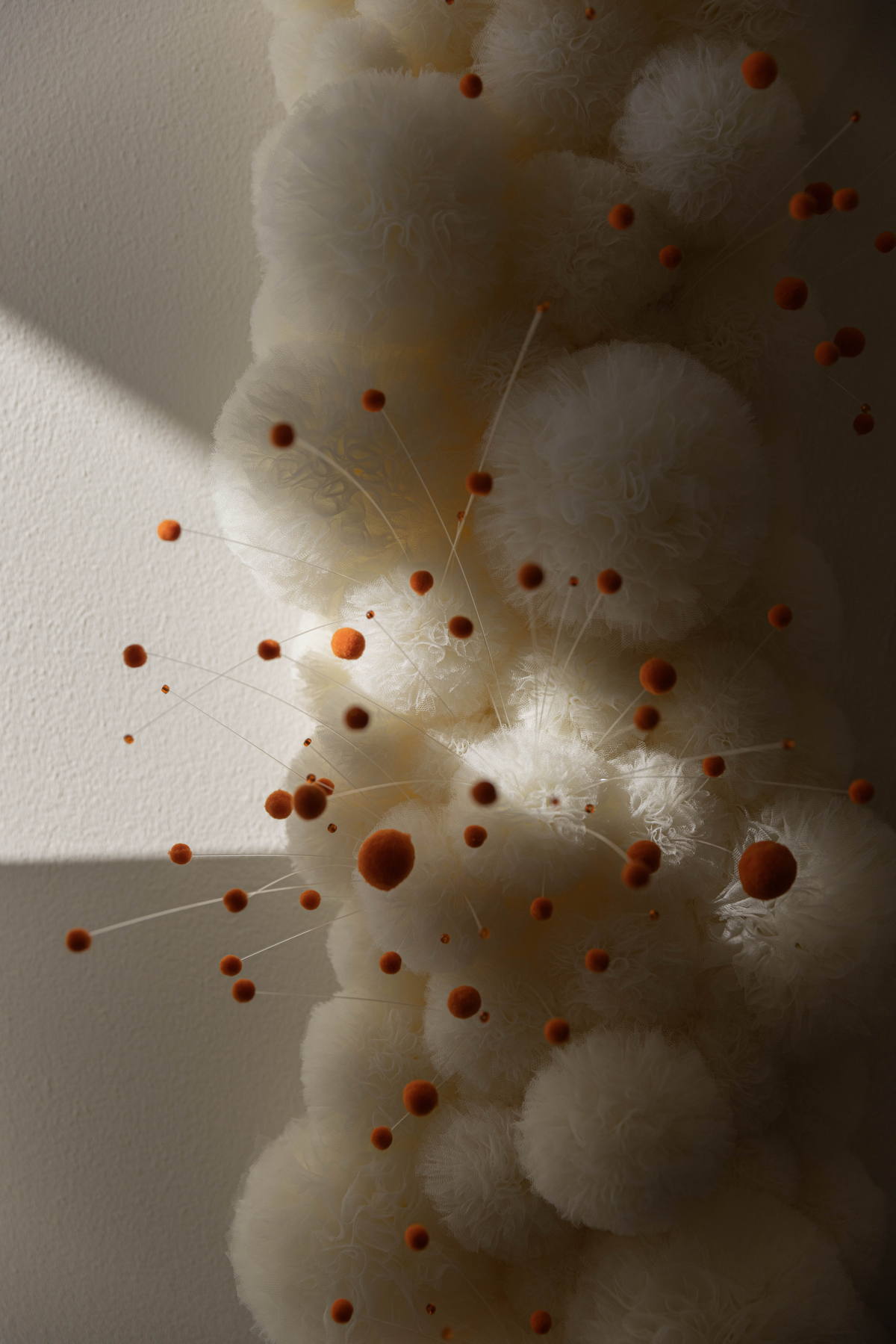
In Finery, you stepped away from the human body – creating a textile sculpture instead. You also mention that critical self-reflection led you to realise depth and contrast had previously stayed in the background. Was it scary to let go of the body as a reference point? And what did you discover about yourself when you did?
Yes, I actually found that quite difficult at first. There was a lot of questioning myself: is this still right? Am I allowed to do this? But once I had that moment of thinking, yes, this is it, it felt incredibly freeing. I think the biggest struggle is often with yourself. Why did I think I couldn’t move away from the body because of my background in fashion?
I’ve learned to listen more to what makes me feel excited. If I’m making something and it makes me genuinely happy, I try to trust that feeling and follow it.
Looking back at the person you were when you started the Finery collection – and the person you are now – do you recognise yourself? Is each new work also a way of meeting a version of yourself you haven’t met yet?
I definitely recognise myself, but I’ve become much more confident. I think I dare to take up more space now, both in my work and as a person, and to really claim that space.
When I started Finery, I was still figuring out what I was allowed to do within my practice and how far I could push myself. Now I trust my own intuition much more. I’m more willing to follow an idea without immediately questioning whether it makes sense or whether it fits with what I’ve done before. So yes, every new work is also a way of meeting a new version of myself. But I don’t feel like I’m leaving the person I was behind.
I still recognise myself in the work, and I hope other people do too. It’s more like I’m growing into different sides of myself while staying connected to where I started.
If someone could read one of your works like a diary – what would they learn about you that you’ve never said out loud?
I think they would learn that making the work is something very comforting and healing for me. It’s also very much about connection. I make many of my works together with my mother, so there is a personal and shared history within them that isn’t necessarily visible when you look at the finished piece. Maybe that’s something I don’t always say out loud: how much these works are connected to the people I love, and how making them can be a way of connecting, processing and finding comfort
You celebrate handmade artistry in an age of machines and AI. Do you ever fear that this kind of work – this kind of devotion – might be forgotten? Or is that fear exactly what fuels you to keep making?
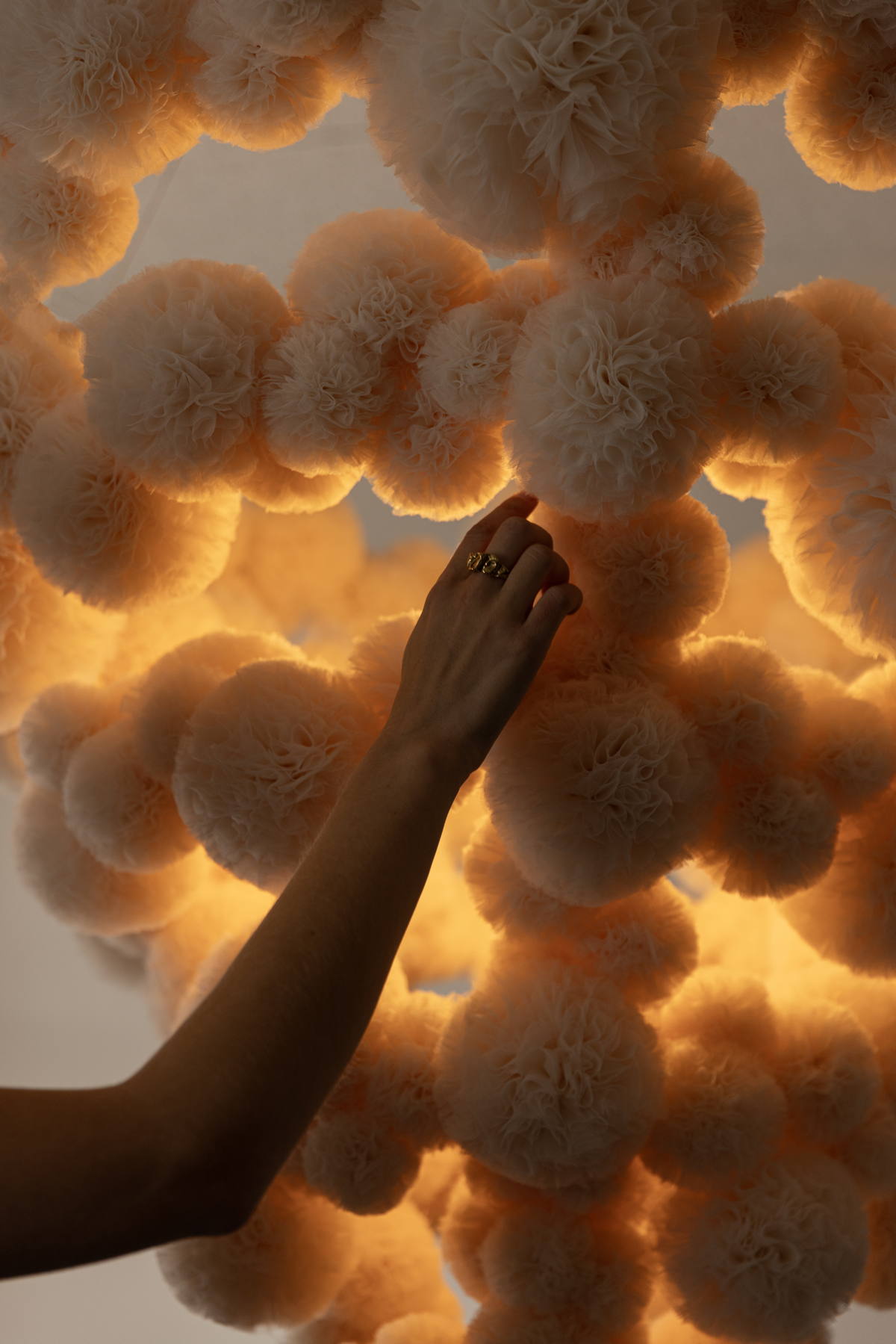
Yes, definitely. I think that fear is actually part of the fuel. When I graduated in 2021 and presented my work for the first time at Dutch Design Week, I had people come up to me and say, “We saw photos of your work, but we thought it was AI, so we came to see if it was actually real.”
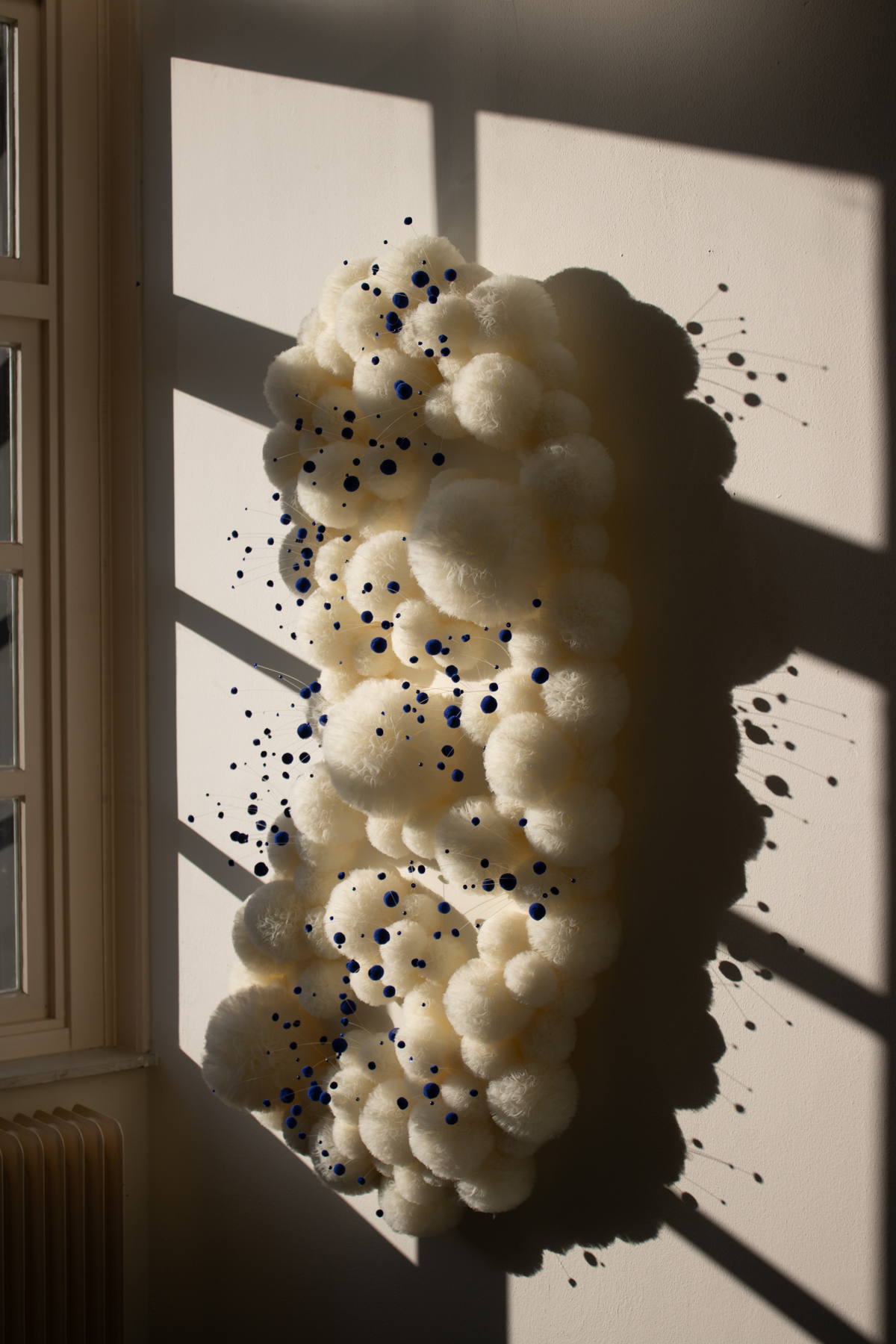
They were looking at the floating pompoms and couldn’t believe they were really there. For me, it was so obvious that it was something made by hand, but that experience made me realise that it isn’t necessarily obvious to everyone anymore. And I actually loved that moment of wonder — that feeling of, “Wow, this is really handmade. You can actually make something like this with your hands.”
I really enjoy working with my hands, and I think we do it too little. Maybe we also need to teach children more often how good it feels to make something themselves, rather than always getting something instantly and ready-made.
Highlight Image:
© Courtesy by Sofie Aaldering


