
Lakecia Benjamin | Dreaming In The Present Tense
With “We Dream”, the New York saxophonist turns from personal survival toward a collective reality still unfolding. She speaks to Luxiders Magazine about political art, the limits of instrumental language, New York’s fragile cultural ecosystem, visual identity and the mental discipline behind a lasting career.
Lakecia Benjamin has never treated jazz as a sealed tradition. Raised in Washington Heights, the New York alto saxophonist, composer and bandleader has built a career shaped by funk, R&B, spiritual jazz and high-velocity improvisation. Movement is part of her language. Yet her sixth studio album, “We Dream”, marks a different kind of shift. This time, she is not looking back at a crisis she has already survived. She is documenting one that remains unresolved.
Benjamin’s 2023 album “Phoenix” followed a near-fatal car accident and transformed recovery into music. “We Dream”, released through Artwork Records, widens the frame. Its eleven compositions move between jazz, soul, funk, hip-hop and spoken word, bringing together a cast that includes Terence Blanchard, Chief Xian aTunde Adjuah, Hiromi, Chris Potter, Jeff “Tain” Watts, Bilal, Tarriona “Tank” Ball and co-producer Kassa Overall. Benjamin describes the album as a collective journey, but she refuses to pretend that its destination is already visible. “I have no idea,” she says when asked what its new world might look like. “We’re in it right now.”
That answer captures the urgency of our conversation.
“Phoenix” explored personal survival, while “We Dream” looks toward our shared future. What changed in your understanding of your role as an artist?
The climate of the whole world changed. “Phoenix” was more self-reflective. It was about my recovery from the accident and its aftermath: this is what happened, this is where I am after the tragedy, and this is the message I can now give.
“We Dream” is happening currently. It is not a story told afterwards. Most of my albums tell the story of something that happened and then present it to the audience. This time, we are all living it together in the present.
You imagine “We Dream” as a cinematic journey. What would its “new world” look like?
I have no idea. We’re in it right now. It is not a vision of what might happen in the future; it is a reflection of our current environment and what is happening now. My other albums were more like stories about myself. This is a collective perspective. The guests, society and every listener are part of the journey.
Nina Simone risked her career by making her music political. What are artists still afraid to say today?
I cannot speak for everyone. I do not approach it by asking whether I am going to be political. I ask what message I am trying to give. Every artist’s work should speak to their purpose in life and to their truth. Some artists choose to make politics the basis of their work; that does not make them better or worse. It means they may have a different purpose.
In 2026, saying that I love every race, every country and everybody’s food—that I want to travel, get together and hang out—can be seen as political. At another time, it might not have been.
I am probably less careful now. Like Nina Simone, I believe that art reflects its time. My job, for all the days I am alive, is to document what is happening. If people do not like what I am documenting, then they should change what is happening.
Ultimately, I want my music to inspire people, change them or make them feel something. If somebody is having a bad day, I want the music to improve it —or at least soothe them as the day continues. Artists are here for the people.
Why did you place Angela Davis’s voice inside “Amerikkan Skin”?
I knew that choosing her would cause some confusion and that people might overstep a little in their interpretation. I wanted a voice that people would immediately recognize. But if you listen to her actual words, she is introducing all the women on the album. She is not speaking about social justice. Her presence alone makes people assume what is happening without listening to what she says.
The sirens work in a similar way. I began the album with the first thing I remember hearing after my accident. I was coming in and out of consciousness, there was blood everywhere, and I could hear the ambulance approaching. That was what the sirens meant to me.
But I also had friends who lost many people during Covid in New York. They heard sirens coming to collect their loved ones. Later, during the protests in New York, other people heard sirens and immediately thought of the police. My godmother told me that when she plays the album, she starts looking for the cops because she feels they are following her.
I wanted to show these different realities strategically. For me, the sound was medical. For somebody else, it meant police brutality or another emergency. I wanted all of us to begin in that shared state of what the pandemic felt like. And, of course, I admire Angela Davis and everything she has done. She was a powerful voice with which to introduce the extraordinary guests on the record.
Your own voice and spoken word are more prominent on *We Dream*. When is the saxophone no longer enough?
Many people first came to know my music through *Pursuance: The Coltranes*, but I had made two funk albums before that. I was rapping then, and rap was always part of my live shows.
“We Dream” is a vulnerable, personal journey. I wanted to place the listener inside my precise state of mind. When you begin with the saxophone, people have to guess. I may think I am playing something very sad, while somebody else hears it as happy, bright and beautiful. Instrumental music creates a kind of bilingual relationship between the artist and the audience: they guess what I am saying, and I guess how they complete the meaning.
Words make the direction clearer. On “Phoenix”, Sonia Sanchez, Angela Davis and Wayne Shorter helped the audience understand the message through language. On *We Dream*, hearing me, Bilal, Tank and Kassa allows listeners to piece the album together more directly. As each song moves into a different mood, the spoken word can bring you back to where we are in the journey.
It was a vulnerable step for me, but it can help listeners understand both the album and who I am. It is almost as if they have heard me speaking in a conversation like this one.
You resisted framing “We Dream” solely through racial violence. What broader warning are you trying to sound?
I did not make this album only because Black Americans experience racial violence. I made it because every community in the world is facing serious problems. It does not matter whether I am in Berlin, South Africa or somewhere else—the news is overwhelming, and people need to come closer together.
Of course I am concerned about racial violence against Black people because it has been happening since before I was born. What is frightening now is the sense that violence and repression are expanding, and that no one is exempt. This is not only about one minority or one majority. It is a call to wake up and look around.
In America, there are school shootings and police brutality. Elsewhere, tour dates can be cancelled because communities are living with violence or conflict between religions. People seem to have forgotten that everybody is a person. Your religion should not erase that. Music began as a way of bringing us together.
How has New York’s music culture changed since your Washington Heights childhood –and what is being lost?
I am not sure New York culture itself is changing. I can travel to another country and hear people rapping in English or playing music from New York. What has changed is the climate in which art is made.
After the pandemic, people became more isolated. They used to meet in person. If you wanted to meet somebody, you went to a show, had dinner, socialized and said hello. Now people may stay home and use an app. Society is forgetting how to spend time together.
There is also an economic reality. People all over the world are struggling. They cannot come to a jazz club and spend twenty dollars on me when the choice is between the club or a sandwich. Politics and economics influence culture in ways we cannot ignore. Music thrives when people have enough money and feel able to go out. People also turn to music to escape the pressures of life, but club owners still have taxes and expenses to pay. We are not living through a particularly carefree moment in history.
At the same time, I see clubs opening. New York has recently gained new rooms such as The Pocket, and there has been talk of Ronnie Scott’s opening here. Blue Note is expanding to London. That does not prove that everyone is doing well, just as opening a supermarket does not mean nobody is homeless. But it shows hope. I would rather people be hopeful and try than give up before they begin.
Do longevity, reuse or conscious choices influence the way you dress onstage?
Not deliberately. I am open-minded: if a second-hand shop has something I like, I will wear it. But I am mainly looking for clothes that reflect my personality. I found a wonderful shop in Paris recently that had more of a vintage feeling. What is old always comes back as new, and what is new eventually becomes old.
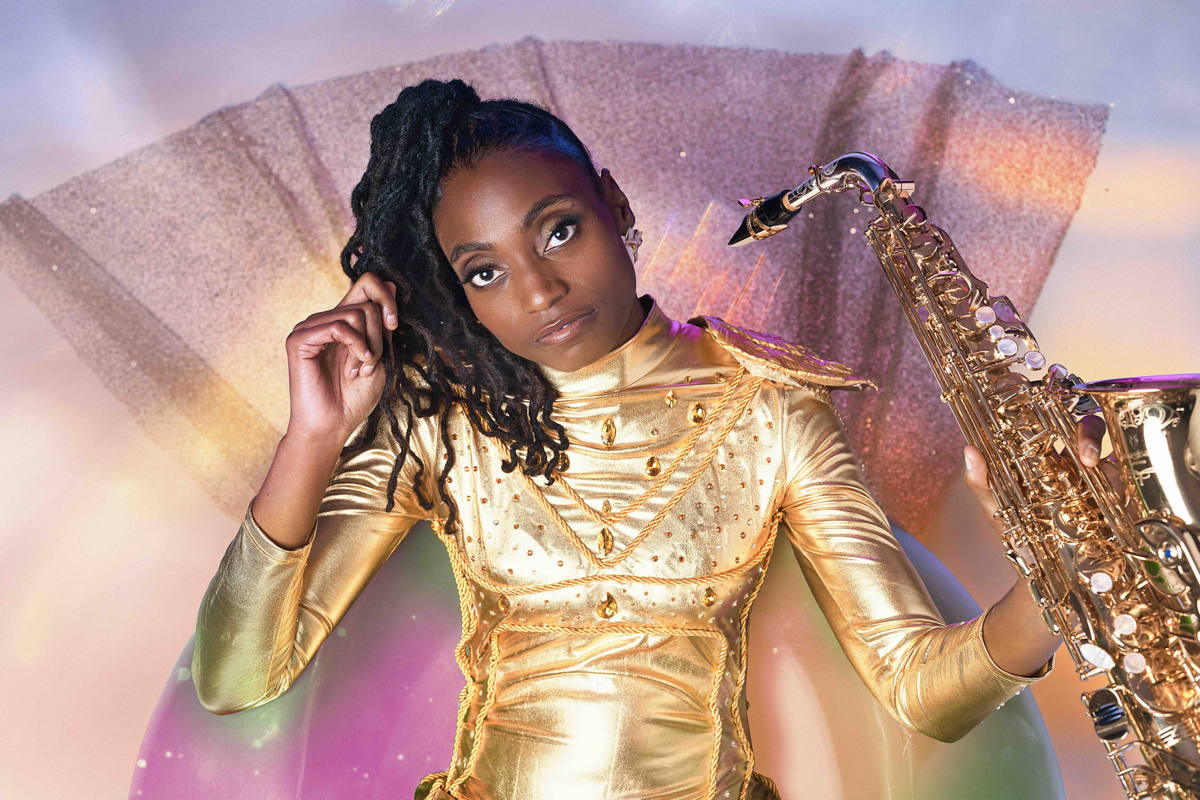
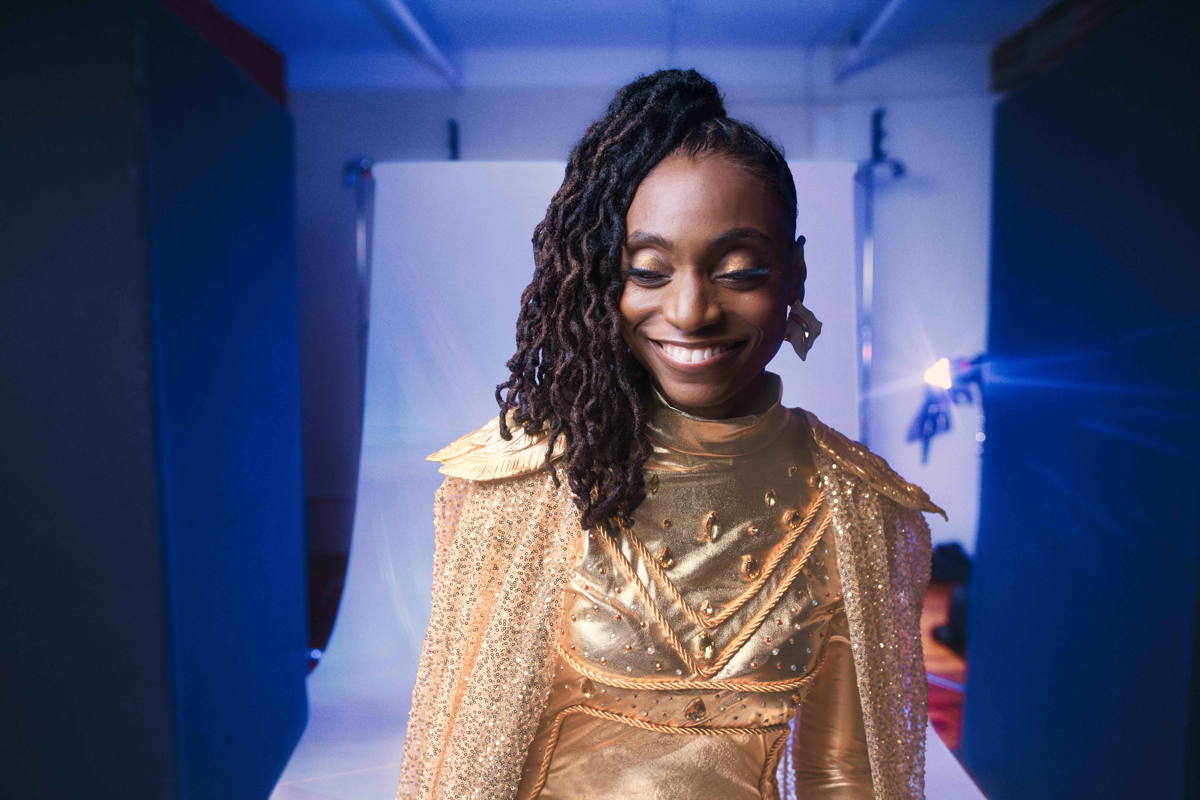
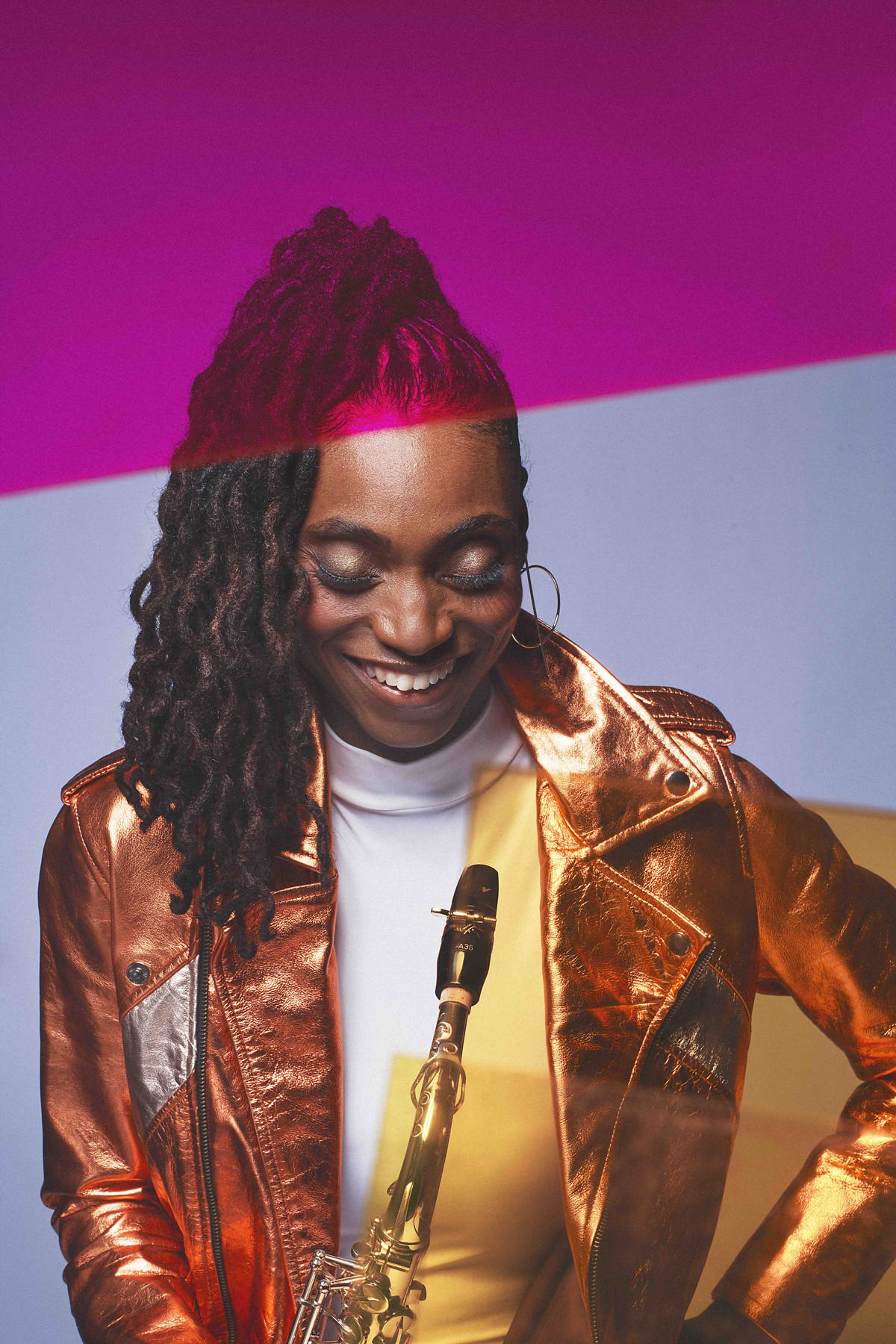
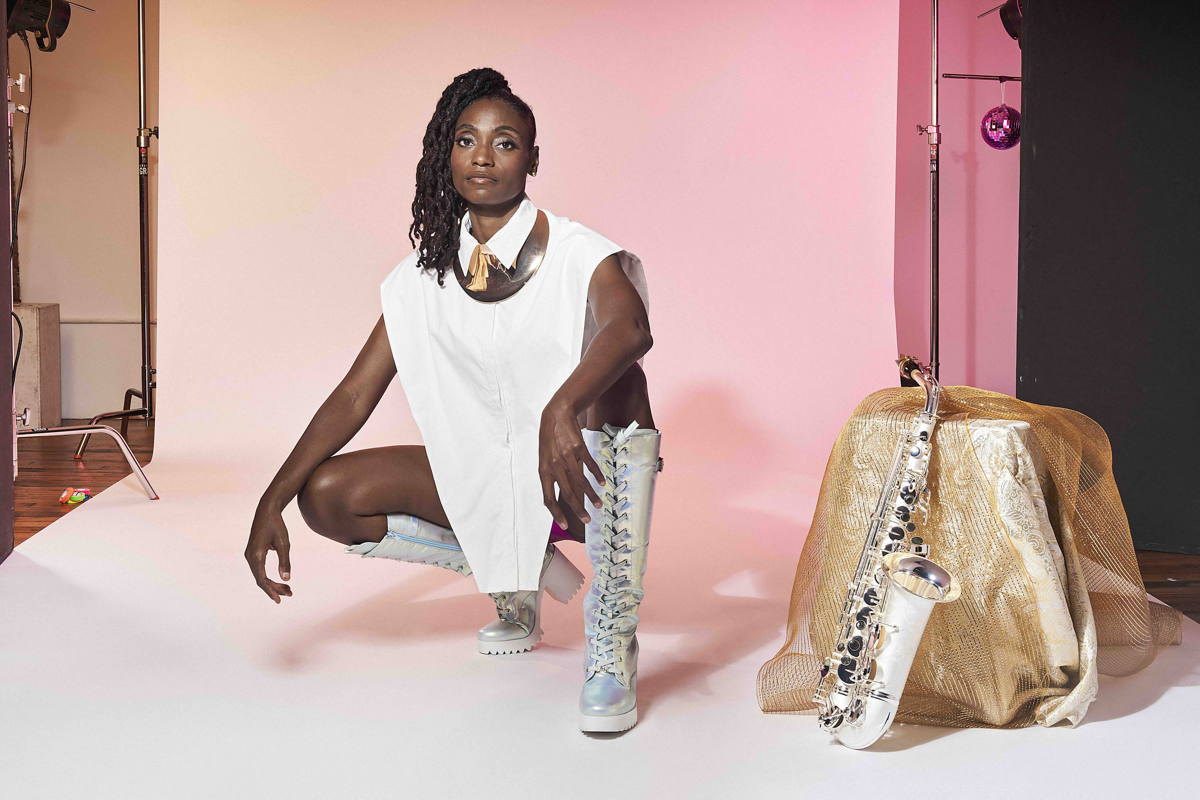
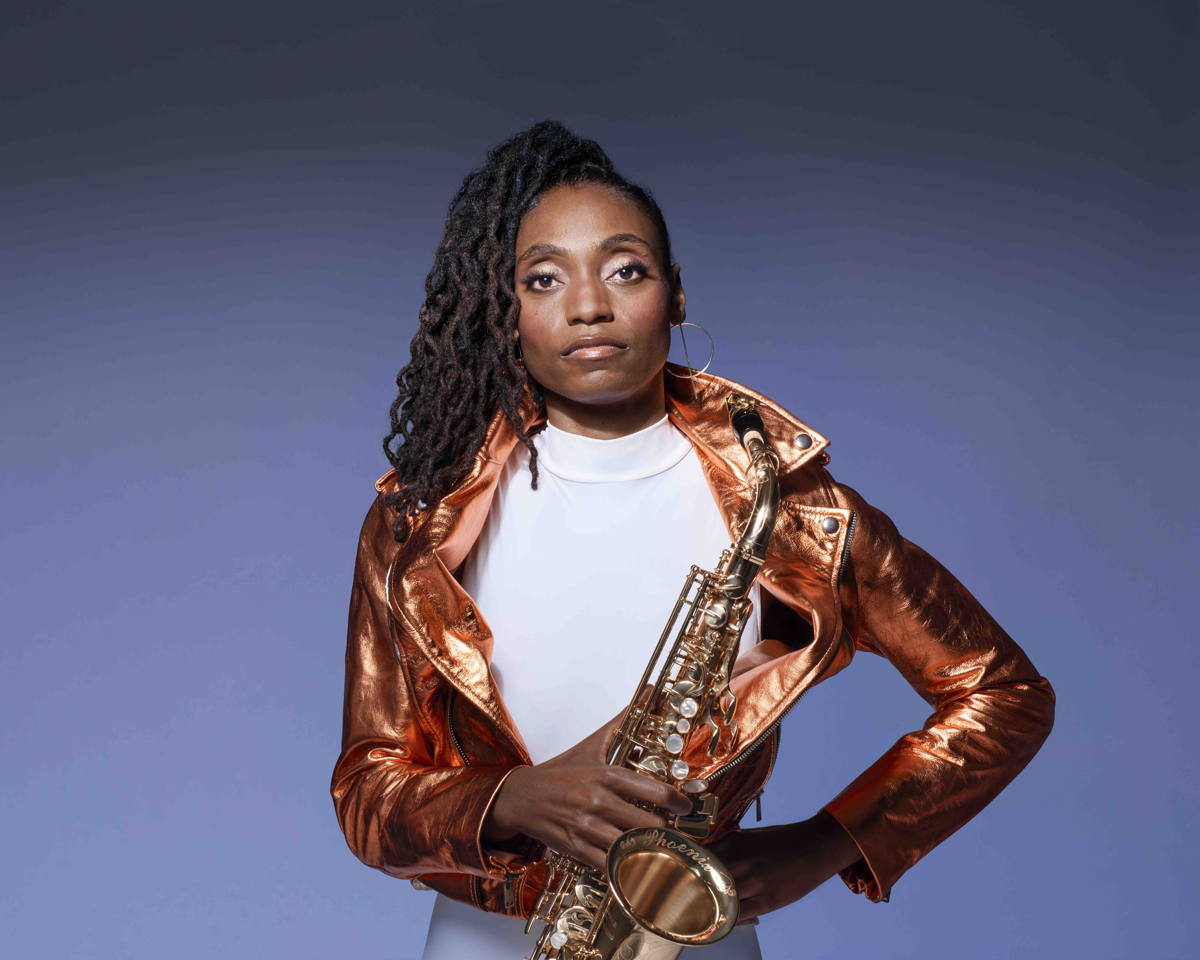
I do not wear many animal-derived clothes, because an animal had to die for them. Visually, I am in a phase of bright, metallic outfits. They give a futuristic, Afrocentric feeling. Audiences sometimes see them as superhero clothes.
I have always believed that people should be able to see who you are before you play. The moment someone sees you, they form a first impression. The same applies to the stage: the audience should not have to spend the entire show guessing who you are. The whole performance is designed to reveal that. By the end, people can decide whether they connect with what the artist represents.
In “Ascension”, you say, “Recognize the real, it’s a battlefield.” Which battlefield do you mean?
Planet Earth. But for artists in particular, mental stability and stamina are among the most important things you need throughout a career.
You are building both a career and a future, and every move requires you to believe in yourself. You need the courage to call Hiromi, to ask for something, to make a decision and not be afraid. Every day, you are battling your sense of self-worth, your own demons, feelings of isolation, and your understanding of family and community.
I think the strongest artists –the ones with the longest careers—have somehow learned not to let their minds take them out of the game. The music is difficult, but the music business is there too, and that business is very mental.
What led you to reinterpret the work of John and Alice Coltrane on “Pursuance: The Coltranes”?
It began with the music, but it was everything. At the time, I felt I was becoming lost. My first two albums were funkier, I was playing with Stevie Wonder and other funk artists, and my band SoulSquad was working. But I became bored playing generic music in the same key just to keep everybody on the dance floor. I felt myself becoming a worse saxophonist every day.
I started to believe that I might have to stop being a bandleader and become a teacher. I decided that I would not end my artistic career without giving it one final shot. I asked myself which artists had first made me realize that I needed to take both my music and my humanitarian nature to the highest level. For me, those artists were John and Alice Coltrane.
I decided to make my dream album, with around 45 legendary guests. I did not know whether anybody would agree to it. I thought that, in the worst case, I would at least have the record and could sell it while touring with Gregory Porter. I never expected it to restart my career as a bandleader, but its release became a relaunch.My intention had simply been to become a better saxophonist and give myself one last chance.
You describe “We Dream” as a warning issued from inside the crisis. Where does the story go next?
I am not sure. We are only a few months into “We Dream”, and right now it feels difficult. I am not tired of traveling or of the music. The difference is the story I have to tell each night.
With an earlier album, I could say: look, I almost died, and now I am alive. Or: look at how much I love the Coltranes. With *Phoenix*, I could tell people about something I had overcome. *We Dream* says: warning-society is becoming unstable, and things feel heavy.
Performing something you have survived feels very different from performing something you are still living through. I do not know whether we will overcome it. When people asked how I moved beyond *Phoenix*, I could tell the story afterwards. If they ask how we move beyond *We Dream*, I have to say that I do not know. I am only at the beginning.
We asked you to choose: Miles Davis’s “Kind of Blue” or John Coltrane’s “A Love Supreme”?
You cannot get rid of “A Love Supreme”.
Yet Miles Davis clearly matters to you too.
Absolutely. In terms of personality, Miles and I are complete opposites. I love John Coltrane, of course, but Miles Davis was allowed to change music ten or eleven times during his career. He continually changed his fashion, his image and his sound while remaining himself.
Younger artists today often have to fight the “jazz police” over who they want to be. Miles could move through all those musical styles and be accepted. You can watch him play “Bitches Brew” for an audience of a hundred thousand people. He shows how influential an artist can become by focusing deeply on the music.
John Coltrane is the great saxophonist: spiritual and technically demanding. But if I had to point to the career that changed the music most broadly, I would choose Miles Davis. He played through virtually all the styles of jazz that we play now.
Is jazz becoming stronger, or is it losing its audience?
There is a push and pull. We are struggling to agree on what jazz is. Some jazz artists say they do not play jazz; some soul artists say that they do.
Young people are very interested in music, especially music created by real people rather than simply given to them by an algorithm. The difficulty is how we define it. Jon Batiste can win Album of the Year, Robert Glasper can reach a huge audience, and jazz musicians can become major contemporary artists –but do all of them identify primarily as jazz musicians?
Look at a Doechii, Rihanna or Beyoncé concert. The musicians supporting the star are often jazz musicians. It is difficult to look at a major stage and not find jazz musicians on it. The audience may not use the terminology, but the music and its musicians are already present. We need to become more unified in the way we communicate that.
QUICK CHOICES
Composition or improvisation? Improvisation.
Consonance or dissonance? Consonance –if it has to be forever.
Spiritual jazz or a deep funk groove? A deep funk groove.
Piano or drums? Drums.
A vintage treasure or a Chanel classic? A vintage treasure.
New York at sunrise or after midnight? New York at sunrise.
All Images:
© Courtesy of Lakecia Benjamin


